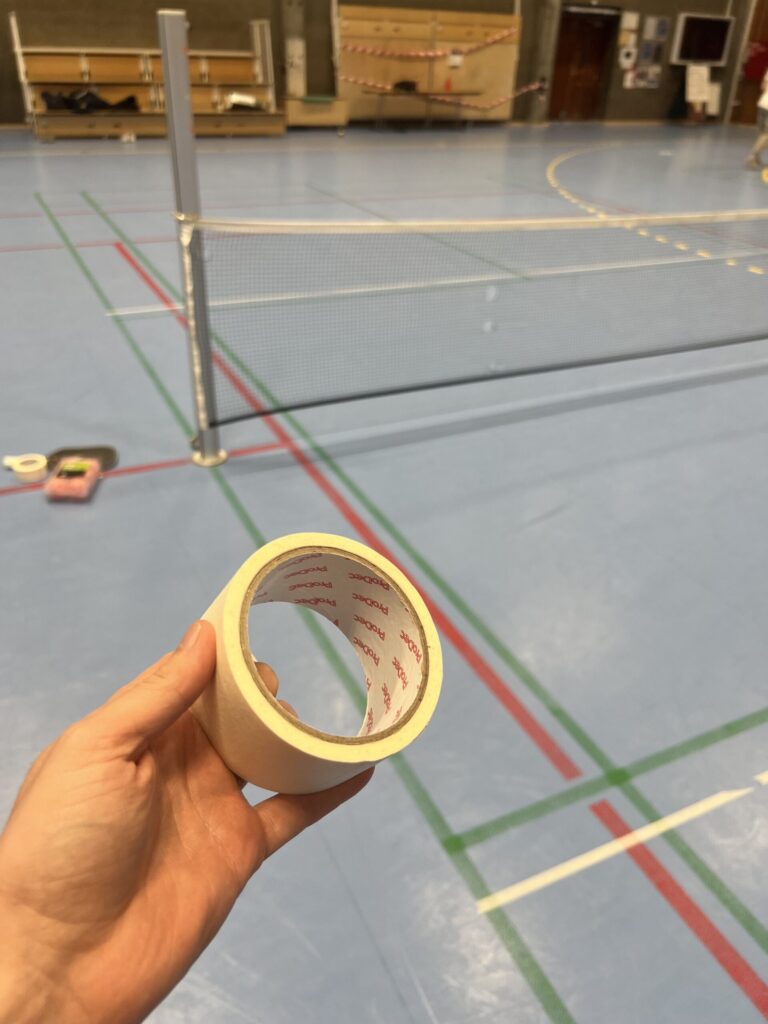
Franklin X-40 Review: My 40-Hour Test of a 36-Pack
I bought a 36-pack of optic yellow Franklin X-40 pickleballs on July 6, 2026 for €110, and I have now used them for roughly 40 hours of practice and play. Most of that use has been solo serve practice, but I have also played singles and doubles with them at club level, roughly around a 4.0 standard. I hit hard, especially on overheads and smashes, so these balls have not had an easy test.
Need help choosing or verifying a ball? Use the Pickleball Ball Selector & Approved Ball Database to match conditions, search approved models and find our hands-on tested picks.
Buying guide: See how the X-40 compares with my other tested balls in my best pickleball balls guide.
My short version: the Franklin X-40 is fast, crisp, consistent and extremely familiar-feeling to me. After about three months and around 40 hours of use across asphalt, concrete and indoor courts, I have not retired a single ball from my 36-pack. All 36 still look usable, none has cracked, and none arrived obviously warped.
Affiliate disclosure: As an Amazon Associate I earn from qualifying purchases. If you buy through a paid Amazon link on this page, The Pickleball Wise may earn a commission at no extra cost to you. I bought this 36-pack myself at full price and received no free product, discount or compensation for this review.
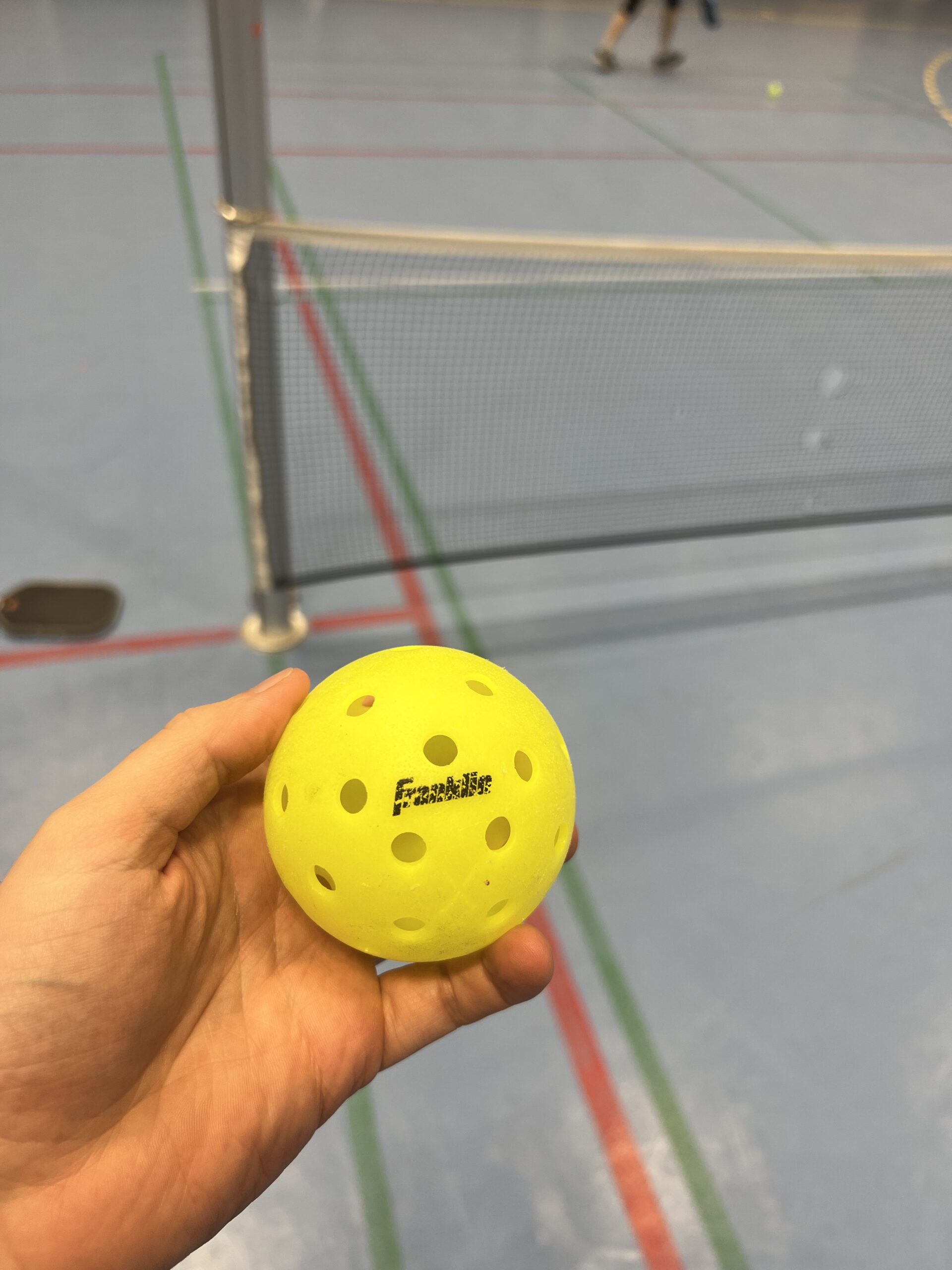
Franklin X-40 Outdoor Pickleballs — 4.6/5
Quick verdict: The X-40 is one of my favorite all-round pickleballs because it is fast, crisp, predictable and familiar. My 36-pack has held up very well so far, with no cracks or retired balls after roughly 40 hours of hard use.
Best for: players who want a widely recognized competition-style outdoor ball, clubs, training groups, tournament preparation and anyone who prefers a faster, firmer feel.
Skip if: you strongly prefer softer/slower indoor balls or you mainly care about finding the absolute longest-lasting ball regardless of what is commonly used in competition.
- Fast, lively pace that I find more fun to play with
- Crisp, solid paddle contact
- Consistent bounce and stable flight in my use
- Good spin response on serves, drives and slices
- All 36 balls in my pack feel very consistent
- No cracks or retired balls after roughly 40 hours so far
- Optic yellow is easy to track in most environments
- 36-pack works very well for serve practice and club use
- Official outdoor ball of the US Open Pickleball Championships
- The bucket handle/lid mechanism is frustratingly difficult to open
- I have seen other players’ X-40s crack, even though mine have not yet
- Bulk pricing is decent, but I would still welcome a lower per-ball price
- Optic yellow can blend into certain yellow/green backgrounds
- Wind still affects the ball outdoors, as you would expect with pickleball
Bottom line
I rate the Franklin X-40 4.6/5. It has the combination I care about most: fast pace, crisp feel, predictable flight and enough durability that I still have all 36 balls in service after around 40 hours. The awkward storage bucket is the clearest design flaw.
How I tested the Franklin X-40
- Purchased: July 6, 2026
- Price paid: €110
- Pack: 36 optic yellow X-40 balls
- Use so far: roughly 40 hours
- Main use: solo serve practice
- Also used for: singles and doubles
- Playing level: club level, roughly around 4.0 by my estimate
- Playing style: aggressive; I hit hard and use a lot of smashes because of my badminton background
- Surfaces: asphalt, concrete and several indoor court surfaces
- Balls retired: 0 of 36
- Cracked balls: 0 of 36 in my own pack
- Warped from new: none that I noticed
Franklin specifies the X-40 at 26 g, 74 mm diameter and 40 precision-drilled holes, with a one-piece polyethylene construction. Franklin also identifies the X-40 as USA Pickleball approved for outdoor tournament play and as the official outdoor ball of the US Open Pickleball Championships.
See Franklin’s official X-40 specifications →
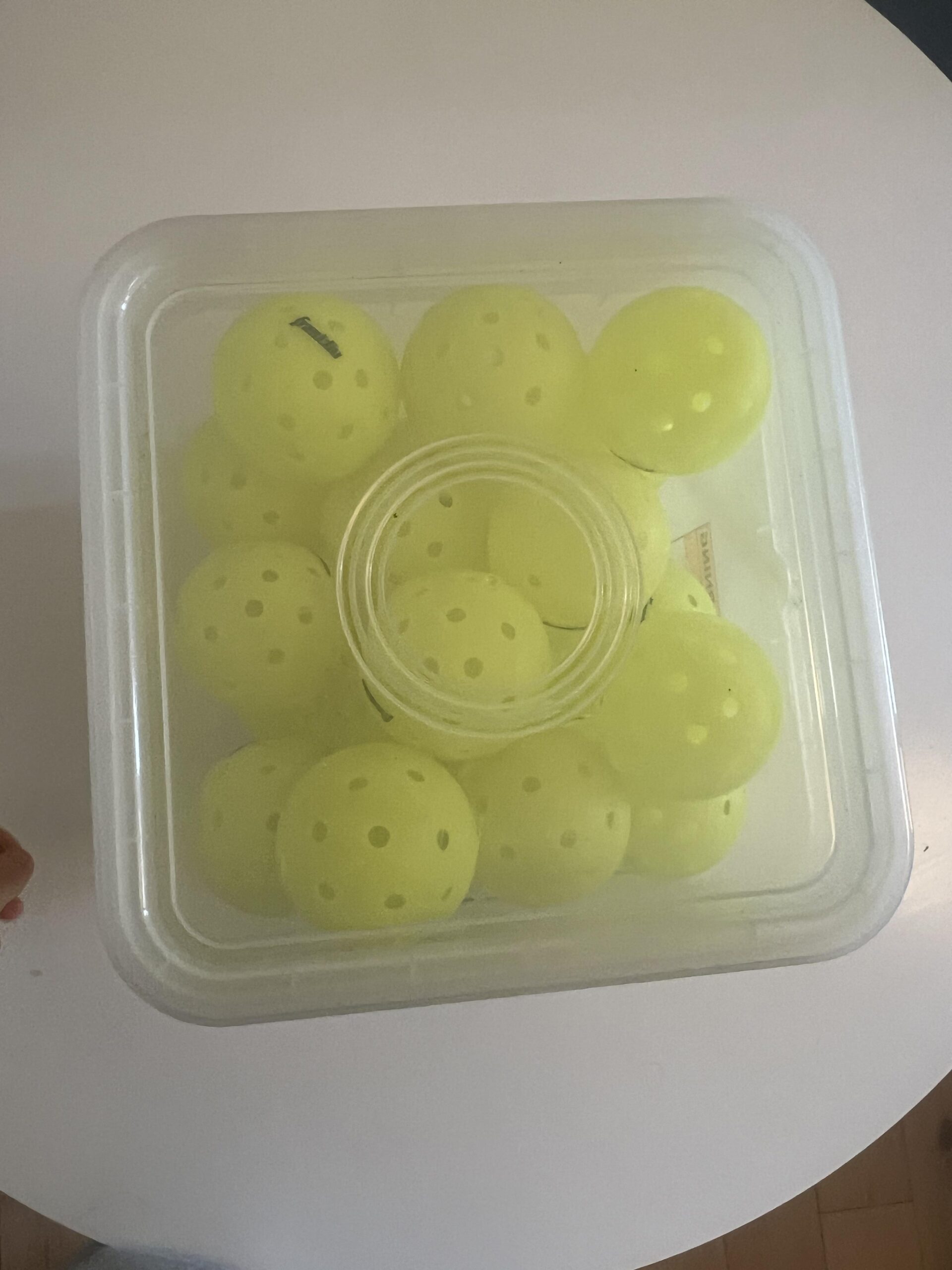
Fast, lively and more fun for my style
The first thing I notice with the X-40 is the pace. I consider it a fast-feeling ball, especially indoors when compared with traditional 26-hole indoor balls.
I like that. Faster rallies feel more exciting to me, and I enjoy the combination of speed and bounce. The ball feels lively without feeling unpredictable.
Compared with the pink AMOSWIZ indoor balls I tested, the X-40 is dramatically faster and more responsive. That is one of the biggest reasons I prefer it.
Compared with the Selkirk Pro S1, the overall playing feel is much closer. Both feel like proper fast competitive balls to me rather than soft recreational indoor balls.
Bounce is high, firm and consistent
The X-40 has a relatively firm feel and a fairly lively bounce in my experience. I would describe it as higher-bouncing than softer indoor balls, but not erratic.
Across my own 36-pack, bounce consistency has been very good. I have not had individual balls that clearly behave differently from the rest.
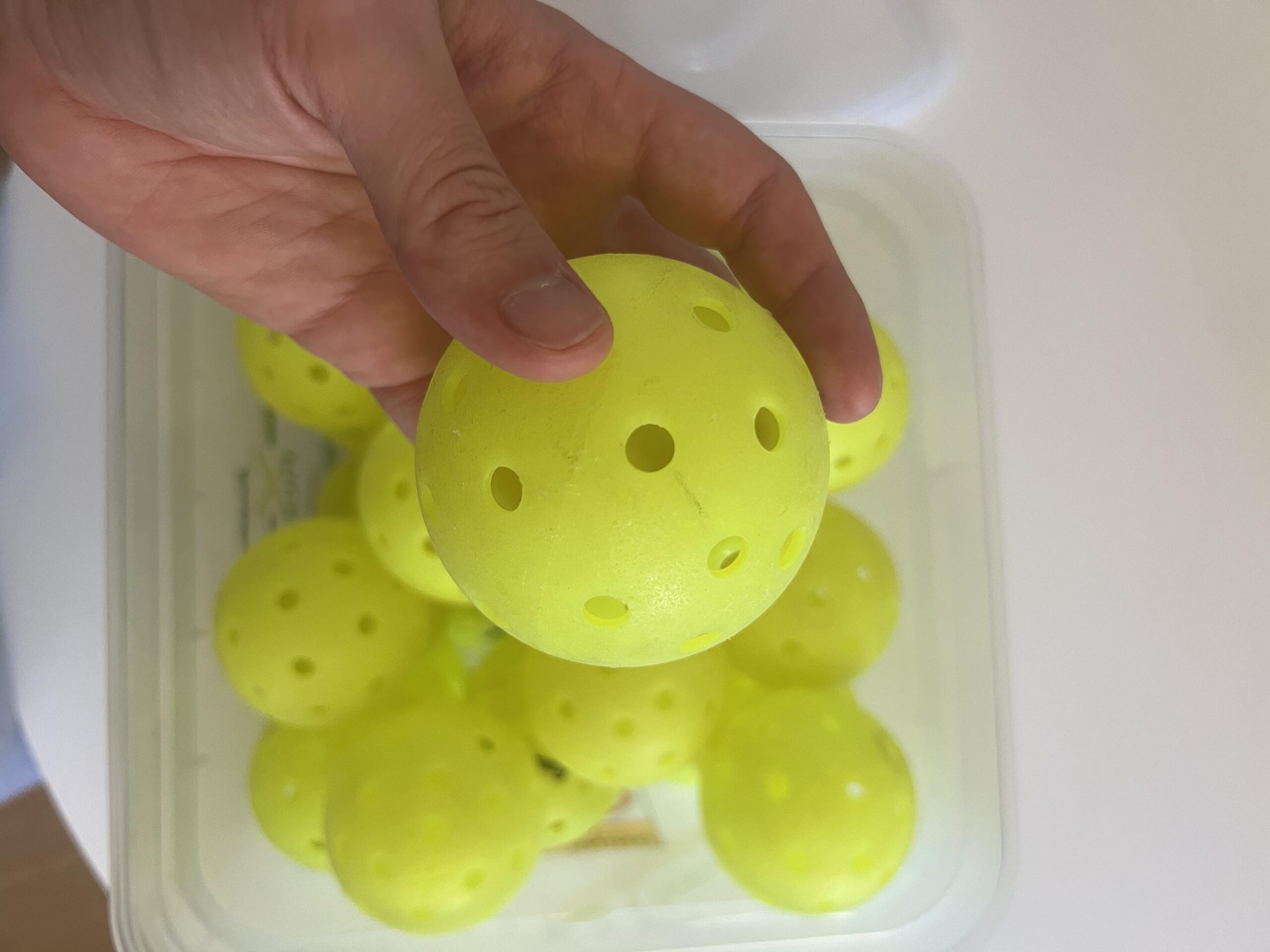
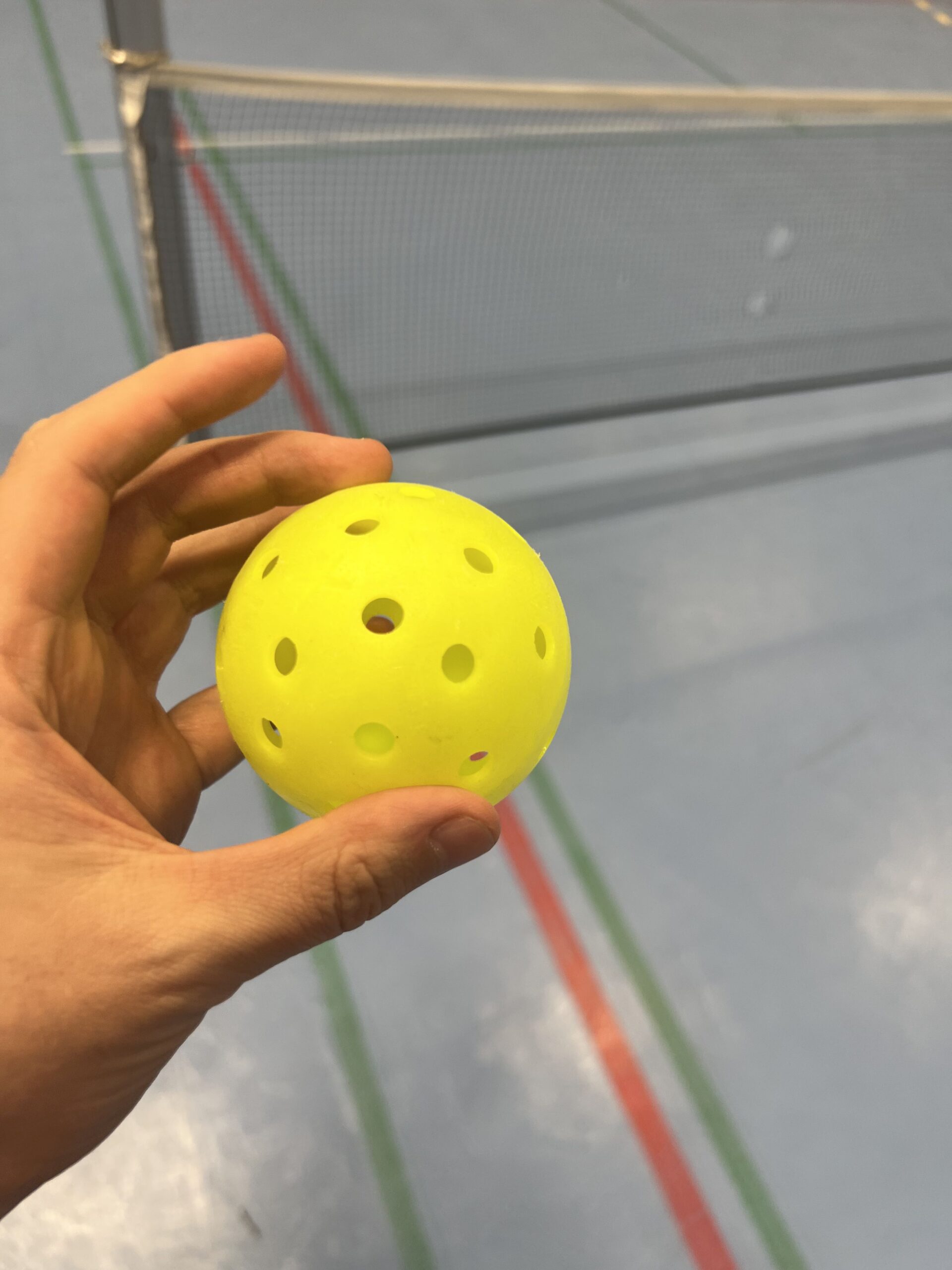
Other players in my club have occasionally identified X-40s that seemed slightly oval, but I have rarely seen that, and I have not found a visibly out-of-round ball in my own pack so far.
Flight is stable, even when I hit hard
I hit a lot of hard serves, drives and overheads. I have not noticed meaningful wobble from my X-40s.
Even on aggressive shots, the flight feels predictable. That matters to me because a practice ball is much less useful if it starts teaching you to compensate for strange movement that would not happen with a fresh match ball.
The 40-hole pattern is designed for outdoor play, and in my experience it behaves well both outdoors and indoors. Wind can still move it around outside, but I have not found the X-40 unusually vulnerable compared with other outdoor pickleballs I have used.
Crisp, solid paddle contact
I like the feel off the paddle a lot. The best word I can use is crisp. Contact feels relatively firm and solid rather than soft, mushy or dead.
That helps on fast exchanges because I get clear feedback from the paddle face. It also suits the aggressive style I naturally gravitate toward.
Spin response is good
I have had no problem generating topspin, slice or side spin with the X-40. I would not claim from my own use that it produces dramatically more spin than every competitor, because I have not measured that in a controlled test.
What I can say is that spin response feels natural and predictable. I never feel as if the ball is limiting what I want to do with the paddle.
I also like it for dinking and resets
Even though I prefer a fast ball, I do not find the X-40 too lively around the kitchen.
Dinks, drops and resets still feel controllable to me. The ball does not feel as if it shoots unpredictably off the paddle, and I can still play a soft game when I want to.
That balance is one reason I think the X-40 works so well as an all-round ball: it rewards aggressive play without making the kitchen game feel chaotic.
Visibility is very good — with one obvious exception
Optic yellow is easy for me to see in most places. Outdoors, indoors and at club sessions, I usually track the ball without a problem.
The exception is when the visual background contains a similar yellow or green tone. In that situation, the ball can disappear more than I would like. The same problem can happen indoors if walls, curtains or court markings are close to the same color.
If your regular venue has a difficult background, buying a different X-40 color could make more sense than simply choosing optic yellow because it is the common option.
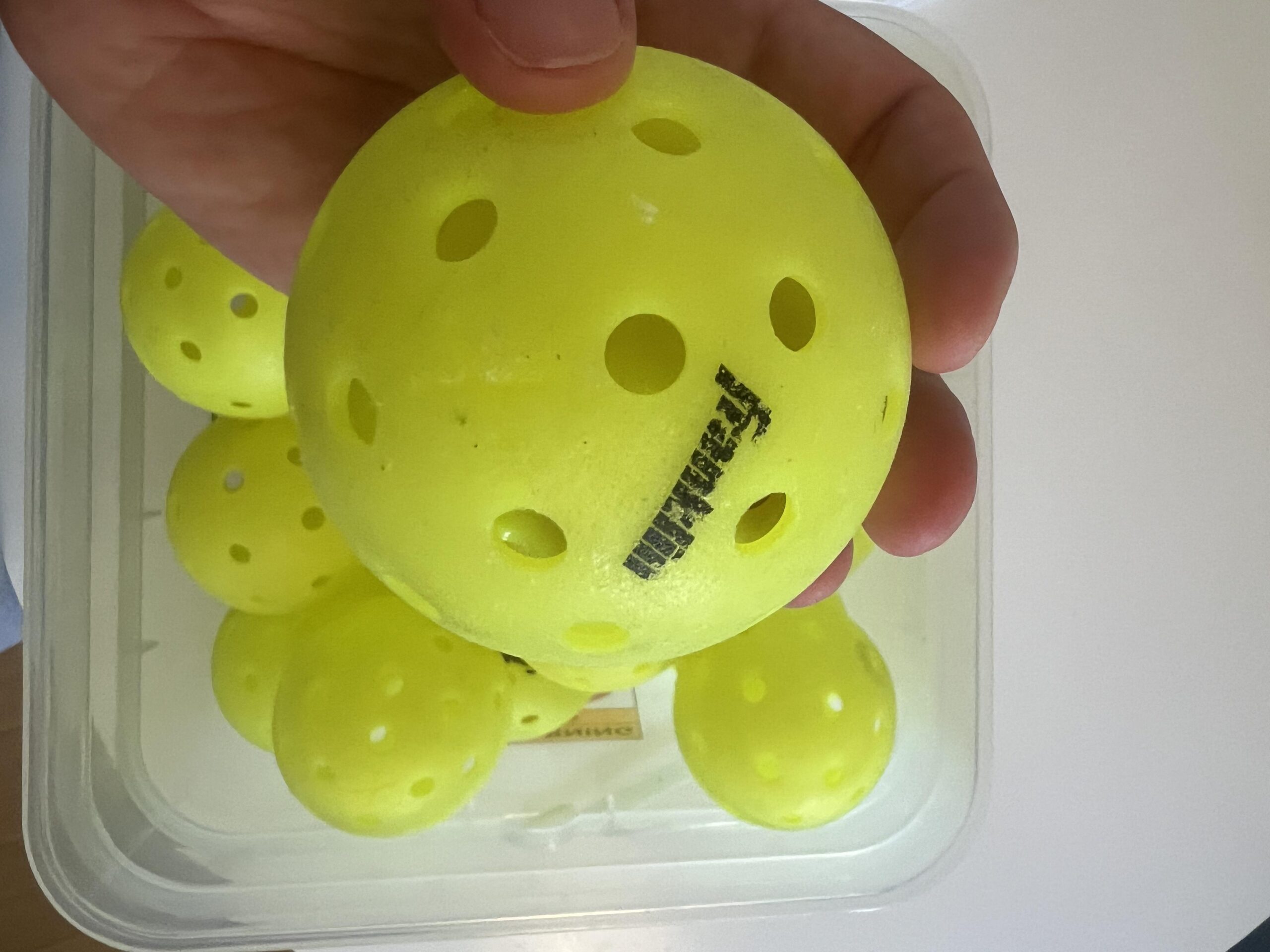
My 36-pack has been impressively durable so far
This is one of the strongest results from my test.
After roughly 40 hours of use, I have not thrown away a single ball from the 36-pack. None of my own balls has cracked, and none looks unusably oval or distorted.
They show normal cosmetic wear from asphalt, concrete and indoor courts, but that is very different from structural failure.
But I have seen other X-40s crack
I do not want my own zero-crack result to imply that X-40s never fail.
I have seen X-40s used by other club players develop cracks. That is one reason I am not giving durability a perfect score despite my own pack performing extremely well.
My current impression is that the Selkirk Pro S1 may have an edge in crack resistance, because I have not yet seen the same kind of cracking with the Pro S1s around me. But that is still an observation rather than a controlled durability test, and I would not present it as proven.
Franklin X-40 vs Selkirk Pro S1
| Area | Franklin X-40 | Selkirk Pro S1 |
|---|---|---|
| Pace | Fast | Fast; broadly similar in my experience |
| Feel | Crisp and solid | Also firm and competition-oriented |
| Flight | Stable in my use | Stable in my use |
| Durability | Excellent in my own pack, but I have seen other X-40s crack | My early impression is that it may resist cracking better |
| Familiarity | My preference because I encounter it so often | Also a very good ball |
| My current choice | X-40 | Strong alternative |
I would not claim the X-40 is objectively superior to the Pro S1. If the Pro S1 ultimately lasts longer, it could offer better value per ball.
For me, however, familiarity matters. If the X-40 is the ball I am most likely to encounter in competitive or club settings, I would rather practice with that same feel than constantly switch between ball types.
Is the Franklin X-40 really the tournament standard in Europe?
I have personally been told by an experienced national-team player and a club leader that the X-40 is widely used in European competition, including indoors despite technically being an outdoor-design ball.
I could not verify a single Europe-wide rule or official standard saying that European tournaments universally use the Franklin X-40. Tournament organizers can choose different approved balls, and the selected ball can vary by event.
What I can verify is that Franklin currently lists the X-40 as USA Pickleball approved for outdoor tournament play and as the official outdoor ball of the US Open Pickleball Championships. Franklin also states that the X-40 is used at hundreds of tournaments annually.
So my practical advice is simple: if you are preparing for a specific tournament, check that event’s published ball and practice with the exact model whenever possible.
See Franklin’s current pickleball lineup →
Why I bought the 36-pack
The 36-pack makes particular sense for the way I train.
I do a lot of solo serve practice, and having 36 identical balls lets me hit long repetitions without constantly walking across the court to collect them.
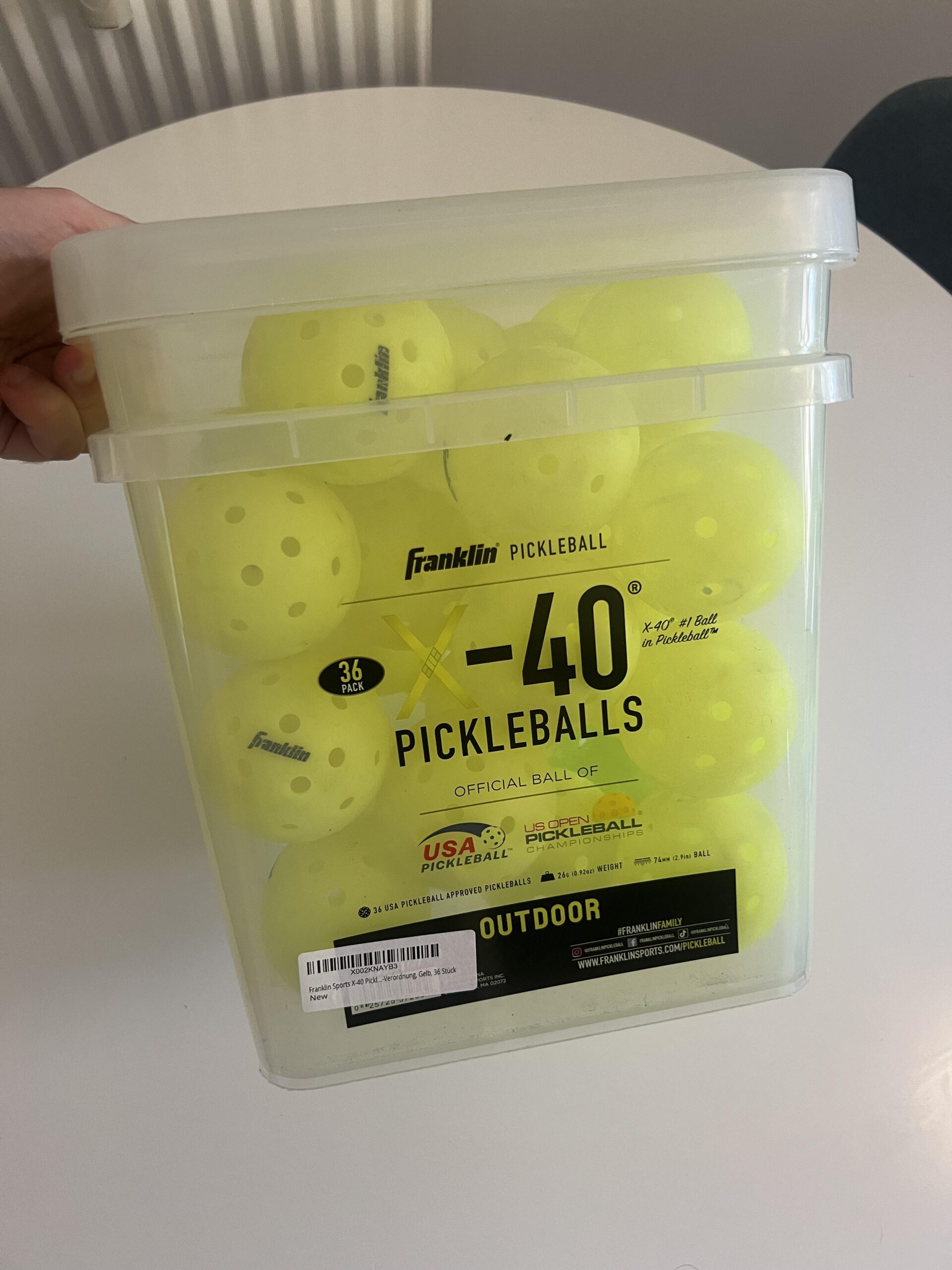
I also use a pickleball retriever for solo practice. One unexpectedly useful detail is that I can place the retriever on top of the X-40 bucket, which raises the balls to a more comfortable height and means I do not have to bend down as much between serves.
The bucket is useful — but the handle is badly designed
I like having the bucket. It keeps all 36 balls together, makes transport easy and doubles as part of my serve-practice setup.
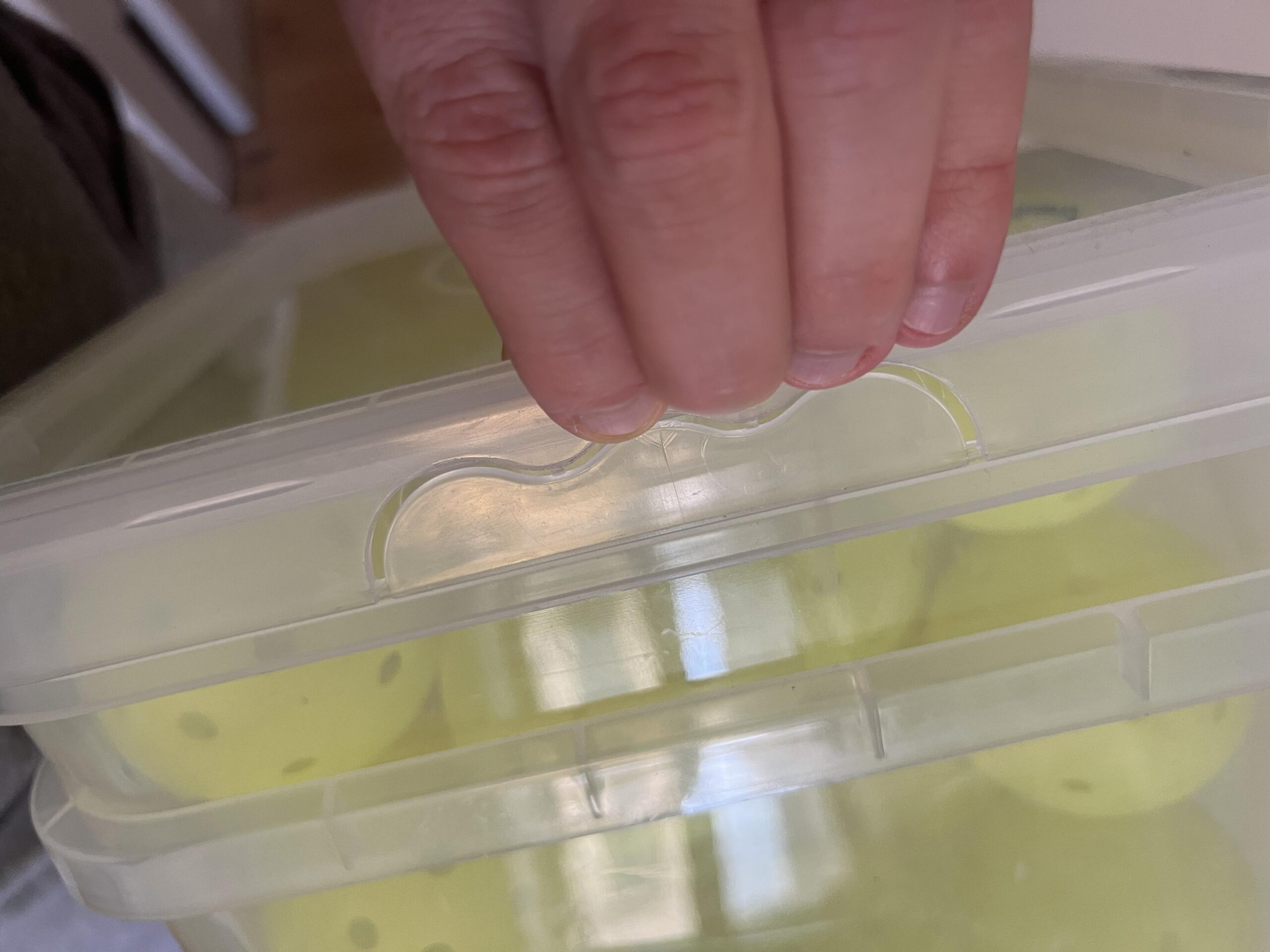
Unfortunately, the handle/lid mechanism is easily the most annoying thing about the entire purchase.
It is extremely difficult to open. I regularly have to use much more force than I expect, and getting into the bucket can take longer than it should. For a container designed to be opened and closed repeatedly at a court, I think this is poor usability.
What I paid and value for money
I paid €110 for 36 balls, which works out to about €3.06 per ball.
I consider that good enough value because none of mine has needed to be replaced yet. The economics become much better when buying in bulk than when purchasing only a few balls at a time.
I would obviously prefer an even lower price, but if I can get dozens of hours from each ball and practice with the same model I want to compete with, I am comfortable paying a little more than I would for a generic recreational ball.
Check the current Franklin X-40 price on Amazon (paid link) →
Who should buy the Franklin X-40?
I think the X-40 makes sense for:
- club players who want a familiar competitive-style ball;
- players preparing for events that specify the X-40;
- serve practice and ball-machine-style repetition where a bulk pack is useful;
- players who enjoy a faster, firmer ball;
- clubs that want a recognizable ball most players already know;
- casual players who simply want a high-quality outdoor ball.
I would consider another ball if:
- your regular tournament uses something else;
- you specifically want a softer or slower indoor ball;
- your main priority is maximum crack resistance and another ball proves more durable in your conditions;
- optic yellow is difficult to see against the background at your venue.
Why I rate the Franklin X-40 4.6/5
My overall rating is 4.6/5. This is an editorial score based on my own experience rather than a laboratory measurement.
This score follows The Pickleball Wise’s published rating method: category-relevant criteria total 100%, each criterion is scored from 1.0 to 5.0 from the documented first-hand evidence, and the weighted result is rounded to one decimal place.
| Criterion | Weight | Score | Why |
|---|---|---|---|
| Flight & consistency | 20% | 4.9/5 | Stable flight, consistent bounce and no meaningful ball-to-ball differences in my 36-pack. |
| Feel & playability | 20% | 4.8/5 | Fast, crisp, solid and fun for my aggressive playing style. |
| Durability | 20% | 4.7/5 | 0 of 36 retired after ~40 hours, although I have seen other players’ X-40s crack. |
| Spin & control | 10% | 4.7/5 | Good spin response and still controllable for dinks, drops and resets. |
| Visibility | 10% | 4.4/5 | Excellent in most environments, though optic yellow can blend into similar backgrounds. |
| Value | 10% | 4.4/5 | Bulk pricing works well when durability is this good. |
| Packaging / bucket | 10% | 3.7/5 | The bucket is useful, but the handle/lid mechanism is unnecessarily difficult to open. |
| Weighted rating | 4.6/5 | Rounded to one decimal place. | |
My final verdict after about 40 hours
The Franklin X-40 is currently the ball I would choose again.
I like its speed, crisp paddle feel, bounce and stable flight. The most important durability result is also simple: after roughly 40 hours, I still have all 36 balls and none of my own has cracked.
The Selkirk Pro S1 may eventually prove more durable, and I am open to changing my view as I put more hours on both. But right now, the X-40 gives me something I value beyond raw durability: a familiar playing feel that I encounter frequently in serious club play and competition-oriented settings.
The awkward bucket handle is genuinely annoying, but it is not enough to outweigh how much I like the actual ball.
Frequently asked questions
Is the Franklin X-40 fast?
Yes, in my experience. I consider it a fast, lively ball, especially compared with softer 26-hole indoor balls.
Does the Franklin X-40 crack easily?
None of my own 36 balls has cracked after roughly 40 hours, but I have seen X-40s used by other players develop cracks. Durability can vary with temperature, surface, playing style and total use.
Is the Franklin X-40 good indoors?
I enjoy using it indoors even though Franklin markets it as an outdoor ball. It feels fast indoors, which I personally like. Whether it makes sense for your group depends on the ball your club or tournament actually uses.
Franklin X-40 or Selkirk Pro S1?
I currently choose the X-40 because I like the familiar feel and encounter it often. My early impression is that the Selkirk Pro S1 may have an advantage in crack resistance, but I have not run a controlled long-term comparison.
Are Franklin X-40 balls USA Pickleball approved?
Yes. Franklin currently identifies the X-40 as USA Pickleball approved for outdoor tournament play.
What size is the Franklin X-40?
Franklin lists the X-40 at 74 mm diameter and 26 g, with 40 precision-drilled holes.
Review methodology and sources
This review is based primarily on my own purchase, original photos and roughly 40 hours of use with a 36-pack of optic yellow Franklin X-40 balls. My first-hand claims cover pace, feel, bounce, flight, spin, visibility, early durability, consistency, packaging and comparison with balls I have personally used.
Published specifications and official competition claims were cross-checked against Franklin Sports’ official X-40 product page and Franklin’s current pickleball lineup. I do not claim that the X-40 is the universal tournament ball in Europe because I could not verify a single Europe-wide standard.

Jonathan Grøn is a pickleball player and racket-sports enthusiast who focuses on practical doubles strategy, rules, skills, and training. He combines regular on-court experience with research from official rules, coaching resources, and other authoritative sources to create clear, useful pickleball guides.