Best Pickleball Shoes (2026): 4 We Tested
Best pickleball shoes in 2026, based on four real-world court-shoe tests: for long indoor sessions, my top choice is the Skechers Viper Court Pro 2.0 because cushioning and comfort matter after hours of play. For quick-feeling indoor grip and footwork, I prefer the ASICS GEL-ROCKET 12. For budget indoor pickleball, the adidas Speedcourt makes more sense than its modest price suggests. My well-used K-Swiss Express Light 3 HB Clay has strong stability but no longer earns a top award after the inner lining began tearing.
These are three situation-specific recommendations from four actual court-shoe reviews, not a definitive ranking of every shoe on the market. None of the footwear I have properly tested supports an evidence-based “best outdoor hardcourt shoe” award yet. The Brooks Ghost 17 GTX is a fifth personally used shoe, but it is a running shoe that I would not recommend as a primary pickleball court shoe.
Affiliate disclosure: As an Amazon Associate, I earn from qualifying purchases. This page contains paid links to Amazon; The Pickleball Wise may earn a commission at no additional cost to you. Recommendations and published first-hand ratings are not influenced by commissions.
Quick picks: which pickleball shoe should you buy?
See the Skechers test ↓
See the ASICS test ↓
See the adidas test ↓
At a glance: four court shoes actually used
| Shoe / outcome | Published review score | Documented play | What the firsthand test suggests | Main limitation | Historical amount paid |
|---|---|---|---|---|---|
| Skechers Viper Court Pro 2.0 Best indoor comfort |
4.3/5 | ~30–40 hours, Jonathan, indoors | Very cushioned, good grip and long-session comfort | EU 44 Wide was too long, with slight heel slip; outdoor untested | €102.50 |
| ASICS GEL-ROCKET 12 Best grip and agile feel indoors |
4.3/5 | ~8 hours, Jonathan, indoor JOOLA floor | Very secure stops, side steps and court connection | Firmer cushioning; too little use to rate durability | US $79.95 |
| adidas Speedcourt Indoor Best budget indoor |
4.4/5 | ~45–50 estimated hours, girlfriend, indoors | Good grip, stability, comfort and value | Needed EU 40 versus usual ~38.5–39, yet outer toes still slightly tight | €38.50 |
| K-Swiss Express Light 3 HB Clay Tested, no top award |
3.9/5 | ~160–170 hours, Jonathan, mixed courts | Strong lateral stability and generally healthy outsole | Holes in interior lining, heavy/sweaty feel, clay-specific tread | About €80 |
Important comparison caveat: These are not four identical pairs tested in one lab, on the same day, by the same person. In particular, adidas was worn by my girlfriend, and ASICS has much less usage evidence than K-Swiss. The award categories emphasize what each purchase has actually demonstrated, while the published ratings remain specific to their own tests.
Our three recommended court shoes
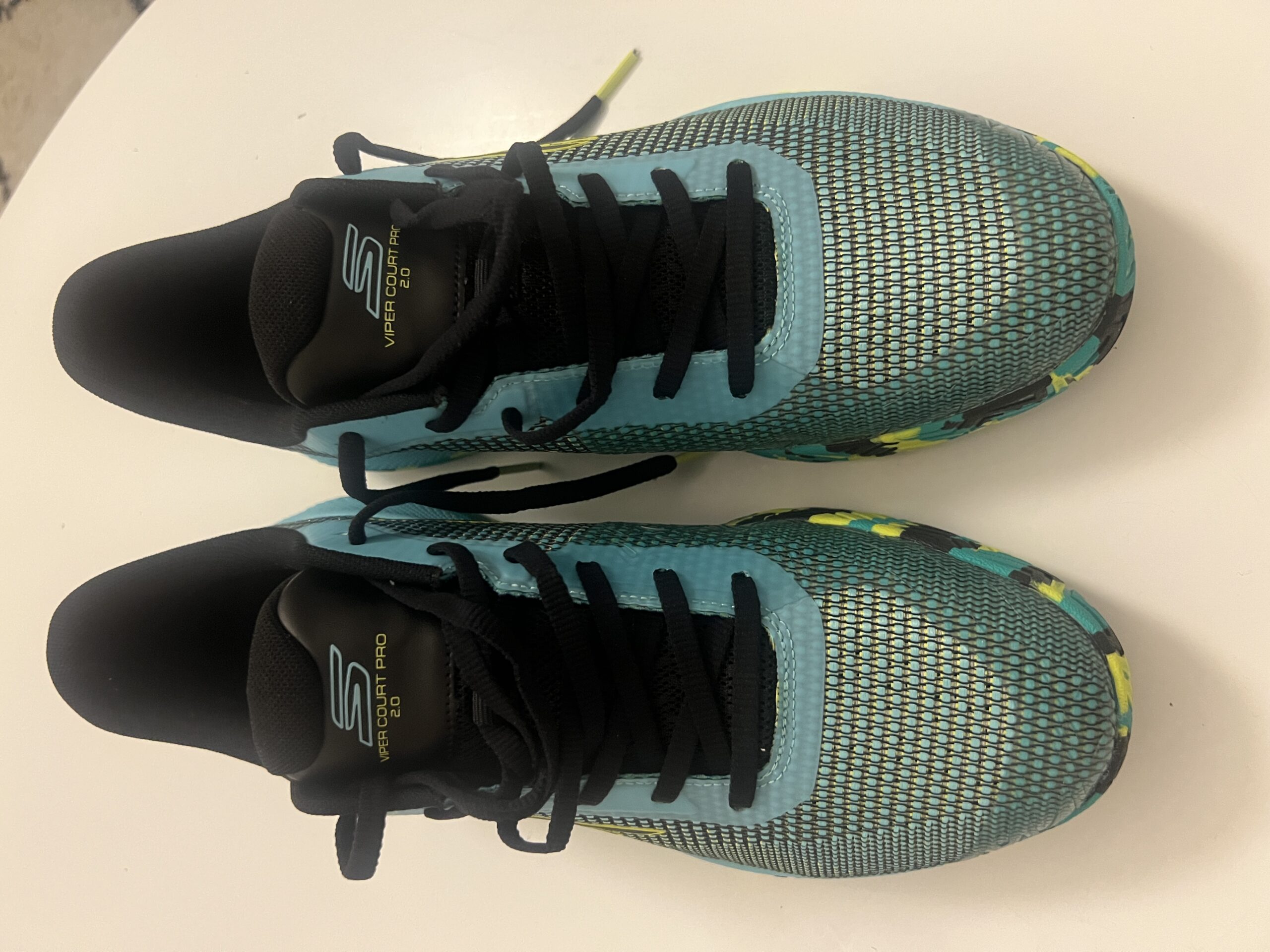
Skechers Viper Court Pro 2.0 — 4.3/5
Best for: indoor players who put long-session cushioning, comfortable arch support and decent court grip first.
Skip if: you want the lowest, fastest-feeling court shoe or your heel moves around in a roomy fit.
Why this result: This is my current go-to indoors. Among my own pairs it feels the most comfortable on my feet, with softer cushioning than ASICS and a less heavy, less sweaty sensation than K-Swiss.
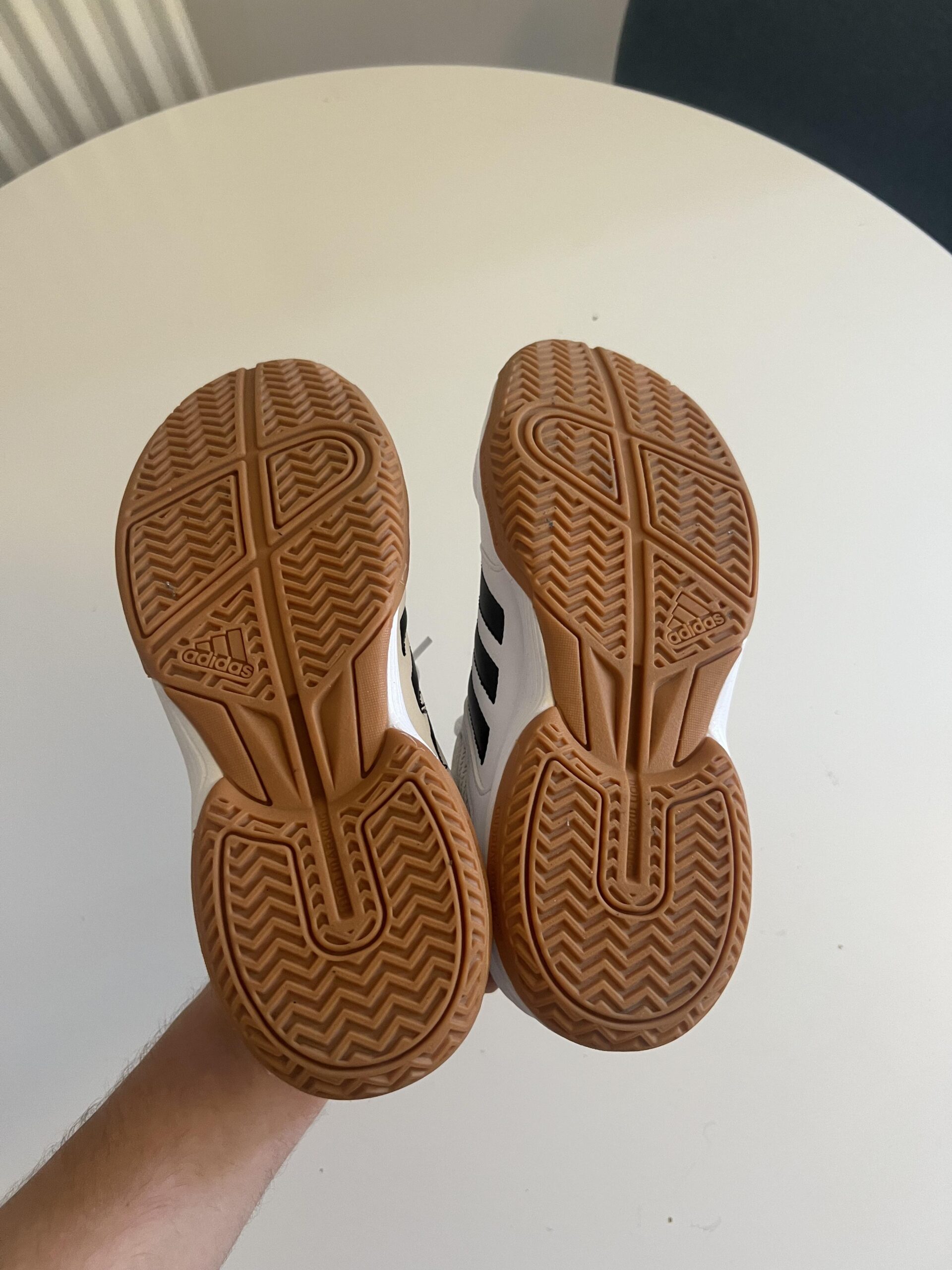
My EU 44 Wide felt right across the forefoot but too long at the back, with a little heel movement. I would personally try EU 43.5 or 43 before buying again; that is not a general size-down rule. Skechers lists Arch Fit support, ULTRA GO cushioning and Goodyear Gold rubber; the comfort and grip observations are mine, not proof of a medical benefit.
- Most comfortable of my personally tested court shoes for long play
- Good indoor grip and predictable lateral movement
- Supportive, cushioned feel and adequate ventilation
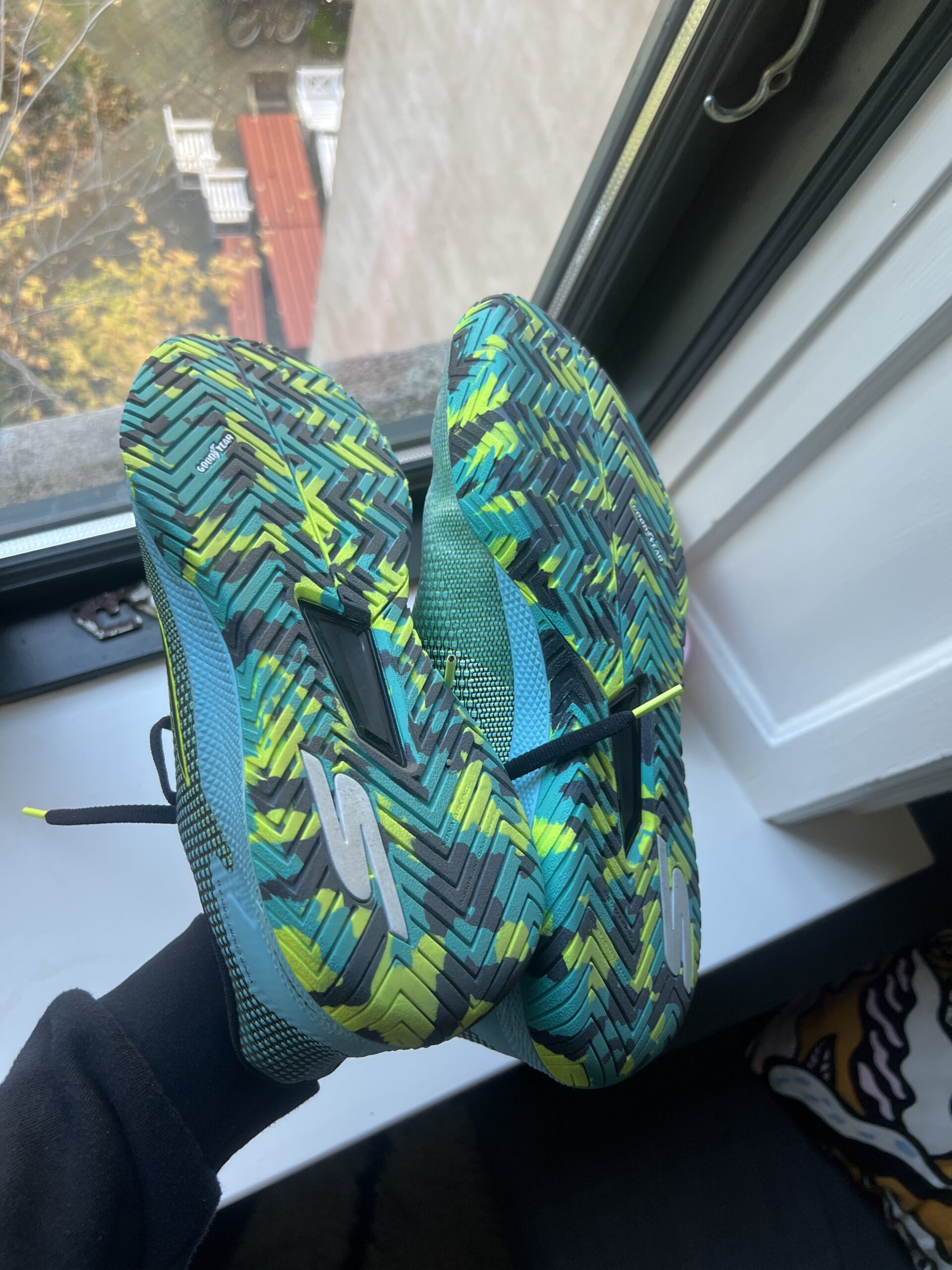
- Original outsole photos show little obvious wear at ~30–40 hours
- Feels lighter and more responsive than my older K-Swiss
- EU 44 Wide was a little long and had slight heel slip
- Feels higher and less connected to the floor than ASICS
- No outdoor grip/durability test; long-term lifetime still unknown
The buying decision
Choose the Skechers if comfort is your priority, as long as the heel holds securely in the particular size and width you try. I would not buy a loose-heeled pair merely because the cushioning feels great.
Firsthand proof: these are my actual outsoles after around 30–40 hours, not stock catalog shots. The tread still looked almost new at that point, but this is early wear evidence only.
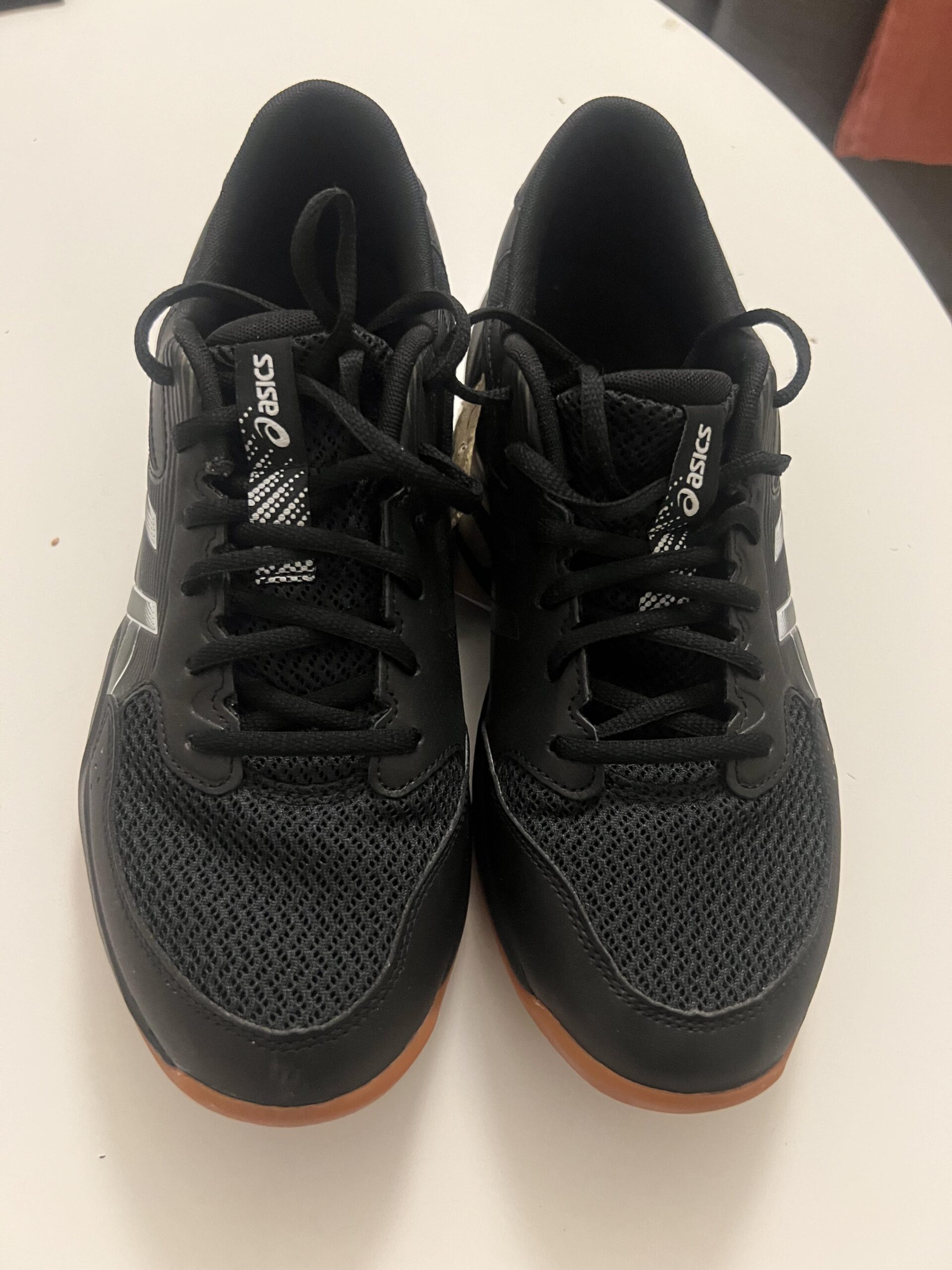
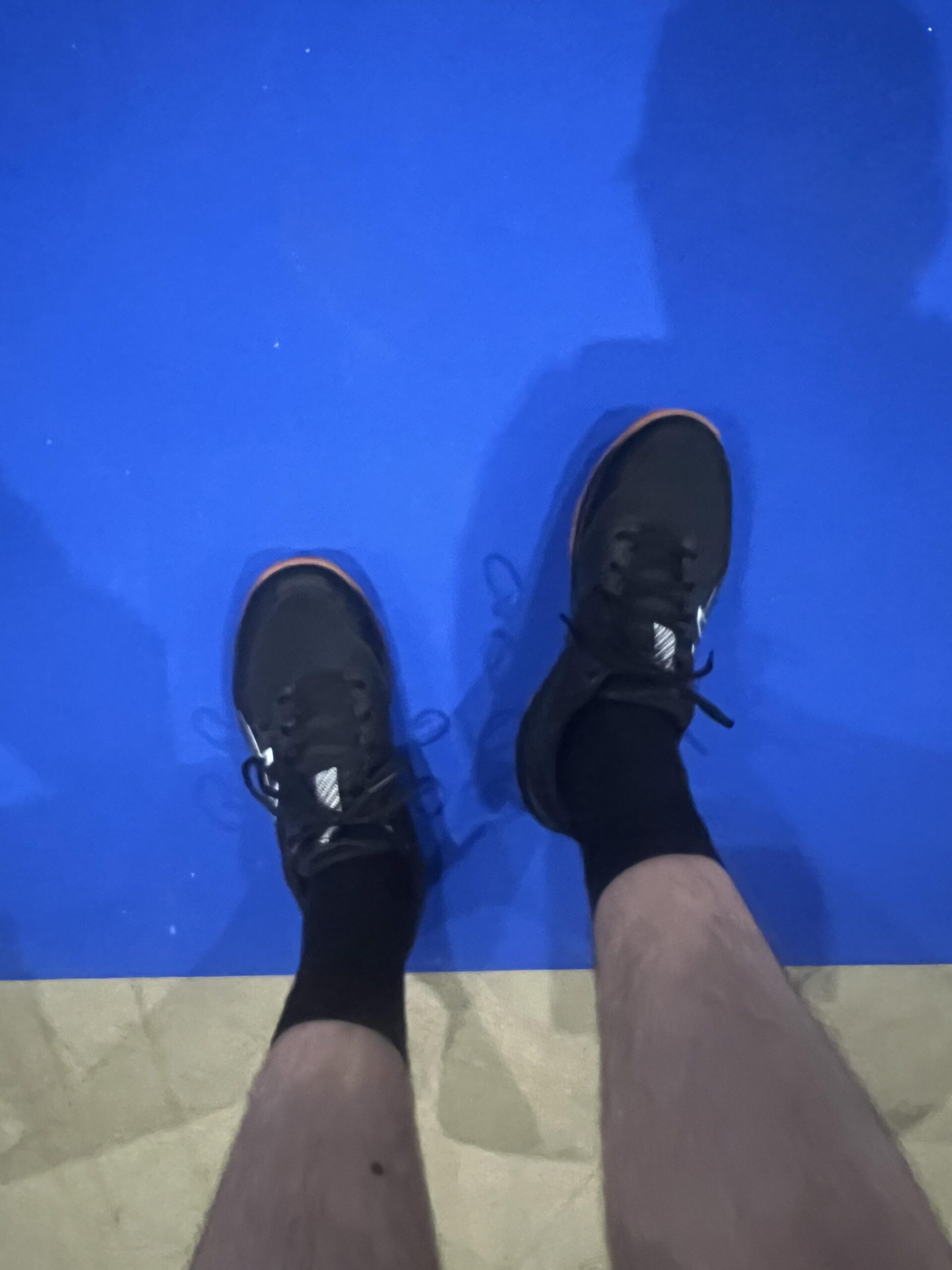
ASICS GEL-ROCKET 12 — 4.3/5
Best for: indoor players who value sharp-feeling stops, grip, lateral stability and a lower, more direct court sensation.
Skip if: you want plush underfoot comfort, already struggle with sore feet after long play, or need proven outdoor durability.
Why this result: This pair gives me the best indoor traction and the quickest-feeling court movement of my own shoes. I feel more planted when stopping and changing direction than I do in K-Swiss or Skechers.
The trade-off is clear: the ASICS feels firmer than Skechers, and my feet and toes can feel sore after longer play. It is a volleyball-oriented indoor court model, not a claim that the manufacturer made it specifically for pickleball. ASICS describes its supportive upper and TRUSSTIC midsole stability design. My perceived speed advantage has not been timed.
- Excellent grip on the tested JOOLA indoor surface
- Strong stopping and quick directional confidence
- Good lateral stability and court feel
- Comfortable overall fit with adequate ventilation
- Noticeably firmer cushioning than Skechers
- Occasional foot/toe soreness
- Only ~8 indoor hours; durability and outdoor behavior unknown
The buying decision
Choose ASICS when the priority is the best grip and quick-feeling movement I personally experienced on the tested indoor surface. Its 4.3/5 score matches Skechers, but the two solve different problems.
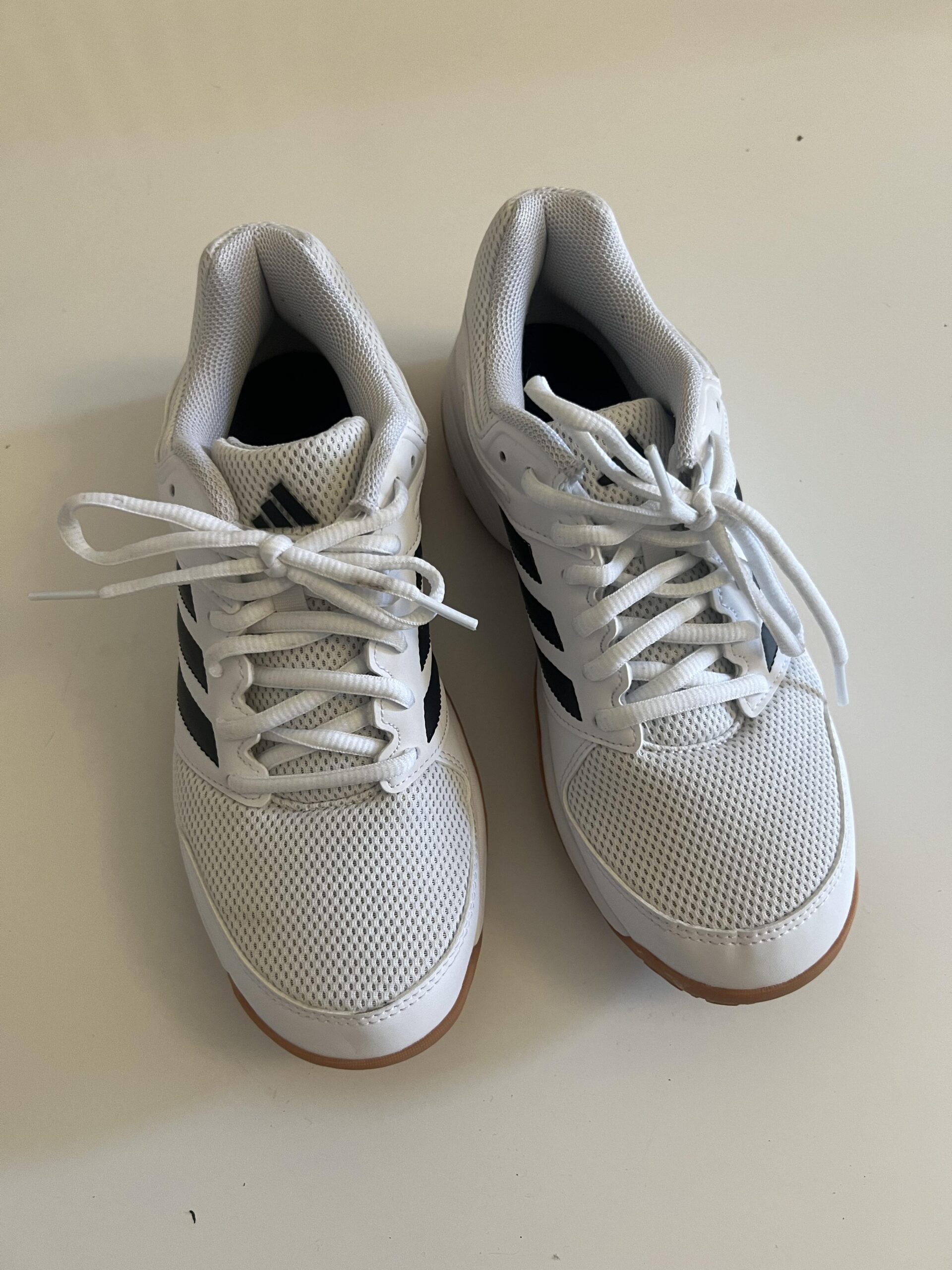
adidas Speedcourt Indoor — 4.4/5
Best for: beginners and intermediate indoor pickleball players who want proper court traction and lateral support at a modest purchase price.
Skip if: your toes need a wide or forgiving forefoot, or you cannot try different sizes / return an imperfect fit.
Why this result: This is our budget winner, not because of its number alone but because my girlfriend had good grip, comfort and stability during longer indoor sessions for €38.50 paid.
She normally wears about EU 38.5–39. EU 38 and EU 39 felt too small; EU 40 was better but still pressed slightly around the outer toes. She did not report problematic heel slipping. adidas calls Speedcourt a regular-fit indoor court shoe with a textile upper and rubber outsole; it is not marketed as a dedicated pickleball model. Her 4.4/5 is her published firsthand score, not a direct head-to-head rating against my men’s shoes.
- Strong indoor traction during her regular court sessions
- Good lateral confidence versus ordinary sneakers
- Light, responsive feel and comfortable cushioning
- Original photos show little visible wear at ~45–50 estimated hours
- €38.50 paid offered excellent value in her experience
- Sizing needed trial-and-error and a larger size
- Outer toe area remains a little tight even in EU 40
- Not tested for outdoors or as a premium tournament shoe
The buying decision
Choose adidas Speedcourt if you play indoors on comparable gym floors and want an affordable real court shoe. Buy for fit rather than copying our EU 40 outcome; the right size for her was not obvious from her usual shoe size.
The fourth court shoe we tested—but no longer a top pick
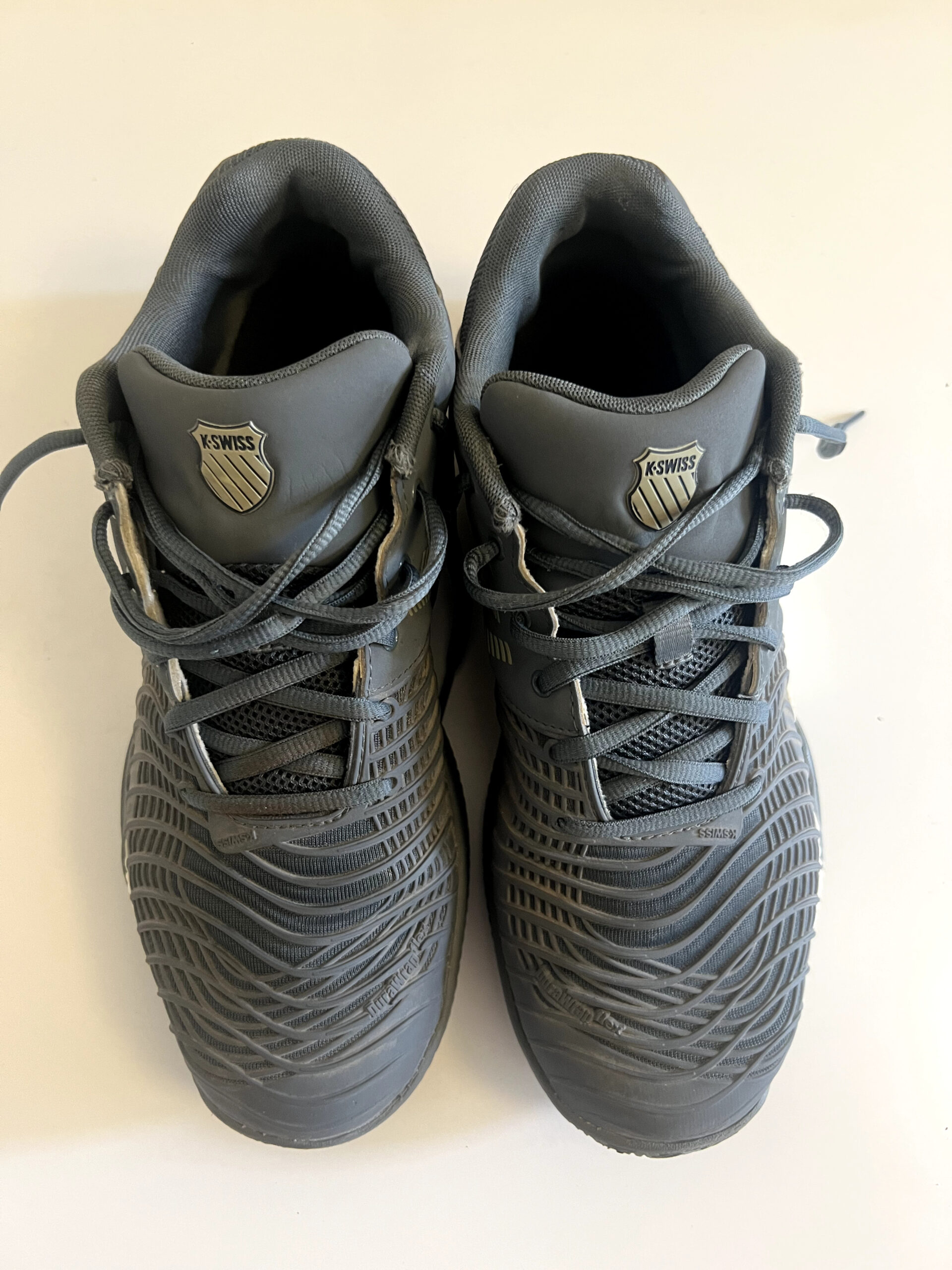
Unlike some current buying guides that recommend K-Swiss Express Light Pickleball, the specific pair I personally tested is the Express Light 3 HB Clay tennis model. They are different product variants. I cannot use the popularity, test results or retail reviews of the pickleball-specific version to erase my hands-on experience with the clay outsole. My dedicated long-term review was updated after around 160–170 hours.
K-Swiss Express Light 3 HB Clay — 3.9/5
Best for: a player who already owns this clay-oriented shoe and values its stable lateral support on suitable, dry surfaces.
Skip if: you primarily need optimized indoor grip, a lighter/cooler-feeling shoe, or the stronger long-term interior durability my tested pair failed to show.
Why this result: These were a major improvement over my running shoes for lateral security. But they now feel quite heavy and sweaty next to my newer pairs, and the inner textile lining has developed visible holes and fraying.
The outside upper and herringbone tread still look fairly good, but two owner photographs document torn fabric by the tongue/lace area. That is the inner side lining, not necessarily the removable insole. The photos were taken before the latest 160–170-hour total, so the exact hour when the fabric started failing is unknown. I also would not recommend play on wet patches, where my confidence in traction was poor.
- Strong lateral stability and true-to-size EU 44 fit
- Good dry outdoor traction in my use
- Herringbone outsole and outer upper have held up reasonably well
- Substantial firsthand evidence across mixed courts
- Documented holes and fraying in the inner side lining
- Heavy-feeling and warmer/sweatier than ASICS and Skechers
- Short/fraying laces and weak wet-patch confidence
- Clay-specific outsole is not the default choice for outdoor hardcourt or gym floors
The buying decision
Why it is here: A best-shoes guide should not hide a pair just because a long-term test uncovered inconvenient flaws. The revised 3.9/5 rating is honest evidence, but it does not earn a Best Overall, Best Indoor or Best Outdoor award. I would look at more suitable, properly fitted alternatives before choosing this exact HB Clay variant again.

What about the fifth pair: Brooks Ghost 17 GTX?
Tested but excluded from the recommended court-shoe picks: Brooks Ghost 17 GTX. I used these running shoes for roughly 30 hours of pickleball as well as everyday walking. They are very comfortable for walking and forward movement, but I felt much less stable side-to-side than in a proper court shoe. Despite the nice cushioning, I would not recommend them as a main pickleball match shoe. They are included as a category comparison, not a fifth court-shoe recommendation.
My buying criteria: what actually matters on a pickleball court?
- Court surface first. A gym-style indoor floor, an acrylic hardcourt and a clay tennis court are different environments. Choose outsole design for where you play, not for a label that says “pickleball.” My clay-specific K-Swiss was not the ideal single pair for all my pickleball sessions.
- Heel lockdown and fit. Toe room is useful, but not when the heel moves around. My Skechers Wide was comfortable across the front yet a little long at the heel; my girlfriend needed several tries to find an adidas size that was not too tight at the toes. Read the shoe-fit guide before copying anyone else’s size.
- Lateral support and stopping. I felt a huge improvement moving from Brooks running shoes to court-specific footwear. A shoe can be wonderfully cushioned for walking but insecure during lateral cuts. This is a practical stability consideration, not a guarantee of injury prevention.
- Traction and controlled pivots. The ASICS gripped best on my indoor surface; Skechers remained secure; the K-Swiss was less reassuring for indoor play and had poor grip on wet patches. No footwear makes a wet court safe.
- Cushioning versus connection to the floor. Skechers is more forgiving under my feet on long sessions, while ASICS feels closer to the playing surface and quicker during changes of direction. These are preferences, not measured performance changes.
- Weight, breathability and long-use wear. K-Swiss felt heavy and sweatier than my newer shoes, and its interior lining eventually tore. Check the internal fabric and heel collar as well as the tread. See how long pickleball shoes last.
- Price and value. The actual prices we paid were €38.50 (adidas), €102.50 (Skechers), about €80 (K-Swiss) and US $79.95 (ASICS). These are historical personal purchases in different currencies and sizes, not live offers. Check today’s price and exact variant before deciding.
Best indoor vs best outdoor pickleball shoes
For indoor courts like those we have used, I can make three useful recommendations: Skechers for cushioning, ASICS for the most planted and fast-feeling grip, and adidas for budget indoor play based on my girlfriend’s separate test. Which is best depends on your own fit and court surface.
For outdoor hardcourt pickleball, I am deliberately not naming a test winner yet. My K-Swiss HB Clay was used outdoors and felt stable on dry courts, but it has a clay-specific outsole and documented interior fabric wear; it does not become the “best outdoor hardcourt shoe” by default. I have not put the Skechers, ASICS or adidas through a comparable outdoor hardcourt wear test. See indoor vs outdoor shoe selection and pickleball shoes vs tennis shoes.
Head-to-head: which shoe do I actually choose?
| The decision | My actual preference | Why | Important qualification |
|---|---|---|---|
| Comfort in long indoor sessions | Skechers Viper Court Pro 2.0 | Noticeably softer underfoot and more comfortable than my other men’s court shoes | EU 44 Wide heel slipped slightly; better sizing needed |
| Grip and “quick feet” indoor sensation | ASICS GEL-ROCKET 12 | Feels lower, sharper and more planted on my indoor surface | No timed speed measurement; firm cushioning |
| Budget/value for a beginner indoors | adidas Speedcourt | Strong traction, stability and comfort at the €38.50 paid | Comes from my girlfriend’s separate firsthand play; toe fit imperfect |
| Longest tested pair, but least compelling new purchase | K-Swiss Express Light 3 HB Clay | Secure lateral stability and acceptable exterior wear after 160–170 hours | Torn inner lining and heavier/sweatier feel downgrade my verdict |
Common buying mistakes I learned from these five pairs
Fit and court surface matter as much as a star score. Before choosing among these real-world tests, read my pickleball shoe fit and sizing guide for toe and heel checks, and the indoor-versus-outdoor shoe guide for court-surface differences. This ranking reflects the exact pairs and playing conditions described above, not a universal guarantee of fit.
- Buying a wider size when the actual problem is length or heel hold: my Skechers forefoot fit was good but the shoe was still slightly long; size and width must be assessed separately.
- Assuming a bigger number on a rating card settles the choice: adidas 4.4/5 comes from a different wearer and price point. For me, Skechers comfort is more important than a 0.1 rating gap between different tests.
- Calling a shoe “durable” by looking only at the outsole: the K-Swiss outer rubber looked good, but the interior textile failed first.
- Using running shoes for repeated lateral play because they feel comfortable: my Brooks felt great for walking but lacked the side-to-side support of my court shoes.
- Assuming every K-Swiss Express Light is the same: my HB Clay tennis variant is not the same product as the dedicated Express Light pickleball shoe seen in many retailers’ best-of lists.
Frequently asked questions
What are the best pickleball shoes for indoor play?
Of the exact models tested on our site, I favor Skechers Viper Court Pro 2.0 for long-session comfort and ASICS GEL-ROCKET 12 for the quickest, most planted feeling on my JOOLA indoor floor. adidas Speedcourt was an excellent inexpensive indoor option for my girlfriend. Fit and floor material matter more than any universal ranking.
Are the Skechers Viper Court Pro 2.0 better than ASICS GEL-ROCKET 12?
They are more cushioned and comfortable for my feet, which is why I wear them most indoors. ASICS still feels quicker, lower and more secure in my court movements. I did not measure a speed difference. Skechers EU 44 Wide was a little long for me.
Can I use volleyball or indoor handball shoes for pickleball?
Sometimes. An indoor court shoe with suitable traction, lateral support and a secure fit can work well on flat sports-hall floors; my ASICS GEL-ROCKET 12 and my girlfriend’s adidas Speedcourt did. That does not automatically qualify them for abrasive outdoor hardcourts.
What is the best cheap pickleball shoe?
In our firsthand comparison, adidas Speedcourt delivered the strongest budget value at the historical purchase price of €38.50, but my girlfriend needed EU 40 despite normally wearing approximately 38.5–39, and the outer toe area remained somewhat tight. It was tested only indoors.
How long do pickleball shoes last?
There is no one-hour cutoff. My K-Swiss had generally healthy exterior rubber after an estimated 160–170 hours but torn interior lining. My Skechers looked almost new after only 30–40 indoor hours, too soon to forecast long-term life. Inspect tread, inner lining, support and fit, not just calendar age. Read the shoe lifespan and replacement guide.
What are the best pickleball shoes for outdoor hardcourt?
I cannot responsibly name a first-hand outdoor winner from this collection. I have mixed-surface experience in a clay-specific K-Swiss model and no comparable outdoor evidence for the other three court shoes. Our surface-specific shoe guide explains the criteria without pretending an indoor test proves outdoor performance.
Methodology, exact products and sources
Guide type: a first-hand-informed buying guide based on four exact court-shoe reviews with actual original photographs and clearly attributed testimony, plus a fifth non-court running-shoe comparison. We did not perform controlled head-to-head lab tests, and all session/hour estimates are approximate. Original product ratings shown on cards exactly match their separately published first-hand reviews: Skechers 4.3/5, ASICS 4.3/5, adidas 4.4/5 and K-Swiss 3.9/5. Awards reflect buyer fit, evidence strength and surface relevance, not simply sorting scores.
- Full first-hand Skechers Viper Court Pro 2.0 review (~30–40 indoor hours) and manufacturer specification for Viper Court Pro 2.0. The manufacturer page may show a different color; my owned pair is Aqua.
- Full ASICS GEL-ROCKET 12 firsthand review (~8 indoor hours) and ASICS Black/Gunmetal 1071A116-001 specification. This ASICS regional page displays Standard width; the reviewer reports purchasing a Wide option separately, so check width on the seller’s selected variant.
- Full adidas Speedcourt review from my girlfriend’s test (~45–50 estimated indoor hours) and official adidas Speedcourt IE8032 specifications.
- Updated K-Swiss Express Light 3 HB Clay long-term review (~160–170 hours), including close-up pictures of torn inner lining; K-Swiss manufacturer technical reference for Express Light 3 Clay (the regional manufacturer listing may show a different color; do not infer it is the exact photographed colorway).
- Brooks Ghost 17 GTX review (~30 pickleball hours plus everyday wear), included to explain why my cushioned running shoe did not suit repeated lateral play.
- How we test and score products · Affiliate disclosure · Pickleball shoe fit · Replacement signs.
Last fully reviewed: November 4, 2026. Historical personal purchase prices are not current offers. Amazon availability, colors and widths can vary by country and over time. The affiliate shortlinks are the product links previously supplied for these reviewed items; an external redirect or live stock/price was not independently confirmed by this article’s research tools.

Jonathan Grøn created The Pickleball Wise. He coaches beginner pickleball players and captains a pickleball team in Series 2. He combines on-court experience with official rules and coaching resources to write practical guides on doubles strategy, skills, and training.