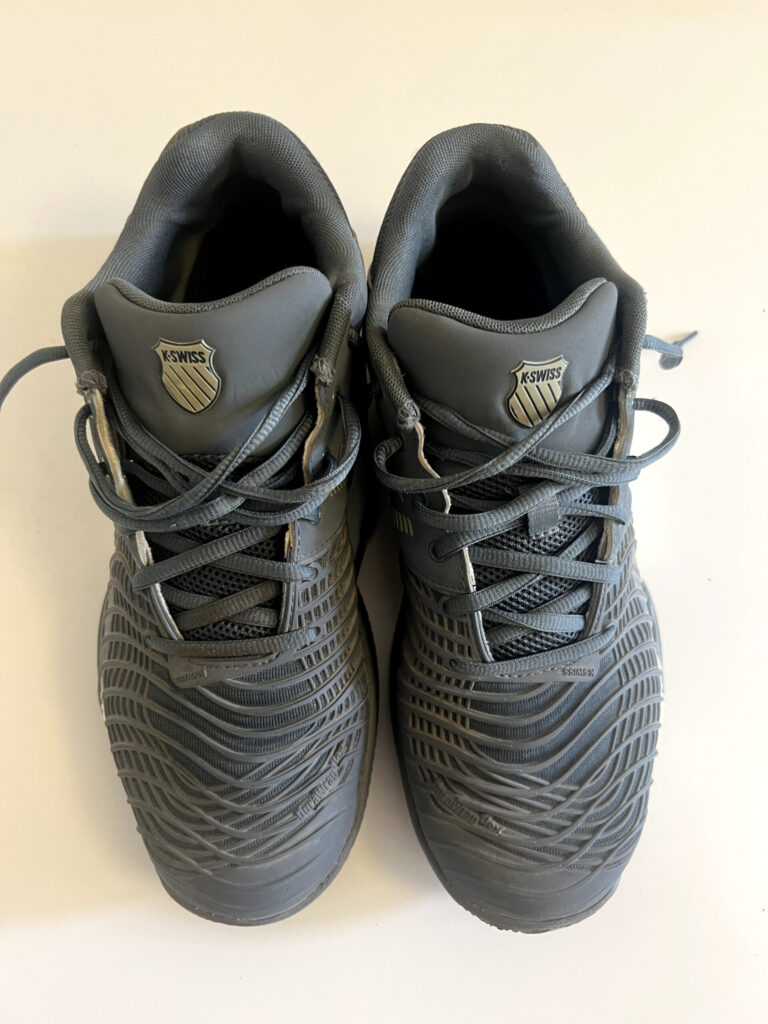
JOOLA Perseus Pro IV 16mm Review: My 8-Hour Pickleball Test
JOOLA Perseus Pro IV 16mm review after eight hours of indoor pickleball: 4.6/5. I bought my own Ben Johns Perseus Pro IV on October 1, 2026 for €149.95. The biggest improvement over my JOJOLEMON Shark 100 was not simply more power. It was the combination of harder, easier-to-place drives and much more dependable drops. It felt more stable even when I missed the center of the face.
This is an early hands-on review of the exact black-face, white-grip 16mm paddle in my original photographs—not a review of all Pro IV thicknesses or shapes. I have only logged around eight indoor playing hours. There were no structural problems in that time, but long-term durability is an open question.
Affiliate disclosure: As an Amazon Associate I earn from qualifying purchases. Links marked paid may earn The Pickleball Wise a commission at no extra cost to you; they do not determine my review or score.
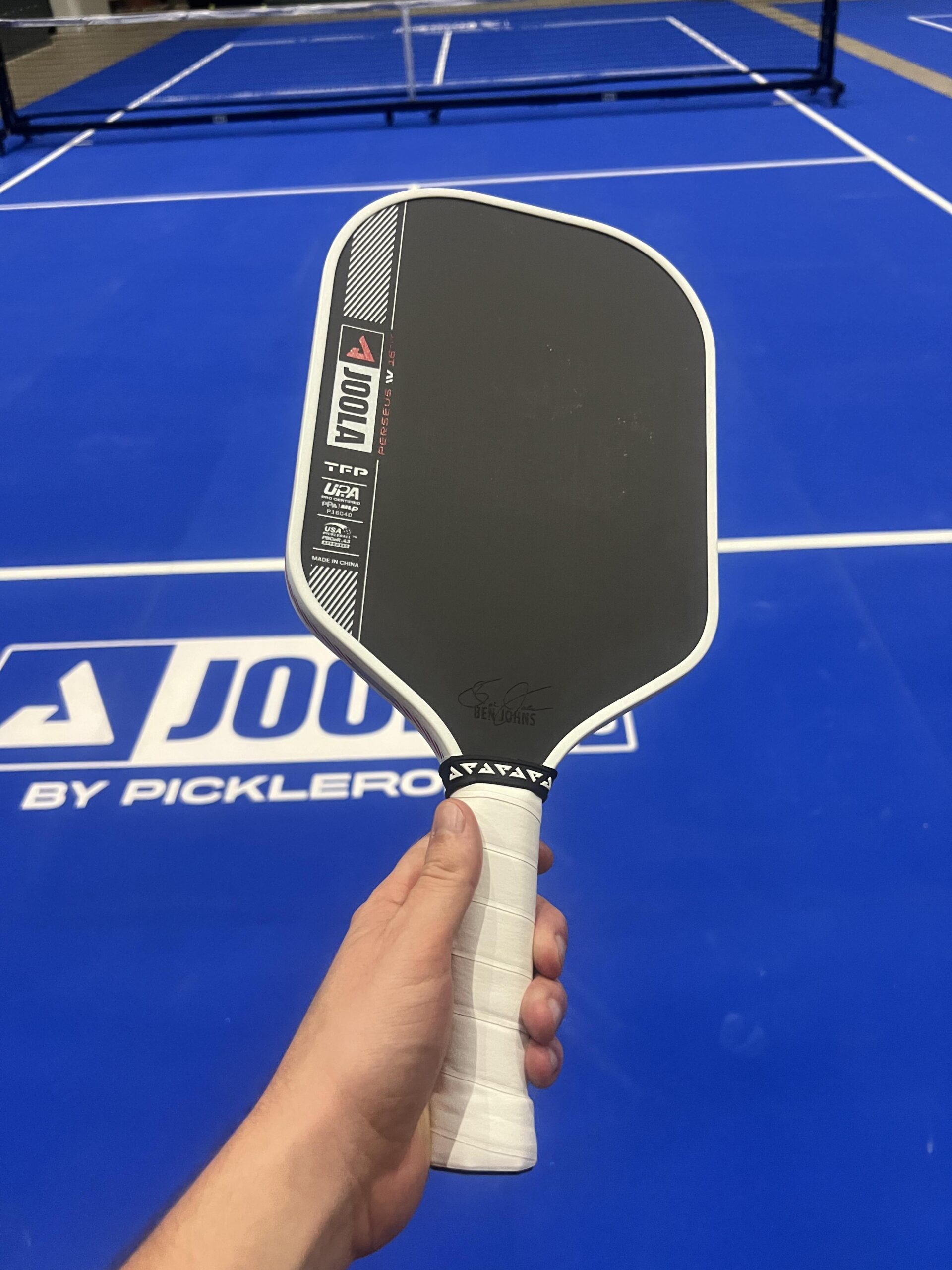
JOOLA Ben Johns Perseus Pro IV 16mm · 4.6/5
Quick verdict: One of the best paddles I have tried. It hits harder yet feels much more predictable than my JOJOLEMON Shark 100, and the difference on third-shot drops was especially impressive.
My biggest surprise: drops that I often buried in the net with the JOJOLEMON were easier to lift over the net and land in the kitchen with this JOOLA.
Big caution: I found no structural fault in eight hours, but that is far too short to prove durability. Third-party core/edge-guard complaints deserve attention.
- Excellent, predictable control on drives
- Noticeably easier drops and slightly better dinks
- Stable serves and forgiving off-center contact
- Good power/pop and spin
- Strong value at the €149.95 I paid
- Long-term reliability remains untested in my hands
- Core-crush and edge-guard issues reported by some other owners
- Fast volleys were not clearly quicker than with my JOJOLEMON
- I would add a tacky overgrip
- Early-test rating, not a longevity verdict
Bottom line
4.6/5 for my first eight hours: fantastic control, confident drops and controlled power at a very attractive price I personally paid. I can recommend how it plays now, but not promise how it will hold up after months.
My test: the exact paddle, purchase and playing conditions
- Exact paddle: JOOLA Ben Johns Perseus Pro IV, 16mm, black face and white grip
- Bought: October 1, 2026
- Price paid: €149.95 (my purchase price, not a claimed current offer)
- Estimated court time: around 8 hours
- Location: indoor pickleball only; no outdoor test
- Comparisons: my JOJOLEMON Shark 100 and my impressions of the newer Perseus Pro V
- Testing limitations: no instrumented ball speed, spin RPM, swing-weight or long-term fatigue/core test
I used this particular paddle in real club play and photographed it on an indoor court, on a table and next to measuring equipment. My observations below describe how it felt to me; they are not controlled head-to-head lab results. I have not used every variant in the Perseus, Hyperion, Scorpeus or Magnus range.
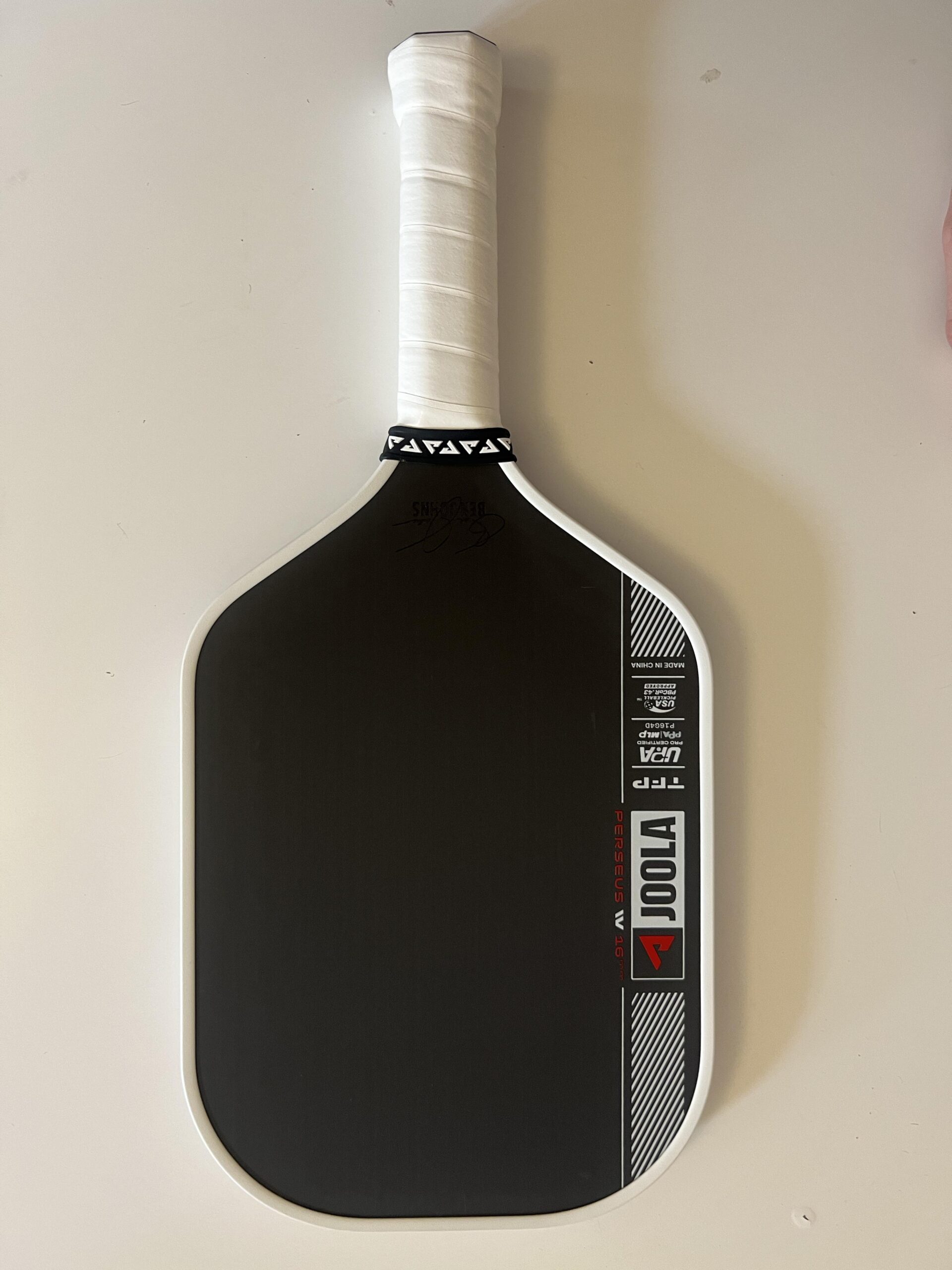
The biggest improvement: drops and short-game control
The most obvious difference was in third-shot drops. With my JOJOLEMON Shark 100 I often felt I was dropping the ball into the net. With the Pro IV, it was noticeably easier to send the ball over the net while still landing it inside the kitchen. That combination of lift and distance control made the soft game feel less stressful.
Dinks also seemed a little easier to place. I do not claim it will fix technique or guarantee consistent drops for another player; it simply gave me a more reliable response during my short test. The feel was stable rather than erratic, which helped me trust the face more.
Drives, serves and power: harder but also more manageable
My drives felt both harder and easier to control than usual. I could attack the ball confidently without the same unpredictable launch I sometimes experience with the JOJOLEMON. There was a little more pop, but importantly the extra response did not feel uncontrollable.
My serves were more stable and repeatable than on the Shark 100. For speed-ups, the two paddles felt about the same to me, so I would not pretend that the JOOLA transformed every attacking shot. The main benefit was confidence that a firm swing would produce a ball closer to my intended trajectory.
Spin, forgiveness and sweet spot
Spin was good, and the sweet spot felt generous. When I contacted the ball slightly outside the middle, the JOOLA stayed impressively stable. That off-center forgiveness is part of why my drives and drops felt so predictable.
I did not measure spin RPM or map the sweet spot with impact sensors, so the terms good spin and large sweet spot are observations, not numeric lab claims. JOOLA’s stated TechFlex Power design and weight distribution are manufacturer claims; the stable feel is what I noticed on court.
Handling, volleys and the stock grip
The overall weight and balance felt fine. I was comfortable holding and using it, including during quicker exchanges, although fast volleys were not noticeably better than with my JOJOLEMON Shark 100. Players whose top priority is the very quickest hand battles should not assume this is an automatic upgrade.
The stock grip was okay, not a deal-breaker. Personally I would add a tacky overgrip for a more secure feel. Grip preference is individual, and I am not saying the standard grip is defective.
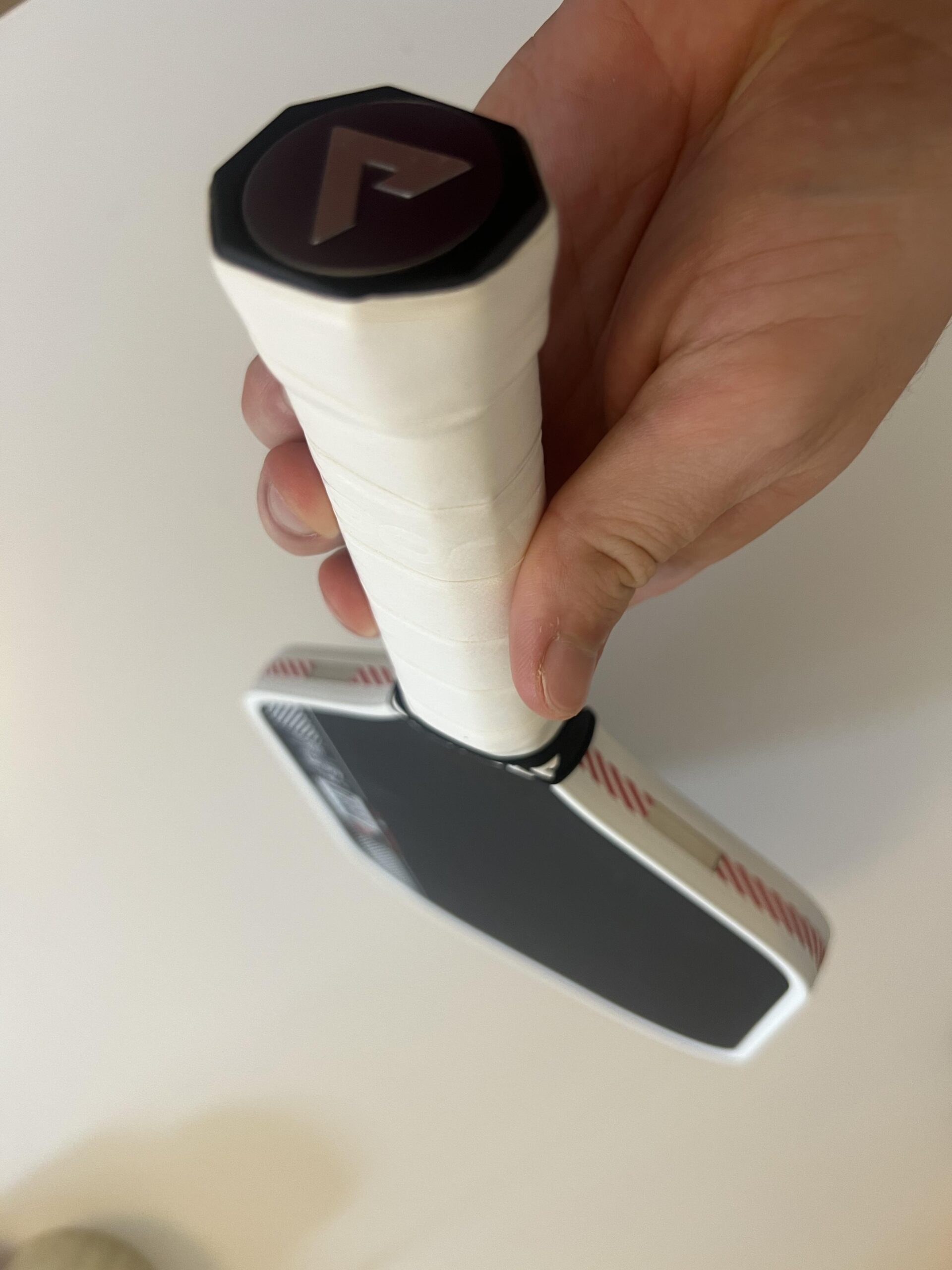
Durability: no failure in eight hours, but real uncertainty
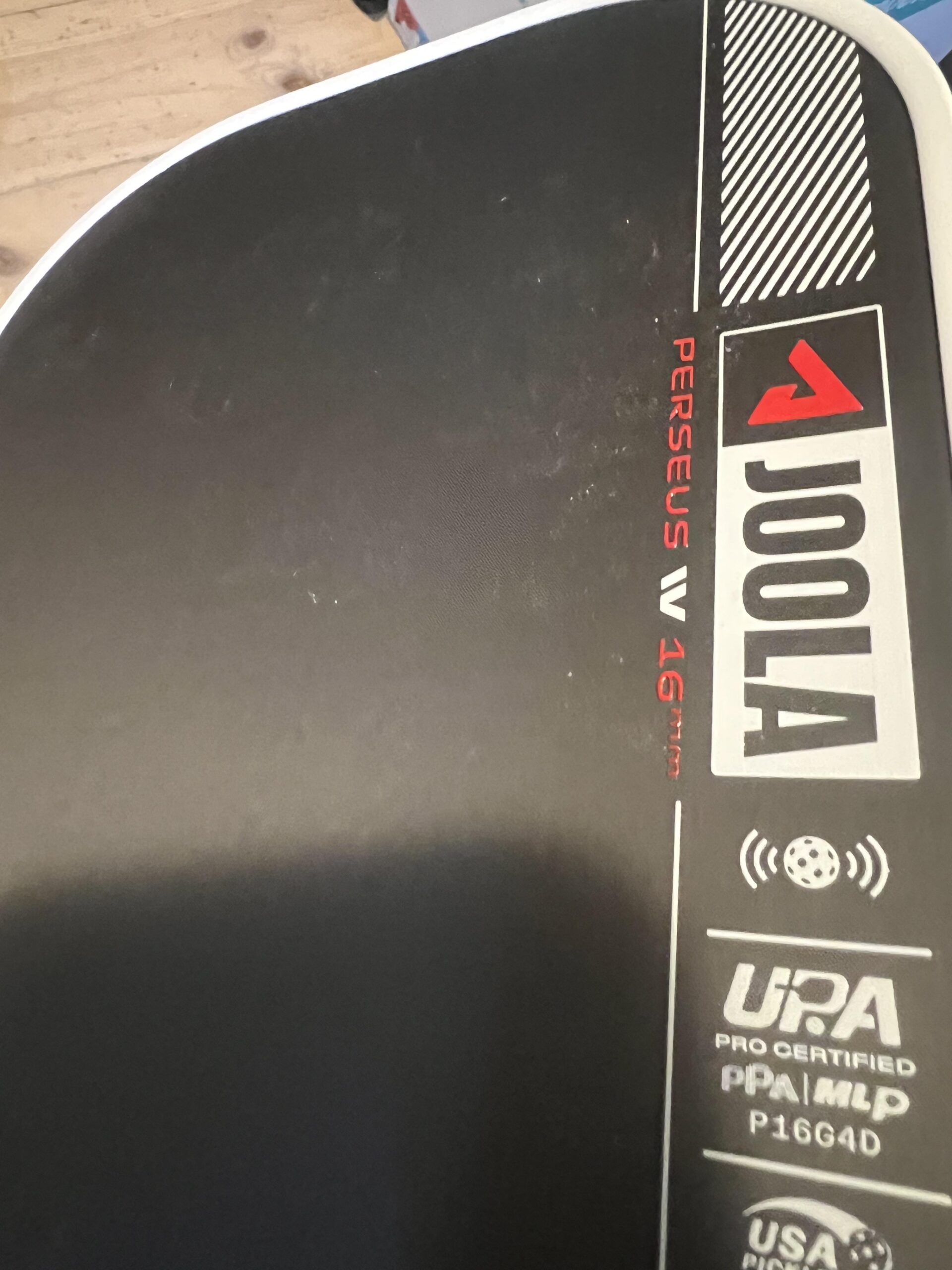
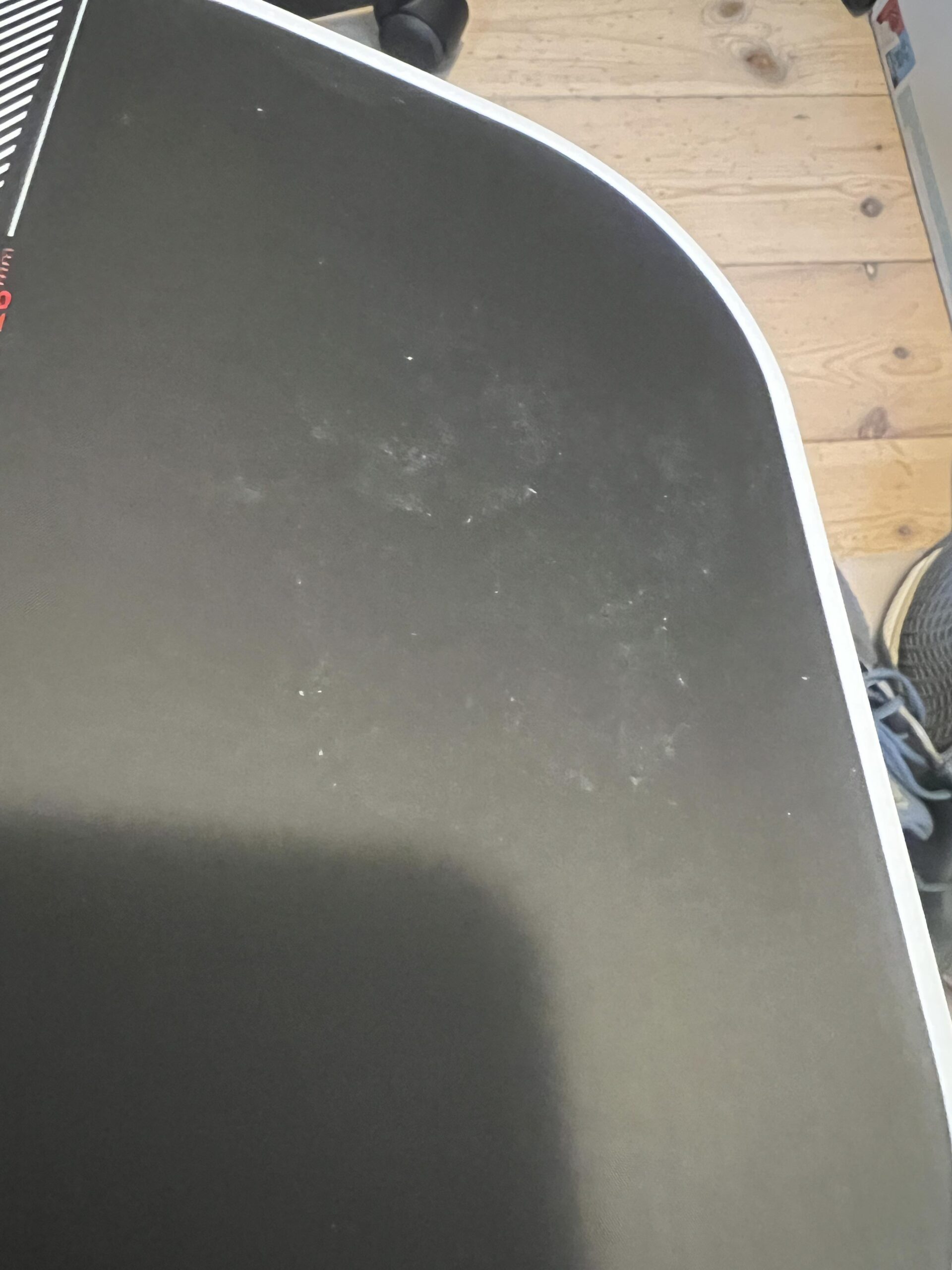
My own result: I had no structural or functional problem during my approximately eight hours. That is good, but it does not establish that a Pro IV will last 50, 100 or 200 hours. The photo below shows marks on the face after use; surface marks alone are not evidence of a crushed core.
What other players report: some owners in public pickleball discussions describe core-crush, edge-guard separation or warranty experiences on Pro IV paddles. Those reports are worth reading, but they are anecdotal, subject to selection bias and do not establish a measurable failure rate. Other players report continued satisfaction. I cannot turn those stories into a personal durability claim.
For examples, see the January 2026 owner discussion on Perseus Pro IV durability and the August 2026 discussion about JOOLA durability. Neither discussion is a controlled durability study.
JOOLA lists a 12-month warranty requiring registration on its current Pro IV product page. Actual eligibility depends on purchase channel, registration and local terms; I would check those before buying. If I notice a suddenly hollow feel, unusual change in rebound, edge separation or other damage, I would document it rather than continue treating the paddle as unchanged.
Specifications and tournament approval
This is the Perseus Pro IV 16mm elongated version. It is not the 14mm model or a Hyperion, Scorpeus or Magnus. The following are manufacturer-listed specifications, not measurements that I independently verified with calibrated tools.
| Specification | JOOLA-listed information |
|---|---|
| Thickness | 16mm |
| Face | Textured carbon fiber |
| Core | PP core with EVA foam wall |
| Length × width | 16.5 × 7.5 inches |
| Average weight | 8.1 oz (manufacturer average; individual paddles vary) |
| Handle length / circumference | 5.5 inches / approximately 4.25 inches |
| Technology | TechFlex Power |
| Certifications JOOLA lists | UPA-A pro certified and USAP PBCoR .43 certified |
| Warranty listed | 12 months; registration required (terms apply) |
The model in my photos visibly carries UPA and USA Pickleball markings. JOOLA separately lists the Pro IV 16mm as UPA-A and USAP certified. Check the current approval database and the exact model listing before a sanctioned tournament because approvals and event requirements can change. The manufacturer’s Perseus Pro IV 16mm specification page is the source for the dimensions and technology above.
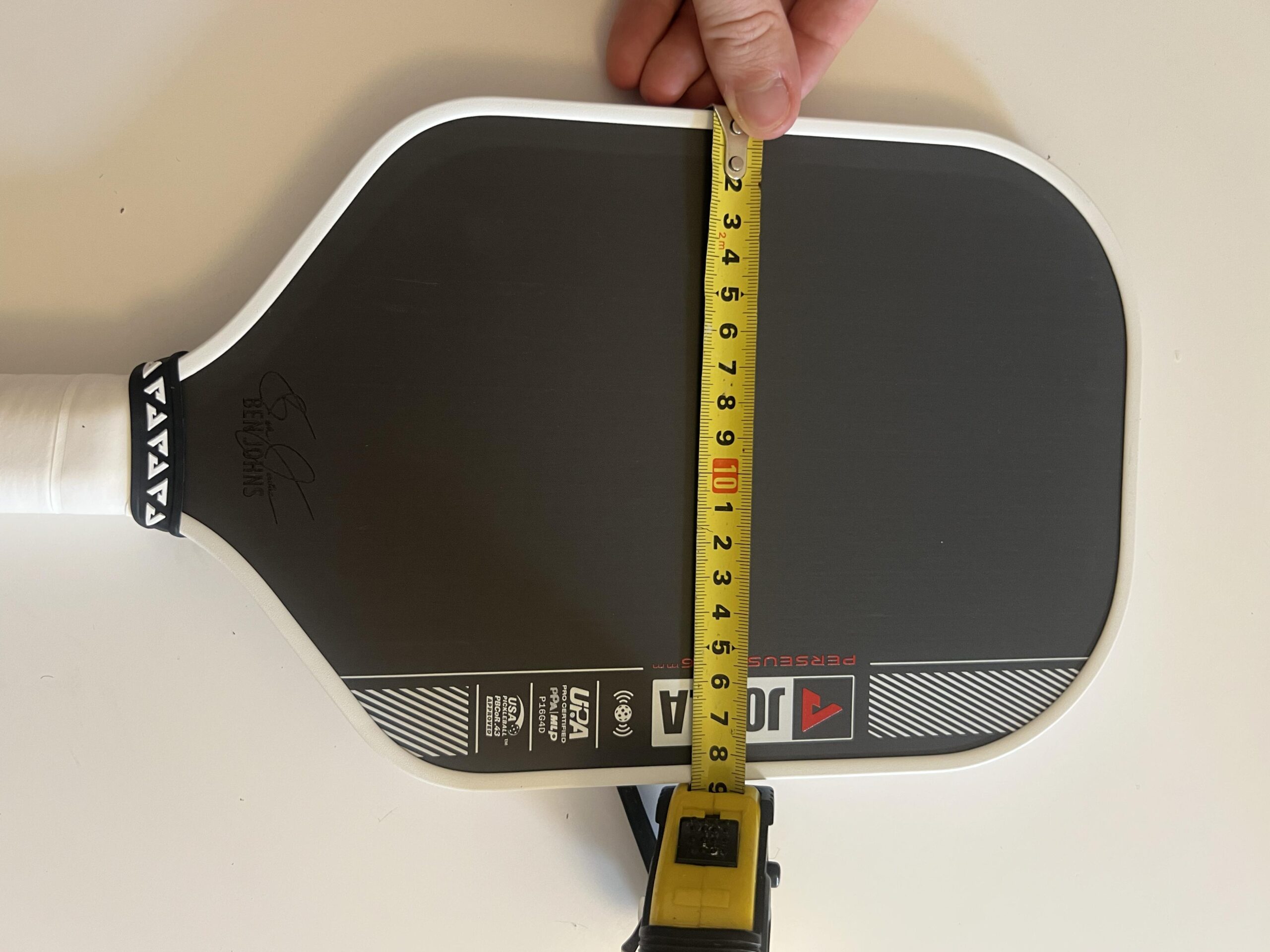
My original measurement photos
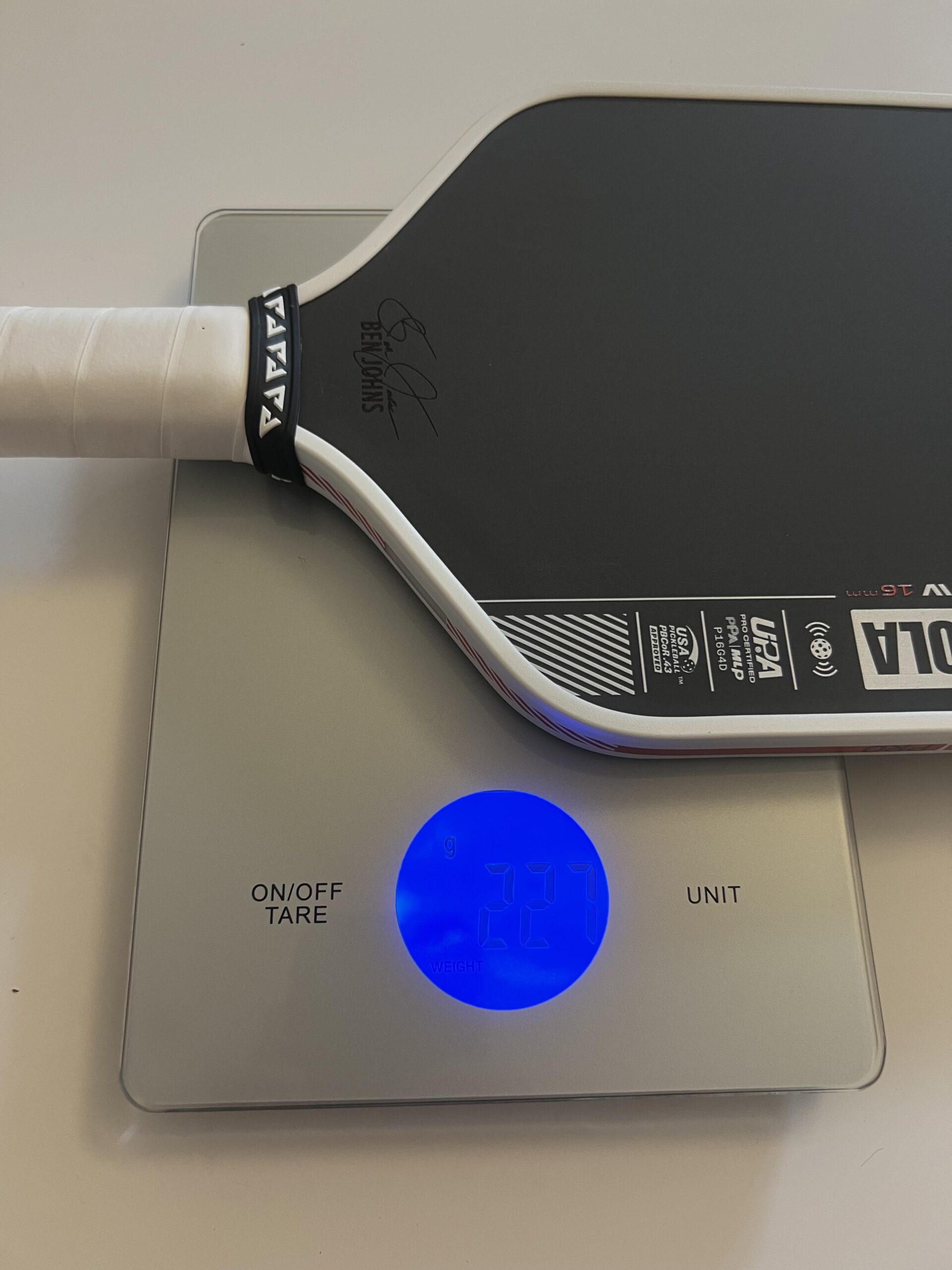
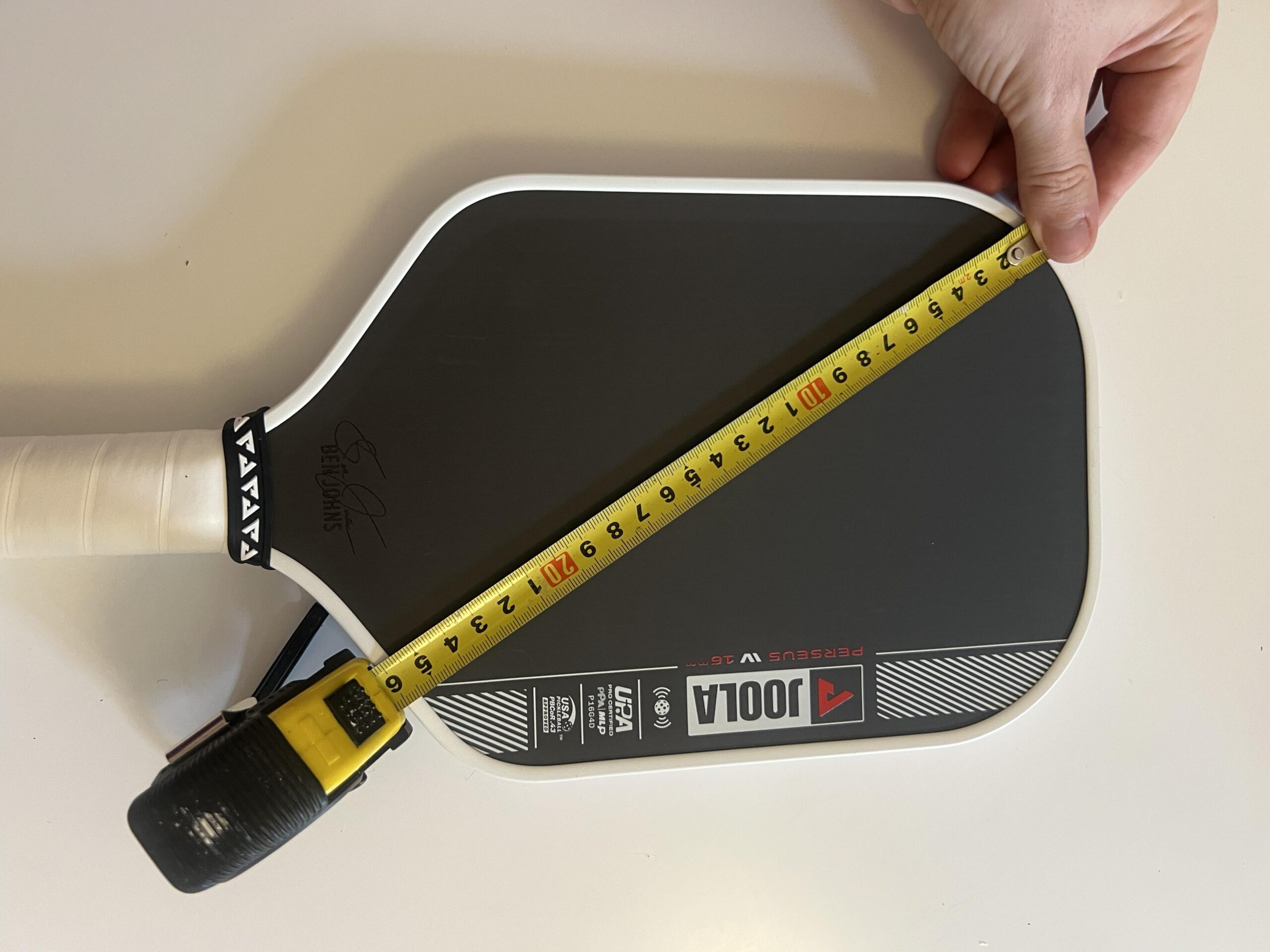
I also photographed this particular paddle on a digital scale and next to a measuring tape. These photos document the test sample, but I am not treating them as laboratory-grade measurements or claiming precision that the photographs cannot support.
JOOLA Perseus Pro IV vs JOJOLEMON Shark 100 vs Perseus Pro V
I have spent much longer with the JOJOLEMON Shark 100, which makes it the clearest reference point. I have also tried the newer Perseus Pro V and liked it slightly more overall, but this is not a controlled three-paddle comparison.
| Shot or decision | Perseus Pro IV 16mm in my test | My comparison |
|---|---|---|
| Drives | Strong and noticeably predictable | Easier to control than my JOJOLEMON Shark 100 |
| Serves | Stable and repeatable feel | More predictable than my JOJOLEMON |
| Third-shot drops | My standout improvement | Easier to clear the net and land in the kitchen |
| Dinks | A little more controlled | Small but welcome gain over the JOJOLEMON |
| Speed-ups / quick volleys | Good, not a standout improvement | About the same as JOJOLEMON in my play |
| Off-center shots | Good stability and forgiveness | Less unpredictable to me than JOJOLEMON |
| Compared with Perseus Pro V | I liked the Pro V slightly more overall | The Pro IV at €149.95 felt like much better value for my budget; prices change |
| Durability | No fault observed after ~8 hours | Insufficient data to compare long-term reliability |
The Pro V is the one premium paddle I personally put just ahead of the Pro IV on feel. But at the price I paid for the Pro IV, I would find it hard to justify paying much more for a relatively small subjective improvement. That is a personal value judgment, not a statement that every current Pro V costs twice as much.
Should you buy the JOOLA Perseus Pro IV 16mm?
I would recommend it to: intermediate-to-advanced club players who want controlled attacking power; players struggling with unpredictable drops or inconsistent response from an older paddle; and buyers who can get the correct 16mm model at a good price while accepting that longer-term reliability remains uncertain.
I would hesitate if: your top priority is proven durability over many months, you expect an unusually fast hand-speed upgrade, or you cannot confirm the seller’s warranty and return conditions. The fact that I love how it plays does not remove that ownership risk.
I am also curious about alternatives such as the D2CR Crystal Blue and Spada Spitfire, partly because of durability discussions. However, I have not established that either one is actually more durable; I would not claim that based on rumors. The same goes for any other tempting new paddle.
How I calculated my 4.6/5 rating
This is a short-term performance and purchase-value score, not a certified long-term durability rating. I chose criteria that I could reasonably judge after eight hours. The weights total 100%, and the weighted score is rounded to one decimal place using The Pickleball Wise editorial method.
| Criterion | Weight | Score | Evidence |
|---|---|---|---|
| Control & consistency | 30% | 4.8/5 | Reliable drives, serves and especially drops compared with my JOJOLEMON |
| Power & pop | 20% | 4.6/5 | Drives felt harder while staying easier to place; speed-ups similar |
| Forgiveness & stability | 15% | 4.7/5 | Large-feeling sweet spot, stable off-center contact |
| Spin | 10% | 4.4/5 | Good on-court spin feel; no measured RPM |
| Handling & grip | 10% | 4.2/5 | Comfortable balance, acceptable volleys, grip could benefit from an overgrip |
| Value at my paid price | 15% | 4.5/5 | Excellent early performance for €149.95, discounted by uncertainty about longevity |
Calculation: (4.8 × 0.30) + (4.6 × 0.20) + (4.7 × 0.15) + (4.4 × 0.10) + (4.2 × 0.10) + (4.5 × 0.15) = 4.60/5 → 4.6/5. I did not give durability an invented subscore. A longer test or a real failure could materially change the verdict.
Questions buyers ask
Does the Perseus Pro IV 16mm have good control?
For my playing style, yes. I noticed a particular improvement on third-shot drops and drives compared with my JOJOLEMON Shark 100. Another player’s technique, ball and playing level may lead to different results.
Is the JOOLA Perseus Pro IV durable?
I cannot answer that definitively after eight hours. Mine showed no structural failure during my test. Some other owners report core or edge problems, but those reports do not establish a failure rate. Check warranty registration and buy from a reputable seller.
Is this paddle legal for tournaments?
JOOLA lists the exact Perseus Pro IV 16mm as UPA-A pro certified and USAP PBCoR .43 certified. Always verify current approval and event requirements before entering a tournament.
Is the 16mm version better than the 14mm?
This article covers only my 16mm paddle. JOOLA positions the 16mm as more control-oriented and the 14mm as having more pop. I have not run a direct 14mm-versus-16mm personal test, so I will not invent a winning comparison.
Practical next steps: checking approval and looking after the paddle
If you plan to enter sanctioned tournaments, do not rely only on the approval marks printed on my paddle. Our paddle legality guide shows how to check the exact model against the current approval list. For help understanding why my 16mm model might feel different from the 14mm version, see our thickness comparison; I have personally tested only the 16mm Pro IV.
Because durability is my biggest unanswered concern, I recommend keeping proof of purchase, checking registration requirements through our paddle warranty guide and watching for meaningful performance changes described in our core-crush and delamination explainer. None of those checks mean my particular paddle has developed a fault.
Final verdict
Excellent feel, particularly for drops, controlled drives and off-center stability. I genuinely rate the Perseus Pro IV 16mm among the best paddles I have tried, second only to my impression of the newer Perseus Pro V. Paying €149.95 made it a particularly attractive purchase for me. The unanswered question is durability, and eight hours is not enough to settle it.
Source and disclosure note: Performance observations and photographs are mine. Listed specifications, current certification claims and warranty wording come from JOOLA. Durability complaints attributed to other owners are anecdotal, not failures observed during my test. The Amazon button is a paid affiliate link supplied by the site owner; confirm the exact 16mm variant at the destination. This review does not assert current Amazon pricing or that an affiliate redirect has been independently verified.

Jonathan Grøn is a pickleball player and racket-sports enthusiast who focuses on practical doubles strategy, rules, skills, and training. He combines regular on-court experience with research from official rules, coaching resources, and other authoritative sources to create clear, useful pickleball guides.