Quiet Pickleball Paddles: What USA Pickleball’s Quiet Category Means
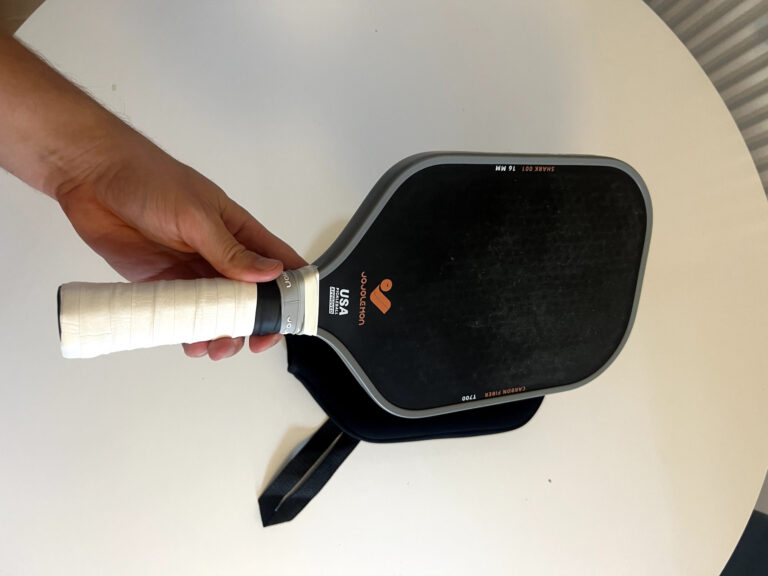
Quiet pickleball paddles are designed to reduce the sharp impact sound that makes recreational pickleball difficult to place near homes and other noise-sensitive areas. But “quiet” can mean very different things on a product page. The most useful distinction is whether a product has actually been recognized under USA Pickleball’s acoustic equipment program or is simply marketed as quieter.
USA Pickleball created its Quiet Category after acoustic research into the sound of paddle-ball impacts. The program is separate from ordinary tournament paddle approval: a paddle can be designed specifically for quieter recreational play without being the paddle you would use in a sanctioned tournament.
This guide explains what the Quiet Category means, why decibels are only part of the story, how frequency changes perceived annoyance, what quieter equipment can and cannot solve, and how to choose a quieter setup without confusing acoustic certification with competition legality.
Why is pickleball noise distinctive?
Pickleball does not usually create one continuous loud sound. It creates a repeated series of short impacts as the ball contacts paddles. That repetitive “pop” can be noticeable even when the absolute sound level does not seem extreme.
The acoustic character depends on more than volume. Important variables include:
- sound pressure level, commonly expressed in decibels;
- frequency content, which affects the pitch and character of the sound;
- how often impacts occur;
- distance between courts and nearby receivers;
- reflections from walls, buildings and hard surfaces;
- terrain and barriers;
- the paddle and ball combination; and
- how hard players strike the ball.
That is why a single “dB” claim does not fully describe how a court will sound to a neighbor.
What is USA Pickleball’s Quiet Category?
USA Pickleball launched the Quiet Category in 2023 to recognize equipment designed to substantially reduce the acoustic footprint of recreational pickleball. The program grew from acoustic research intended to characterize normal paddle-ball impact sound and establish meaningful reduction targets.
USA Pickleball currently maintains a dedicated Quiet Category equipment list that includes paddles, covers or sleeves, and balls. It also recognizes acoustic mitigation products for facilities.
The key point is that Quiet Category is an acoustic designation. It should not automatically be read as “approved for every sanctioned tournament.” Always check the relevant competition-approved equipment list separately if tournament legality matters.
Quiet Category vs normal paddle approval
| Question | Quiet Category | Standard competition approval |
|---|---|---|
| Main purpose | Reduce acoustic output | Meet competition equipment specifications |
| Best use case | Noise-sensitive recreational play | Sanctioned competition |
| What to verify | Current acoustic equipment listing | Current approved paddle database |
| Can status overlap? | Potentially, depending on the product | Potentially, depending on the product |
Do not assume that a paddle appearing on one list necessarily satisfies the purpose of the other. If you play both recreationally at a noise-sensitive venue and in sanctioned tournaments, verify both statuses for the exact model.
What acoustic targets created the category?
When USA Pickleball announced its first Quiet Category paddle in 2023, it described a target below 80 dB and below 600 Hz for that product and contrasted it with conventional paddle impacts around 85+ dB and roughly 1,100–1,200 Hz under its referenced testing.
USA Pickleball later described the broader Quiet Category target as an acoustic footprint approximately half as loud from a perception standpoint compared with common recreational equipment.
Those numbers are useful context, but players should avoid treating them as universal measurements for every shot. Sound readings depend heavily on the test method, strike speed, ball, microphone position, environment and metric being reported.
Why a 10 dB difference matters
The decibel scale is logarithmic, not a simple linear percentage scale. A change of 10 dB is therefore much more meaningful than a casual reading of the numbers might suggest.
USA Pickleball has described the difference between roughly 90 dB conventional recreational equipment and its 80 dB Quiet Category target as an acoustic footprint perceived as about half as loud.
That does not mean every person will perceive every 80 dB impact identically. Human hearing, frequency content and the surrounding environment all influence perception.
Why frequency matters too
Two impacts can have similar measured sound levels but sound noticeably different.
Frequency describes how quickly a sound wave oscillates and is expressed in hertz. Higher-frequency paddle impacts can produce the familiar sharp “pop.” Lowering prominent frequency content can make an impact sound less piercing even when the sound-pressure reading does not tell the entire story.
This is why acoustic equipment programs should not be reduced to a contest for the lowest advertised decibel number.
How can a paddle become quieter?
Manufacturers can change the acoustic response through material and structural choices. USA Pickleball has specifically discussed surface coatings and subsurface materials as ways sound can be dampened.
Potential design variables include:
- face material and surface layers;
- core material;
- core thickness and structure;
- damping layers;
- perimeter construction;
- covers or acoustic sleeves; and
- how the entire paddle vibrates after impact.
There is no rule that one familiar paddle material is automatically quiet. The finished system matters.
Quiet paddles do not all feel the same
Acoustic performance is only one part of paddle performance. Two quieter paddles can still differ significantly in:
- power;
- spin;
- sweet-spot size;
- swing speed;
- stability;
- handle dimensions;
- face feel; and
- overall weight.
If noise reduction is mandatory at your venue, first narrow the field to equipment that meets the required acoustic designation. Then choose among those products based on normal paddle-fit criteria.
Our pickleball paddle buying guide explains the broader performance tradeoffs.
What quiet paddles are currently recognized?
USA Pickleball’s live acoustic-equipment database now lists multiple Quiet Category paddles rather than a single experimental product. The list includes models from several manufacturers, alongside quiet balls and acoustic covers or sleeves.
Because certification lists change, the safest buying process is not to rely on an old article or retailer badge. Check the current USA Pickleball acoustic-equipment database for the exact brand and model immediately before buying if certification matters to you.
What about quiet pickleballs?
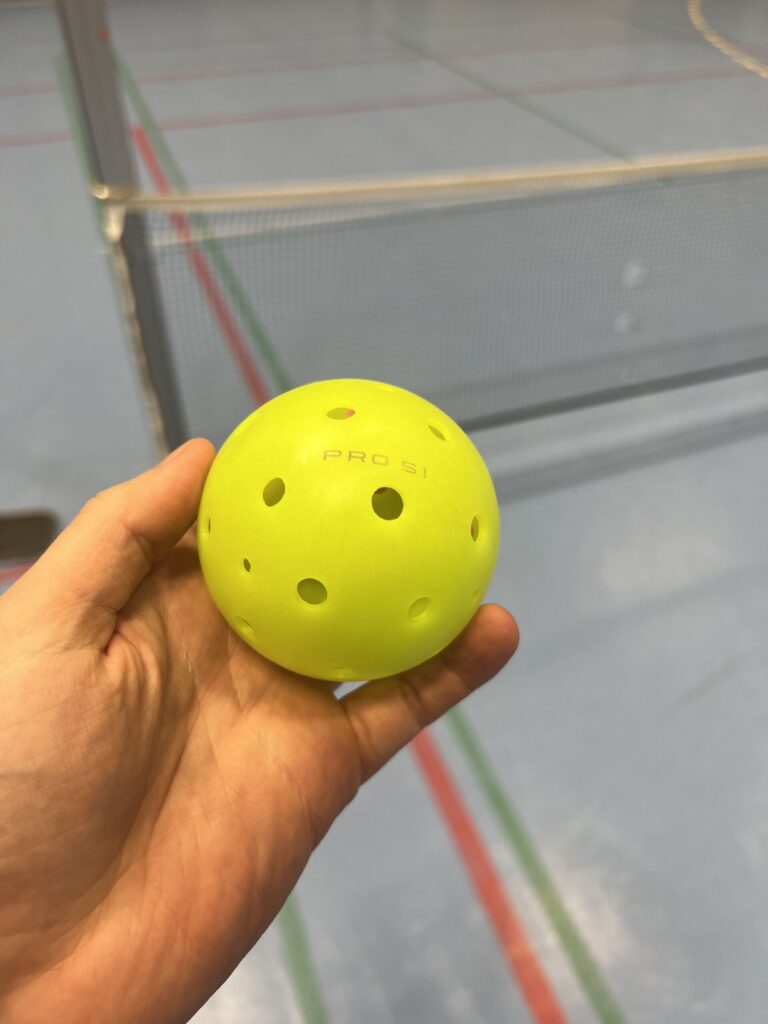
The ball is the other half of every paddle impact, so quieter balls can be a powerful facility-wide intervention.
USA Pickleball’s current acoustic equipment list includes designated quiet balls as well as products with a lower acoustic profile. This can be particularly useful at recreational facilities because changing the ball changes every impact on the court regardless of which player is hitting.
The tradeoff is playability. A very soft or foam-like ball may not reproduce the speed, bounce and flight of a standard competition ball exactly. If realistic practice matters, test the specific ball rather than assuming every quiet product behaves identically.
Quiet balls vs quiet paddles: which helps more?
For an individual player, a quiet paddle is the easiest equipment change because you control it yourself.
For a facility, a standardized quieter ball can be attractive because it affects all players simultaneously. A venue can also combine quieter balls, paddles and physical acoustic mitigation rather than expecting one product to solve the entire problem.
Can a paddle cover or sleeve reduce noise?
Yes, acoustic covers and sleeves are now represented in USA Pickleball’s Quiet Category equipment listings.
These products alter the contact interface rather than requiring a completely different paddle. That may be useful for recreational programs that want a quieter option while preserving existing equipment.
However, adding a cover can change feel, spin, rebound and weight distribution. It can also affect whether the modified setup is legal for competition. Treat an acoustic cover as a recreational noise solution unless the exact configuration is explicitly permitted for the competition you are entering.
Is a quiet paddle legal in tournaments?
Do not answer this from the word “quiet” alone.
For sanctioned play, check the exact paddle in the current competition-approved database. USA Pickleball’s acoustic program and its normal equipment-approval program serve different purposes.
A product designed with specification relief for recreational Quiet Category use should not be assumed to meet the standard competition specification merely because USA Pickleball recognizes its acoustic performance.
Can you make a normal paddle quieter yourself?
Possibly, but modifications create two separate questions:
- Does the modification actually reduce noise in a meaningful, measured way?
- Does the modified paddle remain legal for your intended competition?
Foam, covers, tape and other damping ideas can change vibration, but a homemade modification is not equivalent to an acoustic certification. If a venue specifically requires recognized quiet equipment, use the venue’s accepted list rather than improvising.
Why phone sound-meter tests are limited
A phone app can be useful for rough experiments, but it is a poor substitute for controlled acoustic testing.
Results can change with:
- phone model and microphone;
- automatic gain control;
- distance and angle;
- room reflections;
- background noise;
- ball model;
- strike speed; and
- whether the app reports peak, average or weighted sound level.
If you compare two paddles yourself, keep every variable as consistent as possible and treat the result as a relative home comparison, not a certification measurement.
A better at-home comparison protocol
- Use the same ball for both paddles.
- Test in the same location.
- Keep the phone or meter fixed in one position.
- Use the same player.
- Hit a large number of similar shots rather than one impact.
- Compare both hard drives and softer Kitchen contacts.
- Record the sound if possible so you can compare pitch as well as the displayed level.
- Repeat on another day before drawing a strong conclusion.
This still will not recreate laboratory certification, but it is much better than comparing two random strikes.
Why court location matters as much as equipment
Even excellent quiet equipment cannot erase poor facility placement.
Sound propagation changes with:
- distance to homes;
- number of courts;
- hours of operation;
- terrain;
- walls and reflective facades;
- fences;
- vegetation;
- barriers; and
- local background noise.
USA Pickleball’s acoustic work therefore extends beyond paddles and balls to facility design, acoustic analyses and sound-mitigation products.
Acoustic fencing and barriers
USA Pickleball maintains a separate list of acoustic mitigation products including sound panels, fabrics, walls and other systems.
These solutions can be more appropriate than forcing every player to use one paddle, especially at permanent multi-court facilities. The best solution may combine:
- appropriate site planning;
- court orientation;
- distance;
- acoustic barriers;
- operating-hour policies; and
- quieter equipment.
What should clubs do before building courts?
Noise should be considered during planning, not after complaints begin.
Before construction or conversion, clubs and municipalities should evaluate nearby residences, terrain, reflective structures, expected court utilization and local noise requirements. Acoustic modeling or professional assessment can identify problems that are difficult and expensive to correct after the courts open.
USA Pickleball specifically offers facility-development guidance around acoustics and noise mitigation.
How to shop for a quiet paddle
Use this order:
- Decide what “quiet” must mean. Is it simply your preference, a club rule or a formal acoustic-equipment requirement?
- Verify the exact model. Check the current acoustic equipment list rather than relying on marketing language.
- Check competition status separately. If you play sanctioned events, verify the paddle on the relevant approved list too.
- Check normal paddle fit. Compare shape, handle, weight and maneuverability.
- Demo the feel. Noise reduction is not useful if you dislike playing with the paddle.
- Consider the ball. A quieter ball may provide a larger facility-wide benefit.
Marketing claims to treat carefully
“50% quieter”
Ask what metric produced the percentage and under what test conditions. A percentage without a method is difficult to interpret.
“Silent”
No paddle-ball impact is literally silent. Treat the word as marketing unless accompanied by a meaningful acoustic test.
“USA Pickleball certified”
Check what certification or listing the seller means. Acoustic recognition and standard competition approval are not interchangeable concepts.
“Low dB”
Ask about measurement distance, ball, impact speed and whether the figure is peak or averaged. Also remember that frequency content matters.
Who should consider quiet equipment?
Quiet equipment makes the most sense for:
- courts near homes;
- HOA and residential facilities;
- schools or shared recreation spaces;
- indoor venues where impact sound is unpleasant;
- players practicing at home;
- clubs responding proactively to community noise concerns; and
- facilities whose operating conditions specifically require quieter equipment.
If you play only at a dedicated sports complex far from sensitive receivers, acoustic performance may rank below normal paddle performance in your buying decision.
Do quiet paddles reduce vibration too?
Not necessarily. Acoustic output and vibration felt by your hand are related to the paddle’s structure but are not the same measurement.
A design may use damping materials that affect both, but you should not assume that the quietest paddle is automatically the most arm-friendly. Test comfort separately.
Do quiet paddles have less power?
Not automatically. Noise and rebound performance are different characteristics.
Some acoustic designs may change face response or feel, but there is no universal rule that a quieter impact must be weak. Compare the specific paddle rather than treating sound as a proxy for power.
Are all foam paddles quiet?
No. Core material alone does not determine the complete acoustic signature. Face layers, thickness, geometry and the full construction matter.
Likewise, a conventional honeycomb label does not tell you exactly how loud a finished paddle will be.
FAQ
What is the quietest type of pickleball paddle?
There is no single construction type that guarantees the lowest noise. If acoustic performance matters, use USA Pickleball’s current Quiet Category equipment list and compare recognized models rather than shopping by core material alone.
What does USA Pickleball Quiet Category mean?
It is an acoustic equipment program created to identify products that substantially reduce pickleball sound output for recreational and noise-sensitive environments.
Is a Quiet Category paddle tournament legal?
Not necessarily. Check the exact model in the applicable competition-approved paddle database. Acoustic recognition and competition approval answer different questions.
Why is pickleball noise annoying even when it is not extremely loud?
The repeated impulse pattern and prominent frequency content contribute to the distinctive sharp “pop.” Perceived disturbance also depends on distance, surroundings, repetition and background sound.
Can a quiet ball help more than a quiet paddle?
At a facility, it can be especially useful because every player uses the same ball. The best solution depends on how closely the quieter ball reproduces the play characteristics the facility needs.
Can sound barriers solve pickleball noise?
They can reduce sound propagation when properly selected and installed, but effectiveness depends on site geometry and design. Equipment, site planning and barriers can work together.
Bottom line
Quiet pickleball equipment is no longer just a marketing idea. USA Pickleball now maintains dedicated acoustic equipment and mitigation programs built around measured sound reduction. For players, the important distinction is between a product that is genuinely recognized for acoustic performance and one that simply claims to be quiet. For facilities, the bigger lesson is that paddles are only one part of the solution: balls, barriers, court placement and operating practices all influence what neighbors actually hear.

Jonathan Grøn is a pickleball player and racket-sports enthusiast who focuses on practical doubles strategy, rules, skills, and training. He combines regular on-court experience with research from official rules, coaching resources, and other authoritative sources to create clear, useful pickleball guides.