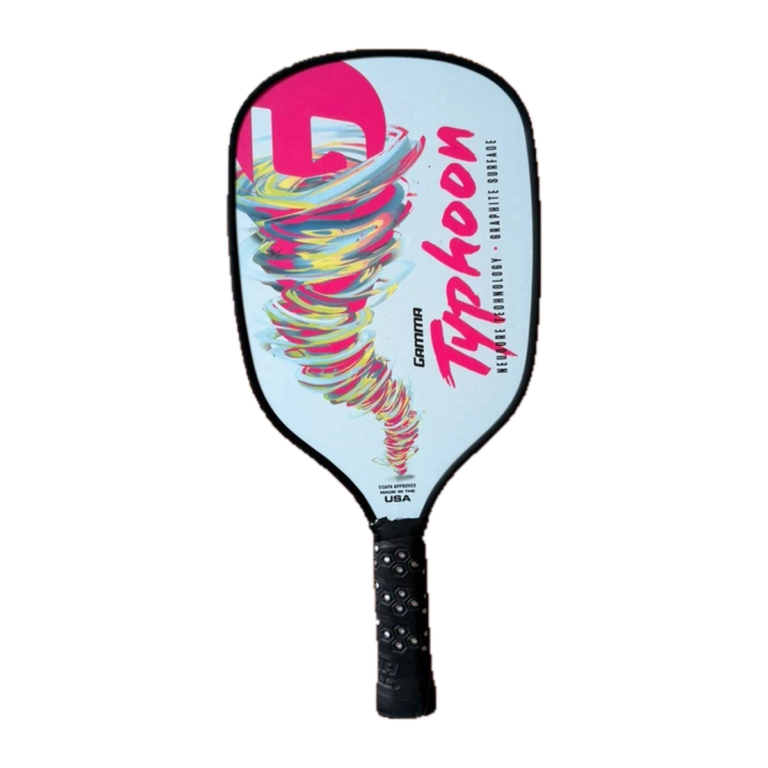
Paddletek Bantam EX-L Pro Review: My 31–60 Hours (Riptide Blue)
My Paddletek Bantam EX-L Pro Riptide Blue review after 31–60 hours: I bought the paddle myself for $99.99 in September 2026, with no discount or sponsorship, and used it for indoor doubles with indoor balls. My overall rating is 4.0/5. In clean contact I liked its lively pop, powerful drives, decisive putaways, topspin and quick reactions at the kitchen. It is not an unqualified easy-to-hit paddle: the sweet spot felt narrow and I had many mishits. Its head-biased balance also made me adjust my technique, and the grip wore enough to require replacement.
The apparent tension between “lighter than several paddles I have used” and “head-heavy balance” matters here. Overall felt weight and where that weight sits are different characteristics. My EX-L Pro felt relatively light alongside some of my previous paddles and quick in close-range exchanges, while the headward balance still affected my swing. Likewise, effective attacking shots did not make the paddle particularly forgiving outside the center. These are complementary parts of my first-hand experience, not data copied from another review.
Affiliate disclosure: As an Amazon Associate I earn from qualifying purchases. Amazon US links on this page include my affiliate tag owlratings08-20, which may earn a commission at no extra cost to you. I purchased this paddle independently; it was not free, sponsored or discounted. I could not verify an exact Amazon.com ASIN for this particular Riptide Blue EX-L Pro, so the linked Amazon page is explicitly search results, not a verified exact-product checkout page.
My verdict: quick, hard-hitting and fun — but demanding outside the center
Why I liked it: I could react quickly when balls came close to my body, control the paddle in fast exchanges and drive or finish high balls with plenty of pace. Clean contact produced a very noticeable pop.
What made it harder: the sweet spot felt small to me, and I experienced plenty of mishits. I also had to adjust my technique to a balance that felt weighted toward the head, despite the paddle feeling lighter than several other paddles I had played with.
Spin: my topspin was strong enough to make a clear difference in the ball’s trajectory. This was a qualitative playing observation, not an RPM measurement or a head-to-head spin test.
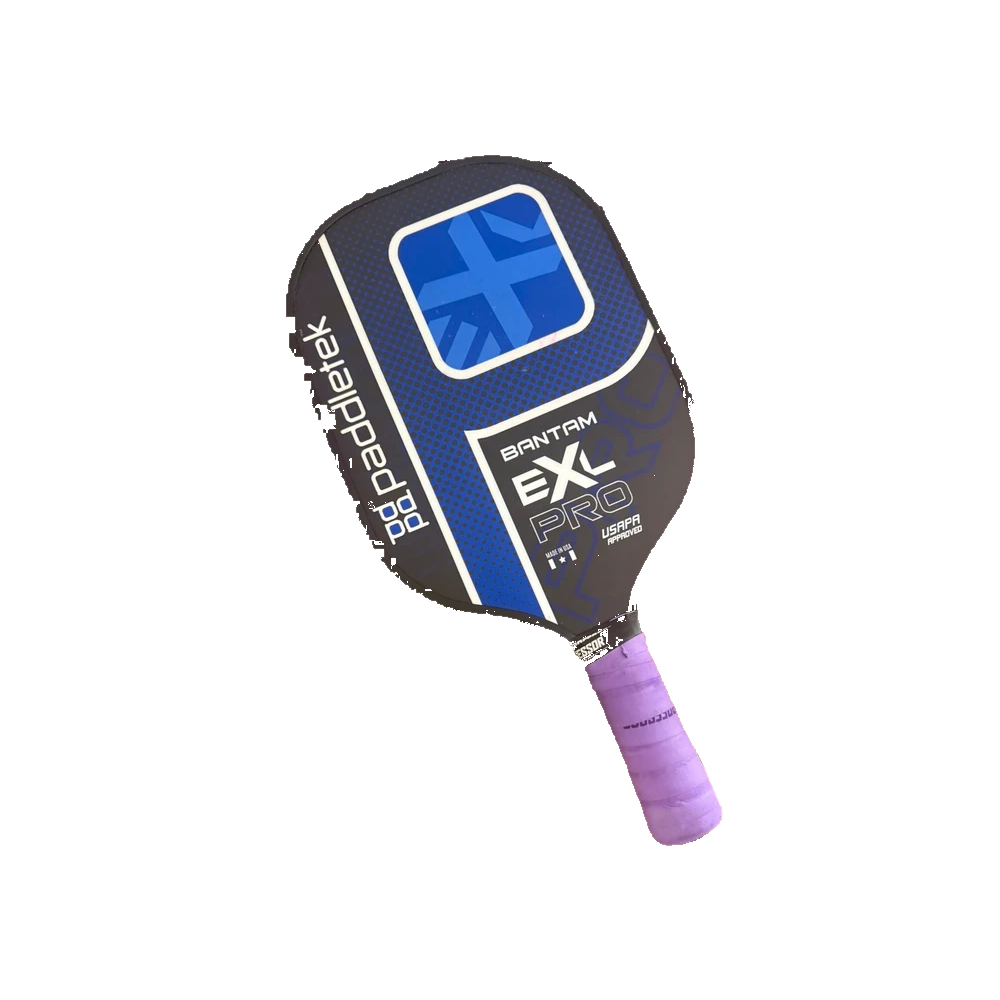
Grip reality: I appreciated the substantial feel of the grip, but over my 31–60 hours it wore enough to need replacing. My photo shows a purple wrap; I did not establish whether that wrap was original, an overgrip or a replacement, so I do not assign it a history.
Value: for the $99.99 I paid, I considered it good value and gave it an overall four stars out of five, while acknowledging the forgiveness and grip-wear drawbacks.
My pros
- Fast reactions in close kitchen exchanges and balls aimed at the body
- Strong drives, putaways and high-ball finishes when contact was clean
- Lively, unmistakable pop from the face
- Topspin that visibly changed the ball’s flight
- Relative lightness compared with several paddles I had used before
- A substantial grip feel I liked while it was in good condition
- Good personal value at my $99.99 purchase price
My cons
- Sweet spot felt narrow and I had many mishits
- Headward balance required technique adjustments
- Grip wore sufficiently to need replacement during my use
- Benefits depended more on finding clean contact than on forgiveness
Bottom line: 4.0/5, the rating I personally selected
The Bantam EX-L Pro Riptide Blue suited my more attacking doubles moments with strong pop, good topspin and fast hands. I could still control it in quick exchanges, but the narrow-feeling sweet spot and headward balance demanded attention, and grip wear was a practical cost. Those weaknesses are why this is a four-star review, not a claim that it is ideal for everyone.
What I tested: the blue EX-L Pro, not the ordinary EX-L
The paddle in my archived original photo is marked BANTAM EX-L PRO and has blue-and-black graphics consistent with the Riptide colorway. It also shows a purple-wrapped handle. The background was removed from an actual owner photograph for the single featured and product-card image. No paddle graphics or grip were invented or redesigned.
According to Paddletek’s EX-L Pro product specifications, the model uses a 14.3 mm Bantam Smart Response Technology core, a velvet-textured polycarbonate hitting surface, a standard 16 × 8 inch shape, a 4.75-inch handle and a manufacturer-listed 8.3–8.7 oz static weight range. Those numbers describe the product line; I did not weigh or measure my particular paddle. The manufacturer also lists standard and thin grip variants; I have not confirmed which factory grip was on mine or what the visible purple wrap represents.
Importantly, the EX-L Pro is not identical to the regular EX-L, which Paddletek lists with a 12.7 mm core and a 5-inch handle. When choosing online, I would confirm the model text, 14.3 mm thickness and Riptide color before placing an order.
My 31–60 hours: indoor doubles, independently purchased
I reported 31–60 hours in normal indoor doubles club games with indoor pickleballs. I bought the paddle in September 2026 for $99.99, paid the full price and received no sponsor support. I did not supply the exact number of sessions, a venue, an official playing rating, measured mass, swing weight or measured ball speed. All playing results below are my qualitative owner observations rather than a laboratory test.
I selected no first-hand answers about outdoor performance, singles, tournament use, defensive resets, ordinary dinks or specific advanced drops. Rather than filling those gaps with somebody else’s experience, I leave them unclaimed and discuss outside testers separately at the end.
Fast hands and offense: where the EX-L Pro impressed me
The biggest positive running through my answers was quick offensive responsiveness. I could react in tight kitchen exchanges, including when the ball arrived very close to my body. My control during these fast reactions felt good. When I chose to attack, I could hit powerful drives and putaways, and I could finish high balls effectively.
Those sensations matched the obvious pop I felt when the ball left the face. I reported both effective attacking pace and a distinct, lively impact response, which is a stronger first-hand description than a generic “powerful paddle” label. I did not measure speed in miles per hour, and I am not claiming every attempt was successful: the narrow-feeling sweet spot produced many mishits, as discussed below.
The EX-L Pro also felt lighter than several of my previous paddles. That is a comparative feeling, not a statement that this paddle has low static weight according to published specifications or that I measured its swing weight. I did not identify the comparison paddles, so I will not invent a specific head-to-head win against a named model.
Can a paddle feel relatively light and still be head-heavy?
Yes, and this distinction is important to my report. I specifically selected relative lightness compared with several other paddles and also said that I had to adjust my technique because the balance felt head-heavy. The total weight I feel in hand and the distribution of that weight toward the paddle head are different variables.
I therefore do not describe my EX-L Pro as perfectly neutral-balanced. Nor do I erase its quick-hand strengths because of the balance comment. The most faithful interpretation is that it felt relatively light to me and quick in short exchanges, but the headward weight distribution required some swing adjustment. I did not report how many sessions that adjustment took, whether it changed my wrist fatigue or whether added weight would improve the setup.
For background on why where weight sits matters in different ways, see my guide to paddle twistweight and stability. That is general technical context, not a measurement of this EX-L Pro.
Sweet spot: the biggest performance weakness in my test
Despite liking the offensive response, I found the sweet spot narrow and experienced many mishits. I am deliberately keeping that negative experience prominent: it is one of the clearest ways my review differs from some online reports praising forgiveness. A paddle can hit very powerfully when contact is clean and still be frustrating when the ball lands slightly away from the area that feels responsive.
My selection did not specify whether mishits tended to occur at the top, bottom, edge or one particular side of the face. I therefore cannot claim a precisely measured dead zone, a faulty core or the particular lower-face weakness reported by another customer. I also cannot turn this into a numerical sweet-spot area, ball-speed drop or twistweight figure. What I can say is that the forgiving area felt too small for my preference, and that affected my consistency.
Topspin: noticeable ball movement, no invented RPM
I reported that I could generate topspin that visibly affected the ball’s flight. That was a positive part of my attacking game. I did not select any personal experience claiming a specific slice performance, unusually strong spin on serves, deterioration after a few weeks or a win against a particular raw-carbon paddle. Those are absent from this review rather than inferred from other people’s tests.
Paddletek describes the face as velvet-textured polycarbonate. That is a manufacturer specification, not my microscopic surface analysis. For an explanation of why perceived surface texture and ball rotation do not automatically translate to measurable RPM, see the spin, grit and friction guide. I did not personally measure the face or its friction coefficient.
Grip: I liked the fuller feel, but it wore enough to replace
The grip gives this review an unusually practical ownership detail. I reported that a fairly substantial grip was a positive for me. I did not select a complaint about the factory handle being too short or too bulky. But during my reported use, the grip wore enough to require replacement. Both judgments can coexist: I liked the feeling while it served me, yet its wear was a downside.
The photograph shows a purple wrap on the handle. I have not confirmed whether it was the original factory grip, an overgrip, a replacement, or a wrap already present when I acquired the paddle. I will not claim that the purple wrap caused the wear or that it is proof of a completed grip replacement. Nor do I know the manufacturer of the wrap or the exact hour when wear became a problem.
Because I reported wear over a 31–60-hour window, I can discuss this as a genuine short-to-medium-term maintenance concern in my experience. I cannot generalize from one paddle to a universal defect or promise that other players’ grips will behave the same way.
What my $99.99 purchase tells me about value
I paid exactly $99.99 in September 2026 without a discount or sponsor arrangement, and I explicitly selected that the paddle was good value for money. That is a confirmed personal value judgment, not one derived from today’s advertised price. At that cost, I accepted the trade-off between lively offense and the limitations I experienced in clean contact and grip life.
For external price context, Paddletek has advertised the EX-L Pro at $99.99, while other sellers have used a $149.99 reference/MSRP. Price and color availability can change. I am not claiming that either is the current Amazon price or that every seller has Riptide in stock.
Since I could not independently verify a single exact Riptide Blue Amazon.com ASIN, my Amazon US search-results link (affiliate) is deliberately labelled as a search. Please check that a potential listing matches the EX-L Pro, 14.3 mm, Riptide color and your desired grip size, and verify the seller and return policy.
My comparisons with other Paddletek reviews
My other recent first-hand reports on ThePickleballWise include the Paddletek Bantam ALW-C 12.7mm Pink and Paddletek Bantam TS-5 Horizon Yellow. They can help you understand different models, but I did not provide any direct named comparison between either of those and this EX-L Pro in the current questionnaire.
It would therefore be misleading to write that I conclusively found the EX-L Pro faster than the TS-5, more powerful than the ALW-C, better at control than a Gearbox GX6, or superior in spin to an identified modern carbon model. Those are not personal comparisons I confirmed here. The useful contrast is between my separate published experiences, with the test conditions stated on each page.
My four-star rating: evidence behind the verdict
4.0 out of 5 is the rating I personally submitted. It is not an average of web reviews, and I did not supply scored subcategories. To keep the score, four visible stars, pros and cons and structured data consistent, I use that explicit rating throughout, with the following qualitative breakdown.
| Aspect | My first-hand report | Editorial interpretation |
|---|---|---|
| Fast handling | Quick reactions, including close-range balls to my body | Strong positive |
| Power and pop | Effective drives, putaways, high-ball finishes; lively response | Strong positive when contact was clean |
| Spin | Topspin visibly affected ball flight | Positive without numerical spin claims |
| Sweet spot / forgiveness | Narrow-feeling responsive zone and many mishits | Major drawback |
| Balance | Relatively light, yet headward balance required technique adjustments | Mixed, dependent on swing and context |
| Grip and ownership | Fuller grip liked, but wore enough to need replacement | Positive feel with maintenance drawback |
| Value at $99.99 | Explicitly considered it good value | Positive at actual paid price |
There is no made-up 4.4 score for power or 2.8 for forgiveness. This is a transparent narrative explanation of my actual 4/5 assessment, not a fabricated instrument-based scorecard.
Who I think should consider the EX-L Pro
My responses support a cautious recommendation for players who appreciate lively offense, quick doubles reactions, usable topspin and a substantial grip, and who are willing to work on clean contact. I found good value at my paid price. This is an interpretation of my stated priorities, not an owner-tested guarantee that the paddle suits every beginner, advanced tournament player or wrist condition.
I would be more cautious for someone who values a generous, forgiving sweet spot above all else, dislikes a headward feel or wants to avoid early grip maintenance. Because I played indoors with indoor balls, I cannot claim the same performance in specific outdoor conditions. Also, I made no personal assertions about how easy advanced drops, resets, slice or two-handed backhands were, so I do not fill those sections with invented results.
Independent hands-on reports — not my personal results
External perspective only: James at Hobson Homestead liked the EX-L Pro’s forgiving face, soft touch and ability to finish with power, based on his own older hands-on comparison. Pickleball Central’s testers Kelsey and Dean described a large or adequate sweet spot, while Dean also found the response softer and less poppy than preferred. These reports differ from my own narrow-feeling sweet spot and lively pop. That disagreement is worth acknowledging rather than quietly replacing my experience with theirs. Their test colors/configurations are not independently verified as the exact Riptide Blue and grip setup shown in my photo. Paddletek customer David F. separately described weak short-shot response in the lower half of his EX-L Pro; I did not specifically report that location, so I am not claiming that result myself.
Frequently asked questions
Is the Bantam EX-L Pro good for offensive doubles?
In my 31–60 hours of indoor doubles, I liked its fast reactions, effective drives, high-ball putaways and pop. The main caution was that I experienced many mishits because the sweet spot felt narrow.
Is the EX-L Pro head-heavy or lightweight?
Both descriptions had a place in my experience: it felt lighter than several paddles I had used but the balance felt biased toward the head, enough to make me adjust my technique. I did not measure static or swing weight.
Does it have a large sweet spot?
Not to me. Mine felt narrow and I had many mishits. Some independent owners report more forgiveness, but their experiences should not overwrite mine.
Does the grip last?
My grip wore enough to warrant replacement during my reported 31–60 hours of play. I liked its relatively full feel, but the visible purple wrap’s exact origin is unknown. I cannot extrapolate a universal lifetime from one sample.
Is this the same as the regular Bantam EX-L?
No. Paddletek specifies the EX-L Pro at 14.3 mm, while the standard EX-L is listed at 12.7 mm. Check the exact model when shopping.
What did I actually pay?
$99.99 in September 2026, with no discount or sponsorship. This is my own purchase price and does not certify a live Amazon offer.
Review integrity: All “I/my” performance findings come from this owner’s submitted questionnaire. I have not invented exact hours, number of sessions, measured weight, spin RPM, ball speed, outdoor results, comparisons with specific paddles not selected, the nature of the purple grip, or long-term durability beyond the reported grip wear. Sources for manufacturer specifications and other reviewers are linked separately. The single product photo is an actual owner image with background removed, not an AI-rendered paddle.

Jonathan Grøn created The Pickleball Wise. He coaches beginner pickleball players and captains a pickleball team in Series 2. He combines on-court experience with official rules and coaching resources to write practical guides on doubles strategy, skills, and training.