Indoor vs Outdoor Pickleball Balls: Which One to Use
Indoor and outdoor pickleballs are usually easy to tell apart, but the familiar “26 holes indoors, 40 holes outdoors” rule is a convention—not the full USA Pickleball equipment rule. Current USA Pickleball standards allow approved balls with 26 to 40 circular holes, and the official approved-ball database includes Indoor, Outdoor and I/O models.
Need help choosing or verifying a ball? Use the Pickleball Ball Selector & Approved Ball Database to match conditions, search approved models and find our hands-on tested picks.
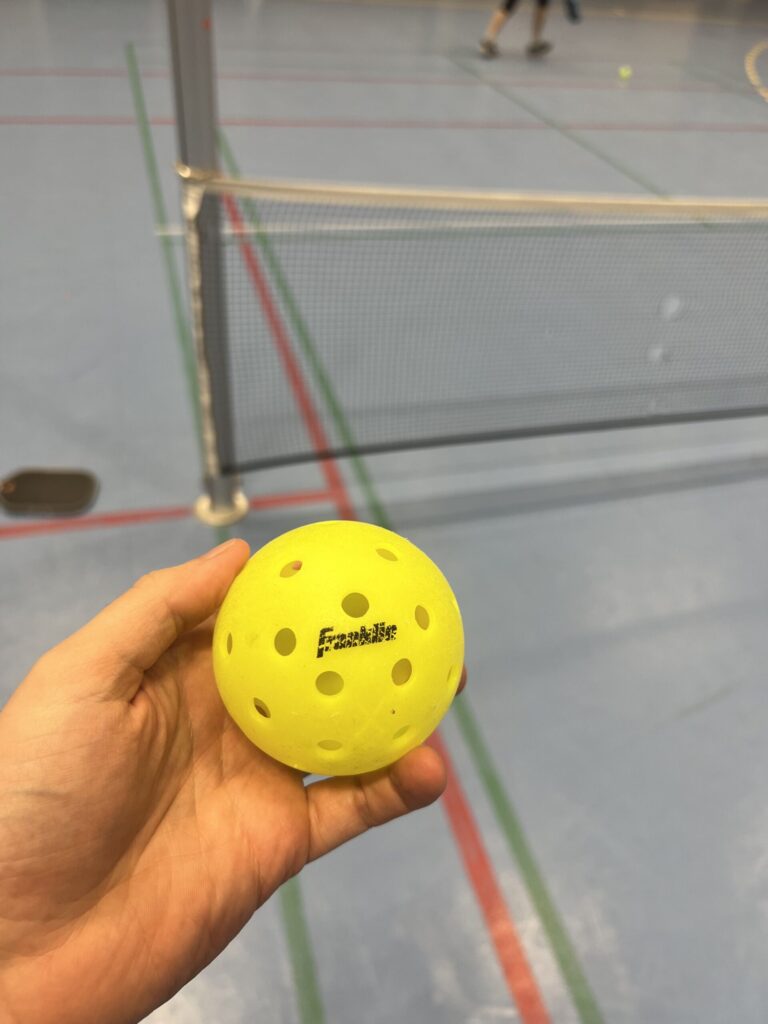
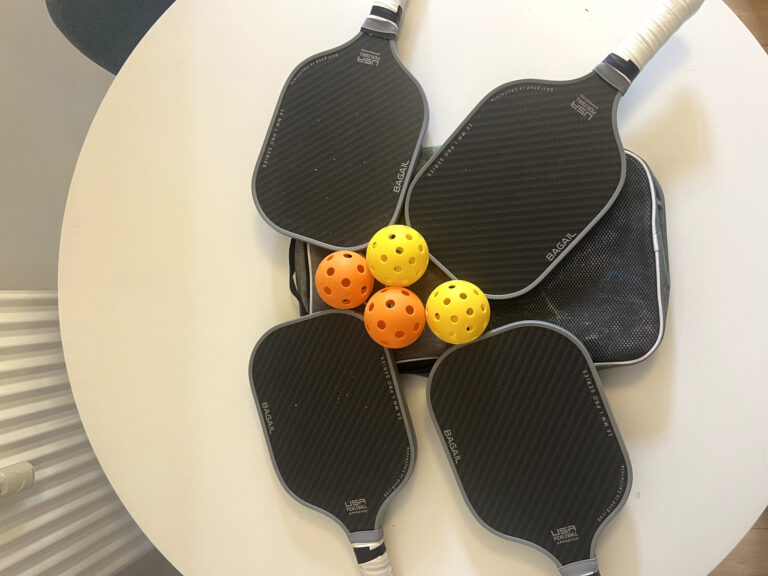
For actual play, the practical difference is still clear: indoor balls are generally softer and slower with fewer, larger holes; outdoor balls are generally harder and faster with more, smaller holes for wind and rougher surfaces. But choosing the right ball is better than counting holes alone.
For specific first-hand recommendations in both categories, see my best pickleball balls guide.
Indoor vs Outdoor Pickleball Balls at a Glance
| Feature | Indoor ball | Outdoor ball |
|---|---|---|
| Typical hole pattern | Fewer, larger holes—often around 26 | More, smaller holes—often around 40 |
| Typical feel | Softer, slower, easier to control | Firmer, faster, more direct |
| Best surface | Wood or smooth indoor sport floors | Concrete, asphalt and textured acrylic courts |
| Wind behavior | More affected by moving air | Designed to be more stable outdoors |
| Wear pattern | Can scuff or deform if used on rough outdoor courts | More likely to crack or go out of round after repeated hard outdoor use |
| Tournament question | Use the exact ball selected by the event; sanctioned tournament balls must be on the current approved list. | |
The Important Rule Most Guides Miss
USA Pickleball’s current equipment standards do not say that an indoor ball must have exactly 26 holes or an outdoor ball exactly 40. The standard allows 26–40 circular holes, while also regulating size, weight, bounce, compression and design.
The official approved-ball database reinforces that distinction because balls can be classified as Ind, Out or I/O. That means hole count is useful shorthand, but the model’s actual design and approval entry matter more than a simple visual rule.
Current USA Pickleball specifications also require an approved ball to be 2.87–2.97 inches in diameter and weigh 0.78–0.935 ounces. Those ranges apply across the approved-ball system rather than creating separate official size and weight rules for indoor and outdoor balls.
Choose the Ball From the Court, Not the Roof
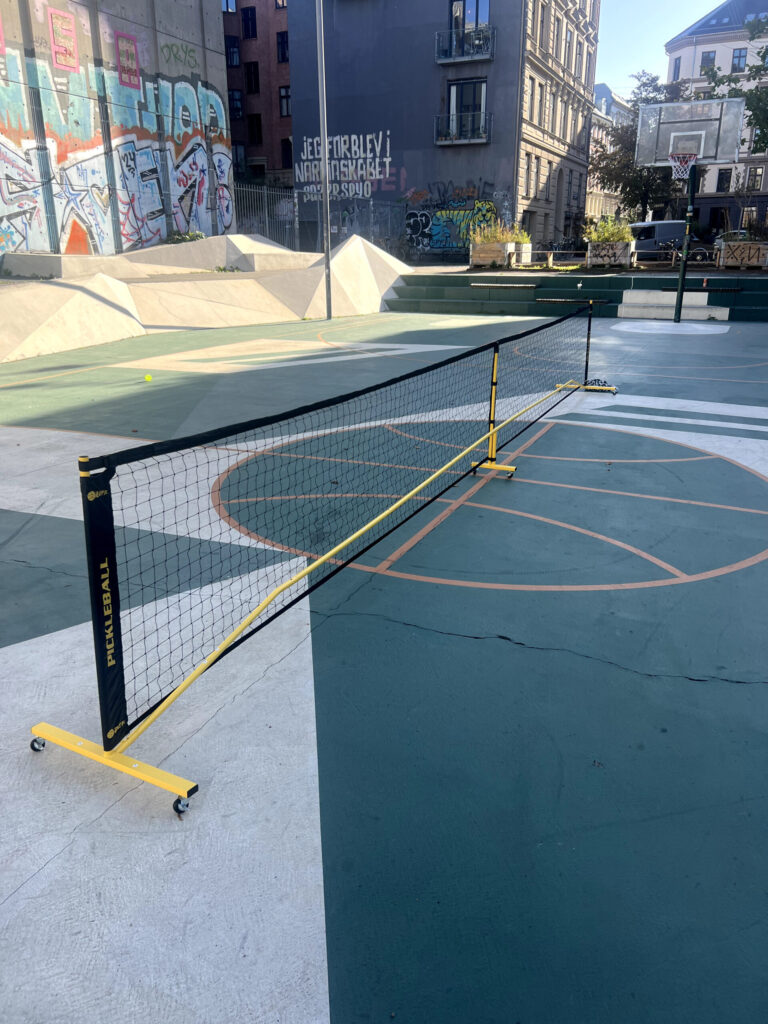
“Indoor” does not always mean “indoor ball.” Many indoor pickleball facilities use outdoor-style acrylic courts rather than smooth gym floors. In that setting, players may prefer or be required to use an outdoor-style ball even though the building has a roof.
Use this decision order:
- Check the venue or event ball first. If the organizer specifies a ball, that decides the question.
- Look at the playing surface. Smooth wood/gym surfaces tend to suit indoor balls; textured hard courts tend to suit outdoor balls.
- Consider wind and temperature. Outdoor conditions make ball stability and material behavior more important.
- Then consider feel. Softer/slower versus firmer/faster is a playing preference only after the environment is appropriate.
What Happens if You Use the “Wrong” Ball?
Indoor ball outdoors: it may move more in wind, feel slow, and wear quickly on rough surfaces.
Outdoor ball on a smooth gym floor: it may feel faster and harsher than players expect, with a different bounce and sound profile.
Neither choice automatically makes recreational play impossible. The bigger issue is that it changes the timing and feel enough that your practice may not transfer cleanly to the ball used in your normal league or tournament environment.
A Better Ball Test Than Counting Holes
If two balls both seem reasonable for your venue, compare them with the same four checks:
- Bounce consistency: does one ball produce noticeably unpredictable bounces after a few rallies?
- Flight in the actual room or wind: does it drift more than expected?
- Surface durability: inspect for scuffing, cracking or deformation after play.
- Match transfer: is this the same type of ball your league, club or tournament uses?
The last point matters more than players think. If you train exclusively with a slow indoor ball but compete with a firmer outdoor ball, your reaction timing, resets and hands exchanges can feel different even if your technique is unchanged.
Tournament Play: Check the Exact Ball
For USA Pickleball-sanctioned competition, the tournament director selects the ball and that model must appear on the current approved-ball list. Do not assume that every ball from a familiar brand is approved, or that a ball used at one event will be used at another.
If you compete regularly, a simple preparation habit is to practice at least part of the week with the same model or a closely similar ball to the one named by the event.
Which Ball Should You Use?
Use an indoor ball for smooth indoor floors when that is the venue standard, and an outdoor ball for textured hard courts and outdoor conditions. Treat 26 vs 40 holes as a helpful convention, not an absolute rule.
For competition, the final authority is the exact approved ball selected by the event—not the hole count printed in a buying guide.
If you want the technical limits behind the choice, see our pickleball ball specifications guide. For temperature-related behavior, see our cold-weather pickleball guide.
Sources
- USA Pickleball Approved Ball List
- USA Pickleball Rules & Equipment Standards
- Pickleball.com ball-selection guide

Jonathan Grøn is a pickleball player and racket-sports enthusiast who focuses on practical doubles strategy, rules, skills, and training. He combines regular on-court experience with research from official rules, coaching resources, and other authoritative sources to create clear, useful pickleball guides.