adidas Speedcourt Review for Pickleball: Great Stability, Tricky Fit
I bought these adidas Speedcourt indoor shoes for my girlfriend on August 23, 2026 for €38.50. She normally wears around EU 38.5–39, but after trying EU 38 and then EU 39, we ended up with EU 40 because the smaller sizes felt too tight. Even in EU 40, the fit around the outer toes is still the main thing she does not love.
She has used them only for indoor pickleball, typically 2–3 times per week for 2–4 hours at a time in badminton halls and on indoor sports floors. That works out to roughly 45–50 estimated hours of pickleball so far, with a plausible range of about 26–77 hours depending on how many sessions and how long they actually were.
My short version: they are a very good budget indoor-court shoe for beginner and intermediate pickleball players. Grip, lateral stability, cushioning and overall comfort have all been strong. The biggest weakness is sizing and toe-box fit: she feels safer and faster than she did in normal sneakers, but the shoe still feels a little tight around the outside of the toes.
Affiliate disclosure: As an Amazon Associate I earn from qualifying purchases. If you buy through a paid link on this page, The Pickleball Wise may earn a commission at no extra cost to you. I bought these shoes myself for my girlfriend and received no discount, free product, sponsorship or compensation.
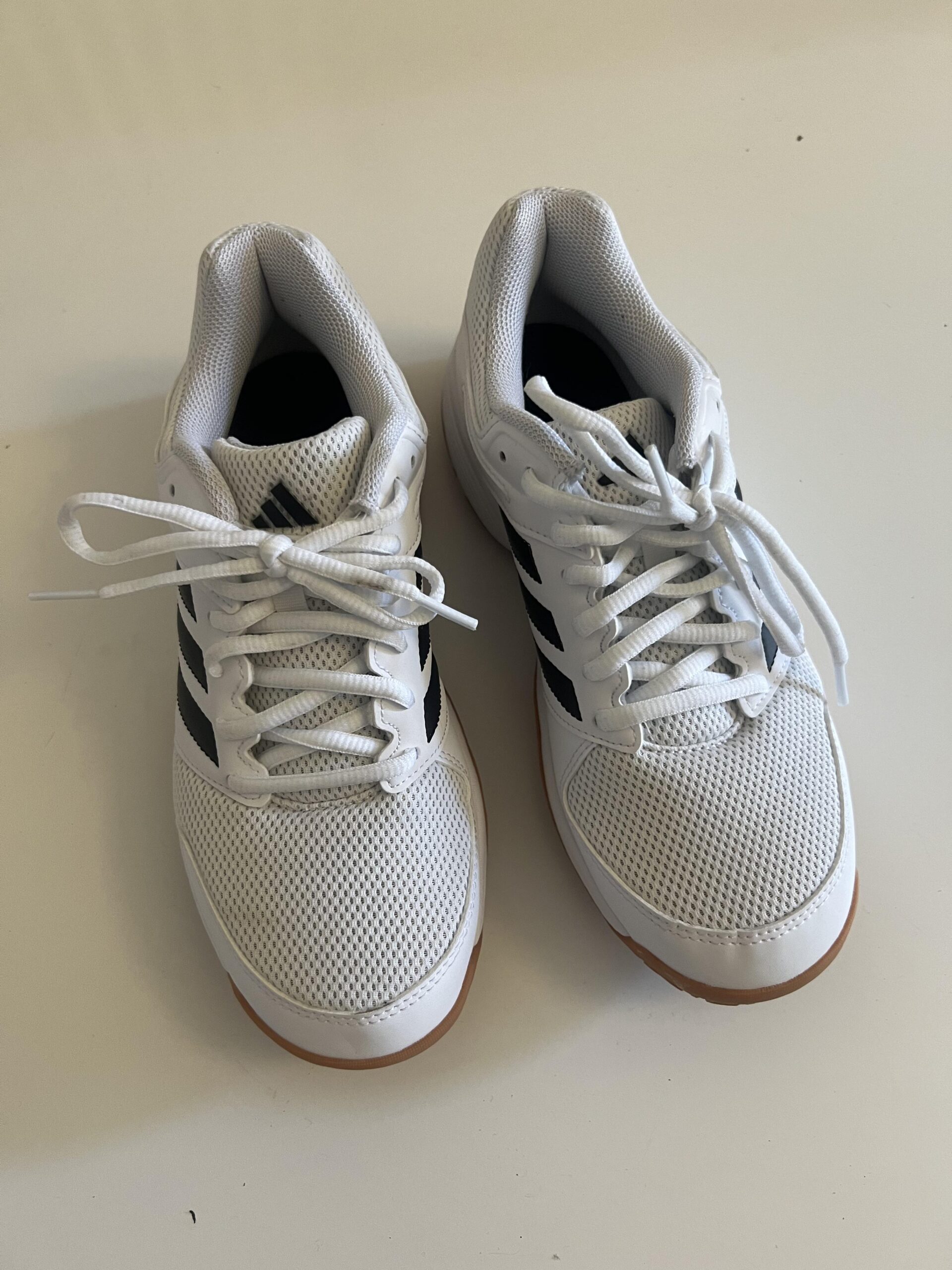
adidas Speedcourt Indoor Shoes — 4.4/5
Quick verdict: Excellent value for indoor pickleball. They feel light, low and responsive, grip well, give good cushioning and noticeably improve lateral confidence compared with normal sneakers. The main drawback is fit: my girlfriend had to move up to EU 40 despite usually wearing around 38.5–39, and the outer toe area still feels slightly tight.
Best for: beginner and intermediate indoor pickleball players who want a stable, grippy and affordable court shoe.
Skip if: you are sensitive to toe-box pressure, want a roomier forefoot, or play at a high competitive level and want a more premium court shoe.
- Noticeably better lateral stability than ordinary sneakers
- Good grip with no meaningful slipping on indoor courts
- Light and responsive during quick movement
- Good cushioning for split steps, jumps and landings
- Comfortable for 2–4 hour pickleball sessions
- No blisters, hotspots or pain during use
- Heel stays secure with no heel slip
- Very little visible outsole or upper wear so far
- Excellent value at the €38.50 price we paid
- Sizing was frustrating: EU 38 and 39 were too small before EU 40 worked best
- Even EU 40 still feels slightly tight around the outside of the toes
- Materials feel a little budget-oriented despite performing well
- Design is fine, but she would personally prefer something more colorful/feminine
- For advanced tournament-level play she would probably look at a more premium shoe
Bottom line
At 4.4/5, the Speedcourt is a very strong budget indoor pickleball shoe. Stability is the biggest advantage, and the shoe has delivered good grip, comfort and durability for the money. The main reason it does not score higher is the fit around the toes and the amount of trial-and-error needed to find the least restrictive size.
How we tested the adidas Speedcourt for pickleball
- Purchased: August 23, 2026
- Price paid: €38.50
- Color: Cloud White / Core Black / Gum
- Final size: EU 40
- Usual shoe size: roughly EU 38.5–39
- Sizes tried: EU 38, EU 39 and finally EU 40
- Use: indoor pickleball only
- Frequency: around 2–3 times per week
- Session length: around 2–4 hours
- Estimated use so far: roughly 45–50 hours, based on the midpoint of the reported schedule
- Surfaces: mainly badminton-hall floors, plus some indoor sports flooring
- Tester: my girlfriend; I bought the shoes and gathered her ongoing first-hand feedback
The estimated 45–50 hours is not a logged stopwatch total. From August 23 to October 7 there are about 6.4 weeks. At 2–3 sessions per week and 2–4 hours per session, the theoretical range is roughly 26–77 hours, with about 48 hours at the midpoint. I use the rounded 45–50-hour estimate rather than pretending we tracked every session exactly.
The biggest issue is sizing and toe-box fit
The Speedcourt’s fit was by far the most annoying part of the purchase. My girlfriend normally wears around EU 38.5–39, but we first tried EU 38, then EU 39, and both were too small. We eventually settled on EU 40.
EU 40 is clearly the best of the three for her, but it is still not perfect. She continues to feel a little pressure around the outside of the toes. The shoe does not feel unusually wide or narrow overall; the issue is specifically the way the forefoot/toe area fits her foot.
Her practical advice would be to try at least one size up rather than assuming your normal size will work. I would not turn that into a universal claim that all adidas sport shoes run small. adidas currently labels this Speedcourt as a regular-fit shoe, while her first-hand experience with this pair was clearly that she needed more room.
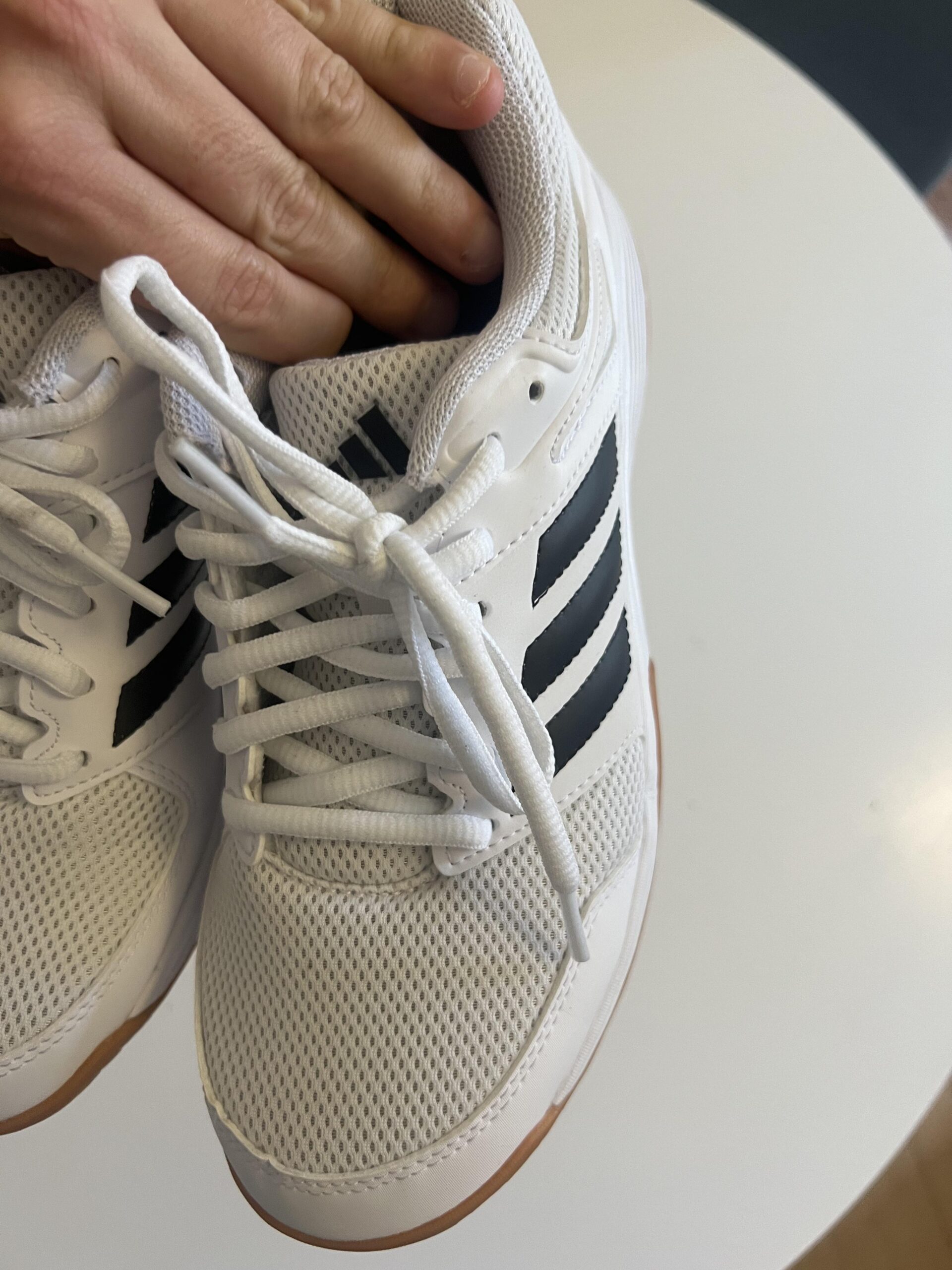
Because toe-box shape varies from shoe to shoe, I would use this as one fit experience rather than a universal size chart. For a broader fit checklist, see our pickleball shoe fit guide on toe clearance, heel security and trying shoes on.
Comfort is good once the size is workable
Despite the fit issue, the shoes were comfortable from the first session and did not require a meaningful break-in period.
She regularly plays for two to four hours and has not had blisters, hotspots, pain or general foot soreness from the shoes. That matters because a shoe can feel fine for 20 minutes and become irritating in a long doubles session; that has not been the case here.
Cushioning has also been good enough for the movements she makes in pickleball: split steps, short accelerations, small jumps and repeated landings. The shoe does not feel overly soft or high off the floor. Her description is closer to low, light and responsive.
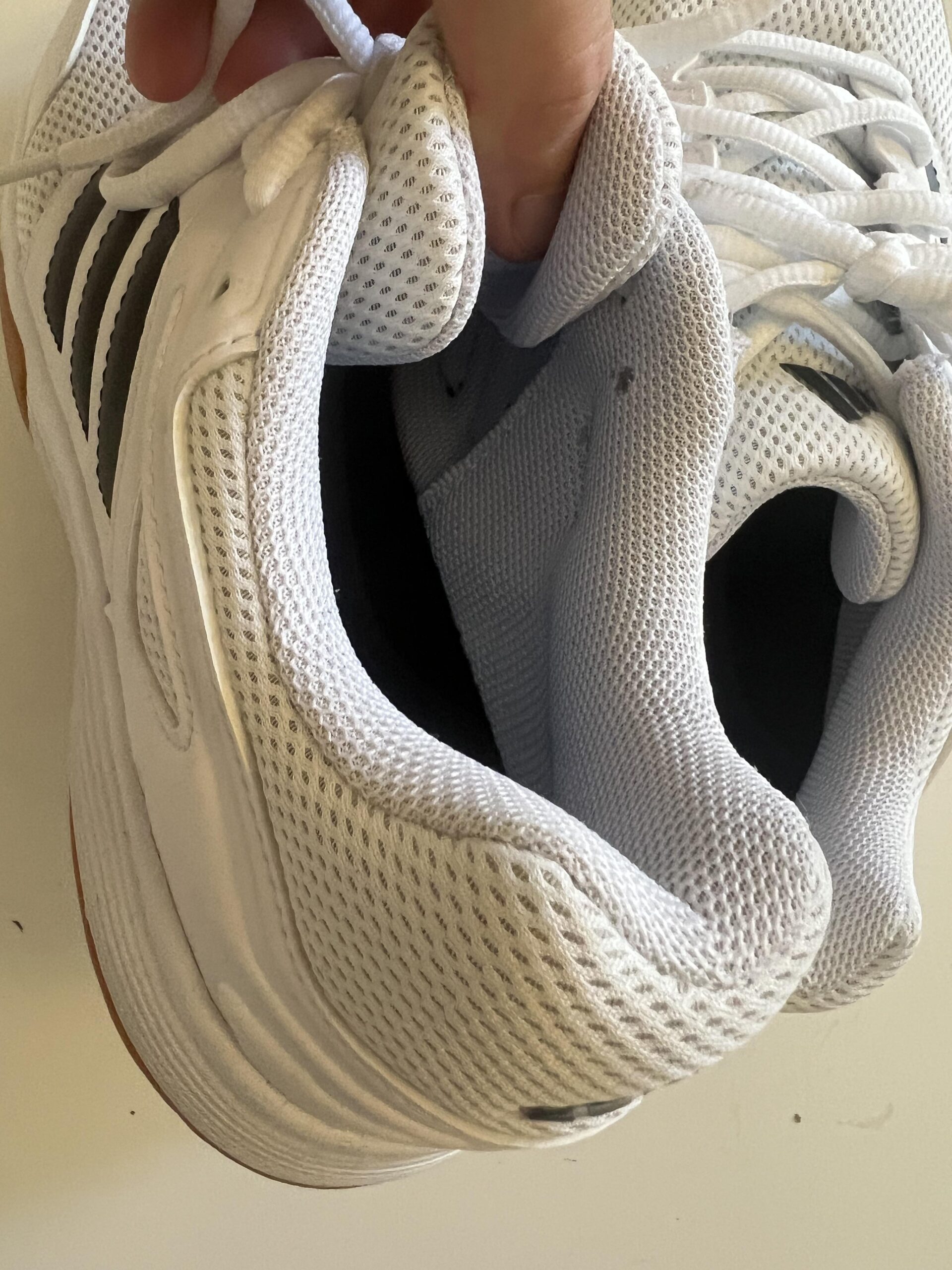
Stability is the biggest upgrade over normal sneakers
Before these, she played pickleball in ordinary sneakers. The biggest difference she notices is lateral stability.
She feels safer when moving side to side and more confident changing direction quickly. That confidence also lets her move faster without feeling that the shoe is rolling underneath her.
She has fallen once while wearing them, but based on what happened she does not think the shoe was the cause. Across the rest of her use, there has not been a pattern of instability.
This is the single strongest reason I would recommend the Speedcourt over normal lifestyle sneakers for someone starting indoor pickleball.
Grip has been consistently good
Grip has also been a strong point. She has not noticed meaningful slipping on the badminton-hall or sports-floor surfaces where she plays.
She also has not noticed a major difference between cleaner and dustier floors. I would still expect any indoor outsole to pick up dust eventually, but in her actual sessions the gum rubber outsole has continued to feel predictable.
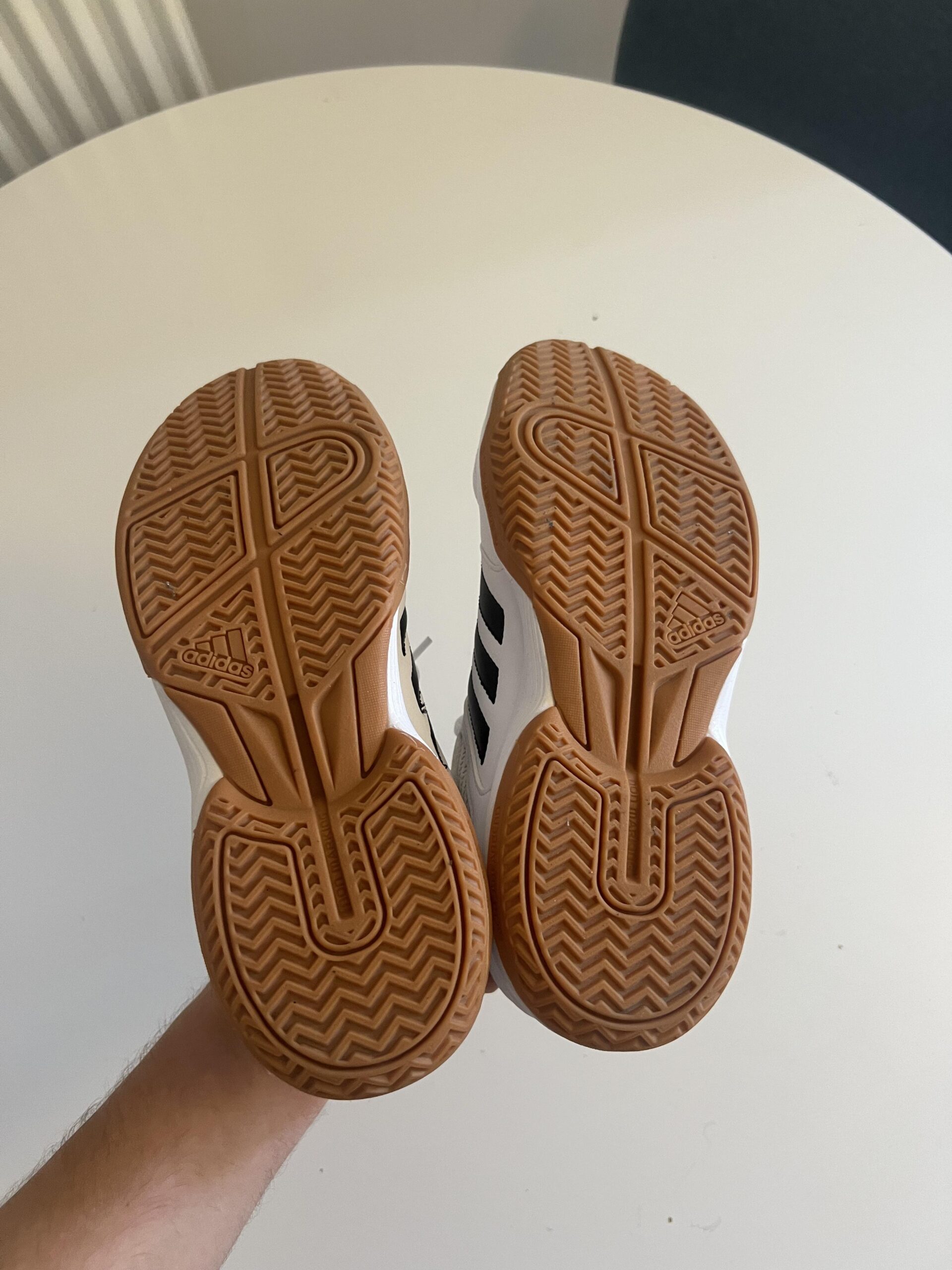
They feel light, quick and low to the floor
The Speedcourt does not feel like a bulky training shoe. She describes it as light and quick, which suits the short movement patterns in doubles pickleball.
The low, responsive feel is also part of why the shoe feels stable. She does not feel perched high above the floor, and the shoe reacts quickly when she pushes laterally or moves into the kitchen.
Breathability is good
The textile upper breathes well enough for her indoor sessions. Her feet get warm after playing, but they do not become excessively sweaty.
The material itself feels comfortable against the foot. The only criticism is that it can feel a little budget-oriented in hand compared with a more premium court shoe. For the price we paid, that has not translated into a performance problem.
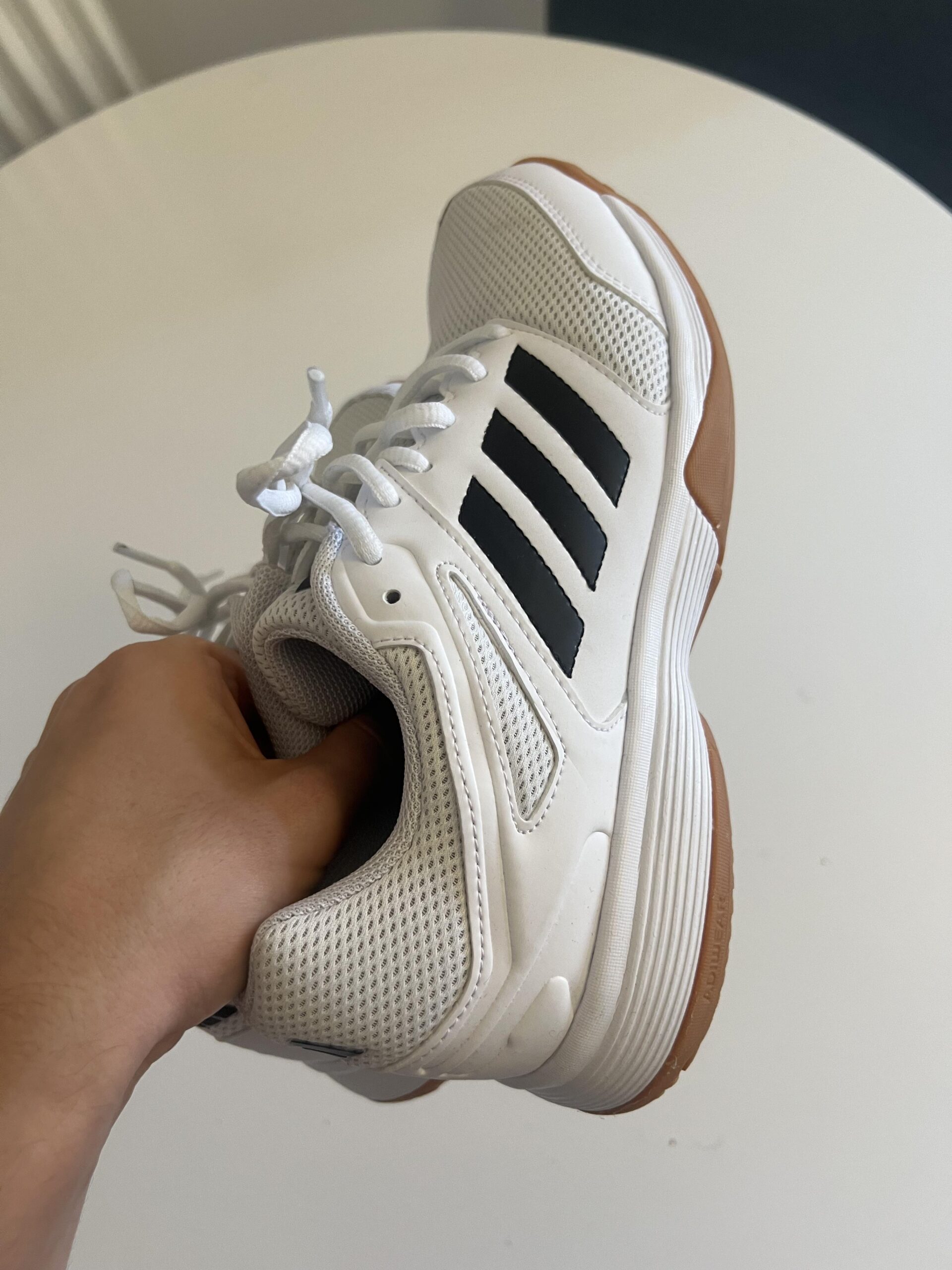
Durability looks excellent so far
At roughly 45–50 estimated hours, there is very little obvious wear.
The outsole still looks healthy, the upper has no obvious tearing, the seams are intact and there is no significant wear around the heel padding. That is encouraging because all of the use has been actual indoor court play rather than casual walking.
I would still call this early-to-mid-term durability evidence, not a long-term conclusion. We have only owned the shoes since late August. I will be much more confident about outsole and upper longevity after several more months.
They have not needed a real cleaning yet. For light dirt, we expect simple exterior cleaning wipes to be enough, but that is not something I would score because we have not actually tested a cleaning routine.
Design is fine, but not a reason she would rebuy them
The Cloud White / Core Black / Gum colorway looks clean and neutral. She thinks the design is okay, but she would personally prefer something more colorful—ideally a more feminine or pink-toned option.
That is obviously subjective and has nothing to do with on-court performance, but it matters for whether she would buy the exact same pair again.
Value is one of the strongest parts of the Speedcourt
We paid €38.50, and at that price I think the value is excellent.
For less than €40, she moved from normal sneakers to a proper indoor-court shoe with much better lateral confidence, strong grip, good cushioning and very little visible wear so far.
Based on her experience, around €60 would still feel like a reasonable upper price for this level of performance. Above that, she would be more inclined to compare it with other indoor court shoes that might offer a better toe-box fit or a design she prefers.
Check the current adidas Speedcourt price on Amazon (paid link) →
Would she buy the adidas Speedcourt again?
At €38.50, she would still consider the Speedcourt a very good purchase. But if she were buying another pair tomorrow, she would probably try a different model first.
That is not because these performed badly. It is because the fit around the outer toes is still not quite right, even after sizing up, and she would like a shoe with a design she likes more.
So the answer is: good enough to recommend, but not so perfect that she would stop shopping around.
Who should buy these for pickleball?
I think the Speedcourt makes the most sense for:
- beginners moving from ordinary sneakers to their first real court shoe;
- intermediate indoor pickleball players on a budget;
- players who value lateral stability and secure grip;
- players who like a light, low and responsive court feel;
- buyers who can try multiple sizes or have an easy return/exchange option.
I would look elsewhere if:
- you need a roomy toe box or are very sensitive to outer-toe pressure;
- you already play high-level competitive pickleball and want a more premium dedicated court shoe;
- you want a heavily cushioned, plush shoe rather than a low responsive feel;
- you strongly care about fashion/color options and do not like this neutral design.
These are indoor court shoes, not an all-surface recommendation. If you also play outside, read our indoor vs outdoor pickleball shoe guide to match the outsole to the playing surface.
What adidas says about the Speedcourt
adidas currently describes the Speedcourt as an indoor-court shoe with a regular fit, lace closure, lightweight textile upper and rubber outsole. The company specifically positions the outsole for grip on flat indoor surfaces and quick changes of direction.
Those are manufacturer specifications. The claims in this review about grip, stability, comfort, fit and durability come from my girlfriend’s use of this pair for indoor pickleball.
See adidas’ Speedcourt product details →
Why I rate the adidas Speedcourt 4.4/5 for indoor pickleball
My overall rating is 4.4/5. This score is based on my girlfriend’s documented first-hand use and our published rating method, not on a laboratory footwear test.
| Criterion | Weight | Score | Why |
|---|---|---|---|
| Stability / court movement | 25% | 4.7/5 | The biggest strength. She feels safer and moves more confidently than in normal sneakers. |
| Comfort / fit | 25% | 3.7/5 | Comfortable for long sessions with no blisters or pain, but sizing was frustrating and the outer toes still feel slightly tight. |
| Grip | 15% | 4.7/5 | Strong indoor traction with no meaningful slipping in her use. |
| Cushioning | 10% | 4.5/5 | Good for split steps, jumps and landings while staying low and responsive. |
| Durability | 10% | 4.7/5 | Very little visible outsole or upper wear after roughly 45–50 estimated hours. |
| Breathability / materials | 5% | 4.2/5 | Good ventilation and comfortable materials, though the upper feels slightly budget-oriented. |
| Value | 10% | 4.8/5 | Excellent court performance for the €38.50 we paid. |
| Weighted rating | 4.4/5 | 4.415 before rounding. | |
My final verdict
The adidas Speedcourt is an easy shoe to recommend as a first proper indoor pickleball shoe—especially around the €40 price point.
Its biggest advantage is not fancy technology. It is that it gives a beginner or intermediate player the things that matter most on an indoor court: stable lateral movement, reliable grip, enough cushioning and a lightweight responsive feel.
The one caution is fit. My girlfriend normally wears around EU 38.5–39, but we had to go through EU 38 and 39 before settling on EU 40, and even that size still feels slightly tight around the outer toes. If you can, try the Speedcourt on before buying—or order from somewhere with easy exchanges.
For her, the shoe has been a clear performance upgrade from normal sneakers. She just hopes the next pair can keep the same stability and grip with a better-shaped toe box.
Frequently asked questions
Are adidas Speedcourt shoes good for pickleball?
For indoor pickleball, yes in my girlfriend’s experience. They provide good lateral stability, grip, cushioning and a light responsive feel. They were designed as indoor court shoes rather than specifically as pickleball shoes, but the movement demands translate well.
Do adidas Speedcourt shoes run small?
adidas labels the model as regular fit, but my girlfriend’s experience was that she needed to size up significantly. She normally wears around EU 38.5–39, tried 38 and 39, and ended up in EU 40. Even EU 40 is still slightly tight at the outer toes. That is one person’s fit experience, not a universal sizing rule.
How much use have these shoes had?
She has worn them for indoor pickleball around 2–3 times per week since August 23, 2026, usually for 2–4 hours per session. Based on that schedule, I estimate roughly 45–50 hours so far, with a wide possible range because every session was not logged.
Do they grip well on badminton-hall floors?
Yes in her experience. She has not had a meaningful slipping problem on the badminton-hall or indoor sports floors where she plays.
Are they good for beginners?
Yes. I think beginner and intermediate indoor pickleball players are the strongest use case because the shoes provide a major stability upgrade over normal sneakers without requiring a premium-shoe budget.
Would she buy them again?
She thinks they were very good value at €38.50, but she would probably try another model next because she wants a better fit around the outer toes and would prefer a different design.
Review methodology and sources
This review is based primarily on my girlfriend’s ongoing first-hand use of the pair I bought for her. I did not wear the shoes myself. Her feedback covers sizing, toe fit, heel security, comfort, grip, cushioning, stability, responsiveness, breathability and visible wear after roughly 45–50 estimated hours of indoor pickleball.
Manufacturer information about the regular fit, textile upper and rubber indoor outsole comes from adidas’ current Speedcourt product page. Those specifications are kept separate from our first-hand observations.

Jonathan Grøn is a pickleball player and racket-sports enthusiast who focuses on practical doubles strategy, rules, skills, and training. He combines regular on-court experience with research from official rules, coaching resources, and other authoritative sources to create clear, useful pickleball guides.