Fostoy Portable Pickleball Net Review: My 30-Hour Test
This Fostoy portable pickleball net review is based on my own purchase on July 8, 2026, and roughly 10 sessions of about three hours each. Most of that has been with the full 22 ft net for doubles and drills, outdoors on basketball courts, hockey courts and other hard park surfaces, with some indoor use too.
After roughly 30 hours of real play, the standout feature for me is not actually the included 11 ft half-court net. It is the locking wheels. They make it much easier to straighten or reposition the assembled net after wind or several games, and that is a practical advantage I miss on the other portable nets I have used.
My main caveat is stability in strong wind. The Fostoy is solid for a portable system, but it can still shift, stand slightly crooked after play or even tip in very strong wind. I sometimes use the carry bag or another heavy object as extra ballast. Long-term durability is also still an open question: after about 30 hours I have seen no rust, sagging, loose joints or meaningful wear, but this is not yet a one-year durability test.
Affiliate disclosure: As an Amazon Associate I earn from qualifying purchases. If you buy through a paid link on this page, The Pickleball Wise may earn a commission at no extra cost to you. The comments below are based on my own use of the Fostoy net.
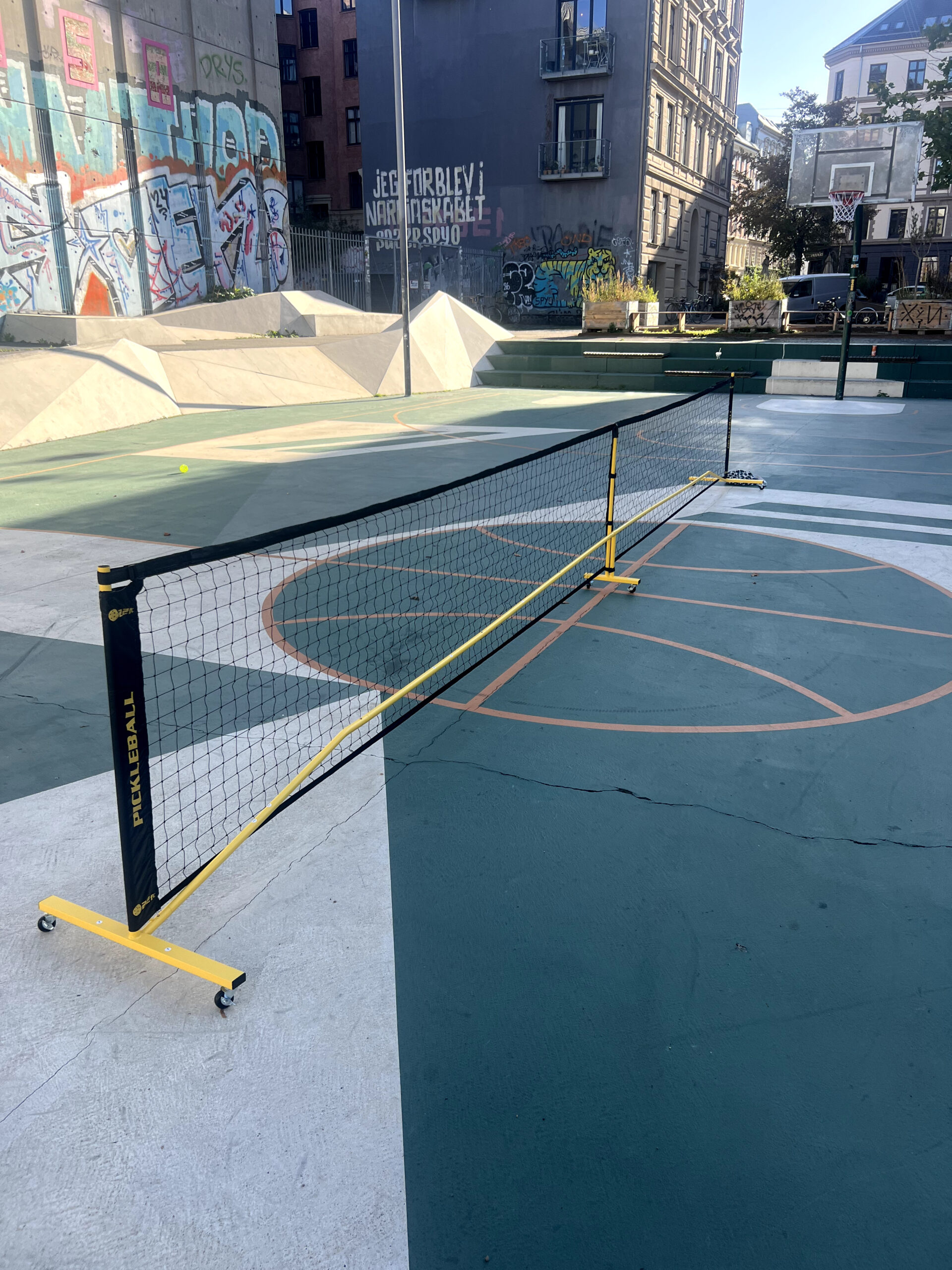
Fostoy Portable Pickleball Net with Wheels — 4.5/5
Quick verdict: I would buy this net again. It sets up quickly, holds good tension, packs down better than I expected and has been easy enough for me to carry up and down three flights of stairs. The locking wheels are the best part because I can straighten or move the assembled net without lifting the whole frame.
Best for: serious recreational players, clubs, coaches and families who need to bring a regulation-height portable net to different indoor or outdoor locations.
Skip if: you want the feel and wind resistance of a heavy semi-permanent or premium tournament-style system, or if carrying a long roughly 17 lb bag is difficult for you.
- Locking wheels make repositioning the assembled net genuinely easy
- About 5-minute solo setup for the 22 ft version once familiar
- Good net tension with no sagging or repeated retensioning in my use
- Solid frame with no looseness after roughly 30 hours
- Carry bag is more usable and roomy than I expected
- 11 ft net adds useful drill and small-space flexibility
- Strong wind can still shift or tip the net
- The long carry bag may be awkward for some older players or on stairs
- Push-button connectors may require a little finger strength
- Nearly three months is too early to make a confident long-term durability claim
Bottom line
For my use — doubles, drills, parks, outdoor hard courts and halls that do not already have nets — the Fostoy has been a very practical portable system. The wheels are what make it stand out for me.
How I tested the Fostoy net
- Purchased: July 8, 2026, with my own money
- Compensation: none; the product was not free or discounted for this review
- Use so far: roughly 10 sessions × about 3 hours, or around 30 hours total
- Main configuration: 22 ft full-width net
- 11 ft use: tested once for half-court/small-space practice
- Main activities: doubles, solo drills and two-player drills
- Surfaces: outdoor basketball/hockey-style hard courts and similar park surfaces, plus some indoor use
- Weather: sun, wind and a little rain; I always pack the net away afterwards
- Height check: I measured the setup and got the expected 36 in at the sidelines and 34 in at center
This is a meaningful early ownership test, but not a multi-year durability test. I can judge setup, portability, tension, stability, wheels, storage and early wear with confidence. I cannot yet promise how the net, bag, wheels or frame will look after hundreds of sessions.
Why I bought this net
I wanted a portable net that I could use for serious practice and full doubles matches rather than only casual backyard play. I also needed something I could move between outdoor courts and indoor halls, because the places I play do not always have a net ready.
The Fostoy appealed to me because it combined a full 22 ft setup, an additional 11 ft net, a metal frame, a carry bag and wheels at a price that looked more reasonable than many premium systems.
I did not buy it primarily for the 11 ft option. I bought it because, among the portable nets I was comparing, it looked like one of the stronger fits for club-style play, drills and frequent transport without moving into the price range of heavy semi-permanent systems.
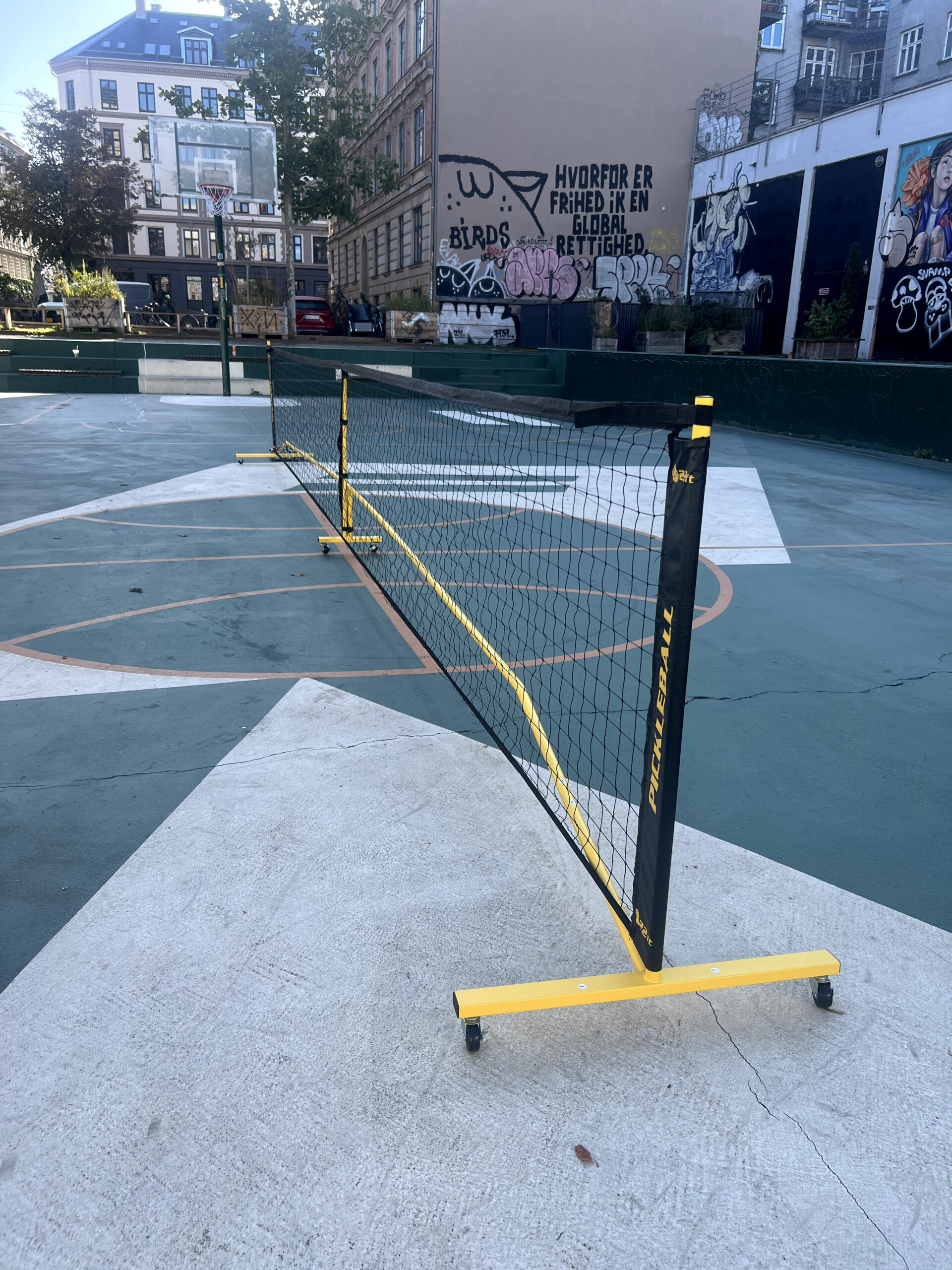
The wheels are the biggest advantage
If I had to name one reason I would buy this Fostoy again, it would be the wheels.
Portable nets do not always stay perfectly aligned through a long session. Wind can push them, players can bump them and after several games the frame may end up sitting slightly crooked. With a non-wheeled net, correcting that can mean lifting or dragging sections of the frame.
With the Fostoy I can simply unlock the wheels, roll the assembled net back into position and lock it again. That sounds like a small feature on a product page, but during repeated real-world use it has become the feature I appreciate most.
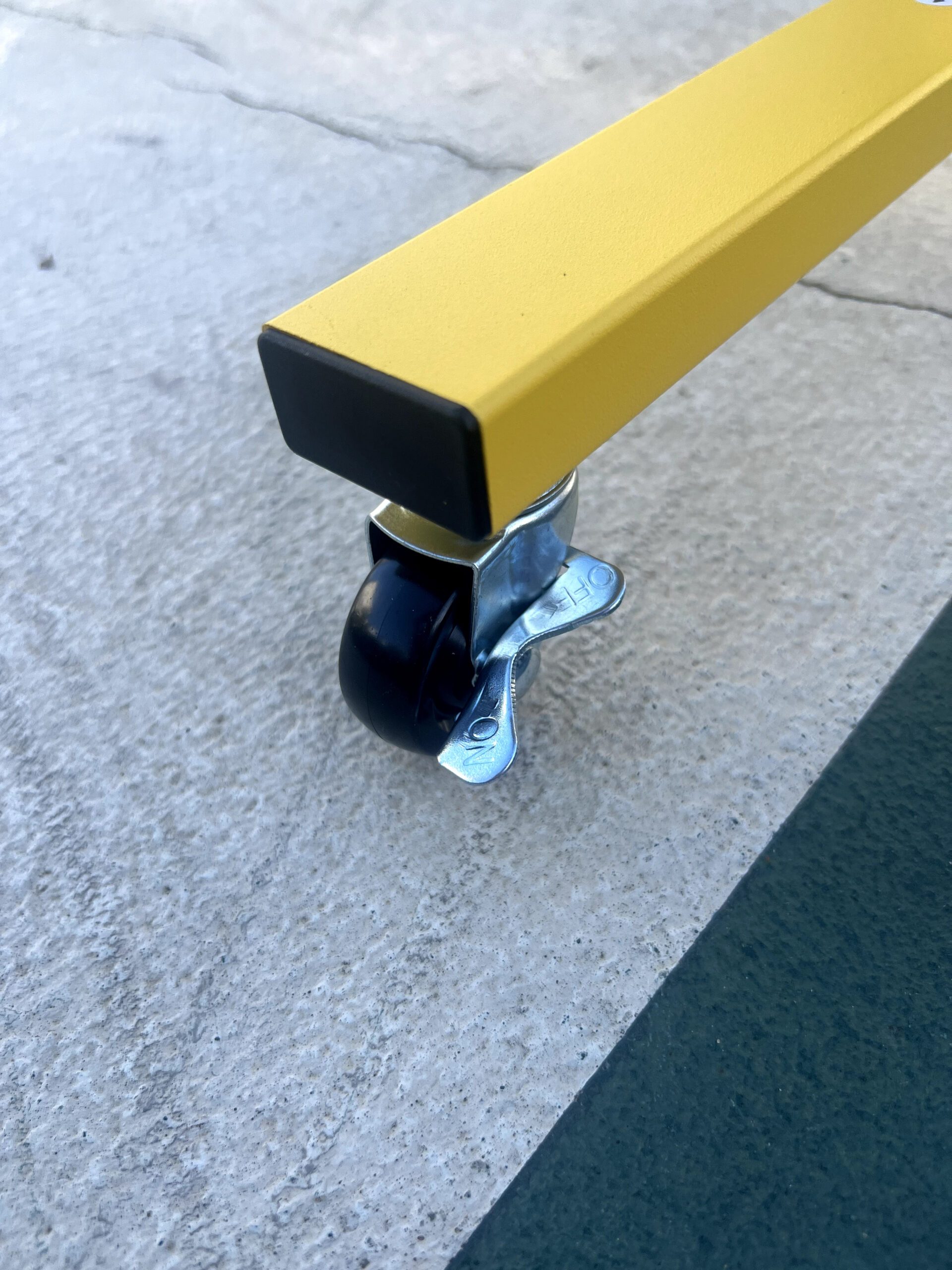
The locks themselves have also worked well outdoors. Once engaged, the wheels are not simply free-rolling during normal play.
Setup: about 5 minutes alone, 3 minutes with two people
Assembly has been straightforward for me. I have experience with other portable nets, so I did not even need to study the instructions closely — the pieces and push-button connections were intuitive enough that I could work it out as I went.
Once familiar with it, my rough setup times are:
- 22 ft setup alone: about 5 minutes
- 22 ft setup with two people: about 3 minutes
- 11 ft setup: roughly half the time of the full version
Taking it down is even faster. The only physical downside for me is that assembly involves a fair amount of bending to floor level. It is not technically difficult, but if your back dislikes repeated bending, that part is worth knowing.
The push-buttons have been easy for me. My girlfriend did struggle with one connector once and needed help, so I would not say every button is effortless for every user. That fits the broader owner-feedback theme on the Amazon listing, where ease of assembly is generally praised but some people mention finger strength as a minor issue.
The carry bag is better than I expected
I expected repacking the system to be one of the annoying parts. It has actually been easier than I thought.
My best packing method is to put the net material at the bottom and the heavier frame parts on top. That seems to use the available space better. Compared with the portable Forza nets I have used, this bag feels like it gives me a little more room, although I would still happily take a bit more.
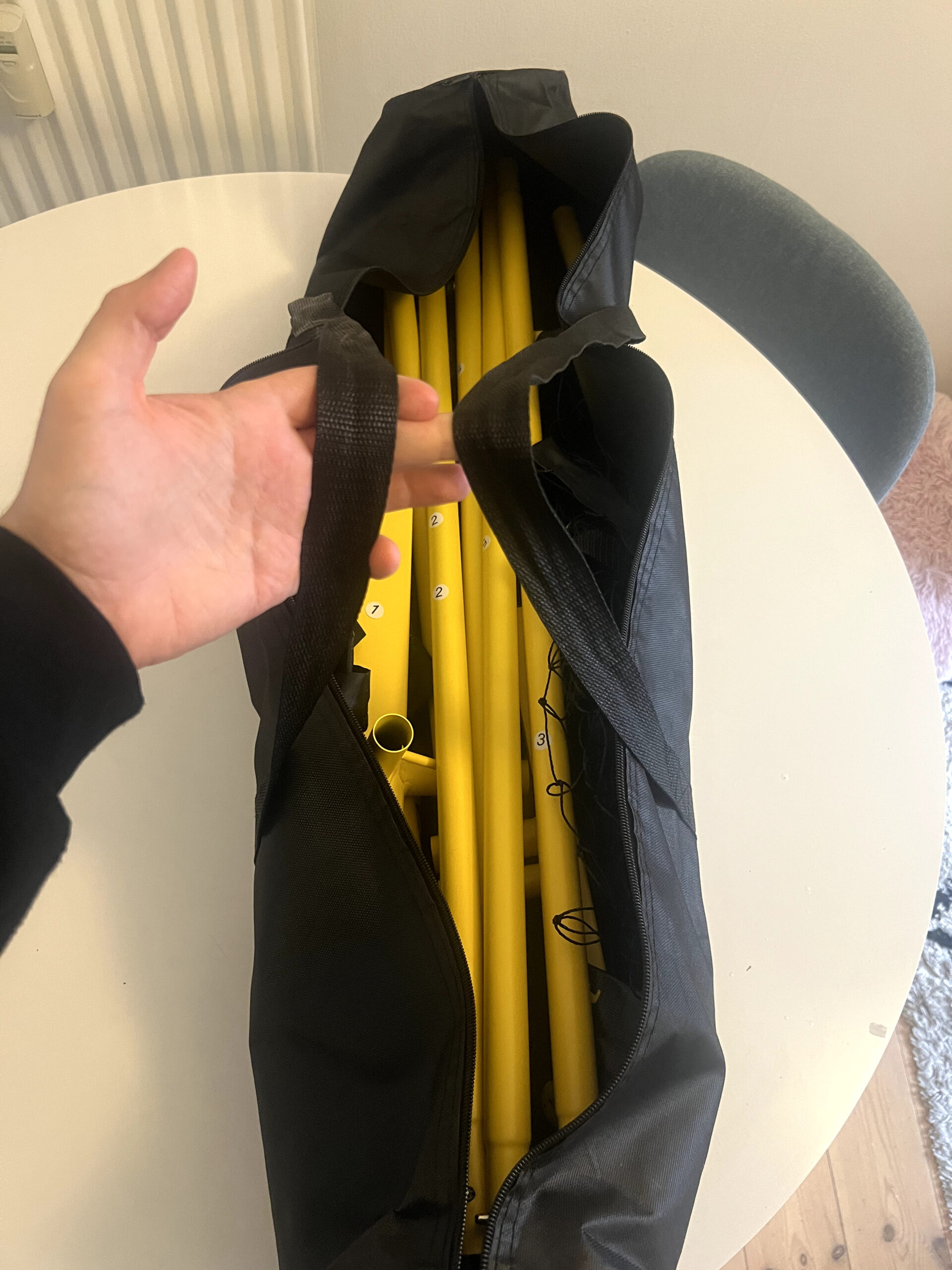
The zipper has been fine so far and I particularly like the handles/straps. I can carry the long bag in my hands or get it onto my back when I need both hands for other gear.
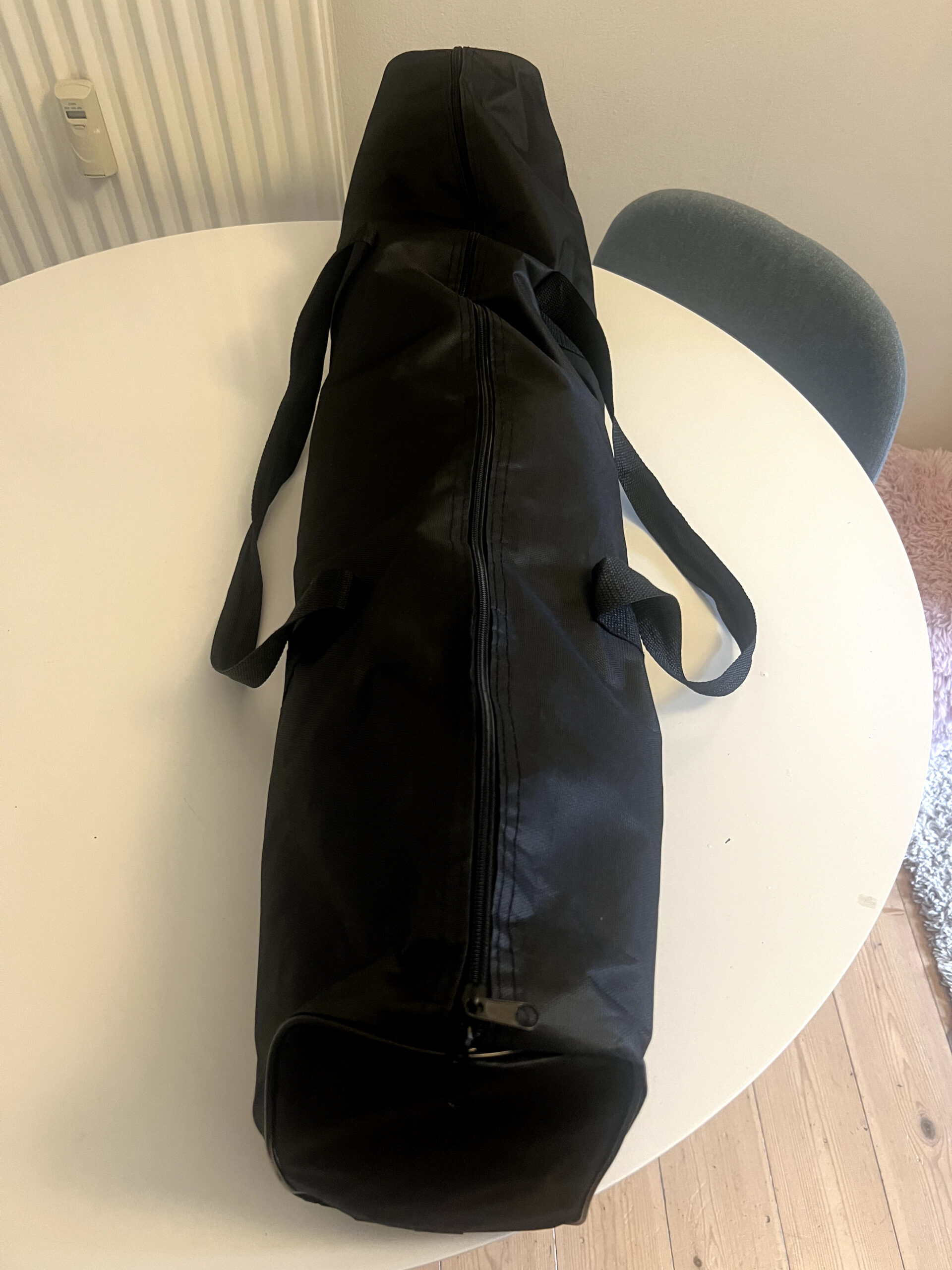
The Amazon listing gives the system weight as 16.94 lb. I personally manage it up and down to a third-floor apartment along with another bag, balls and other gear. That does not mean everyone will find it light. The bag is long as well as fairly heavy, so stairs may be inconvenient for senior players or anyone with limited carrying capacity.
On-court tension has been very good
The 22 ft net has stayed tight in my use. I have not had a problem with the center hanging noticeably low, and I have not needed to keep stopping to retension the top during a session.
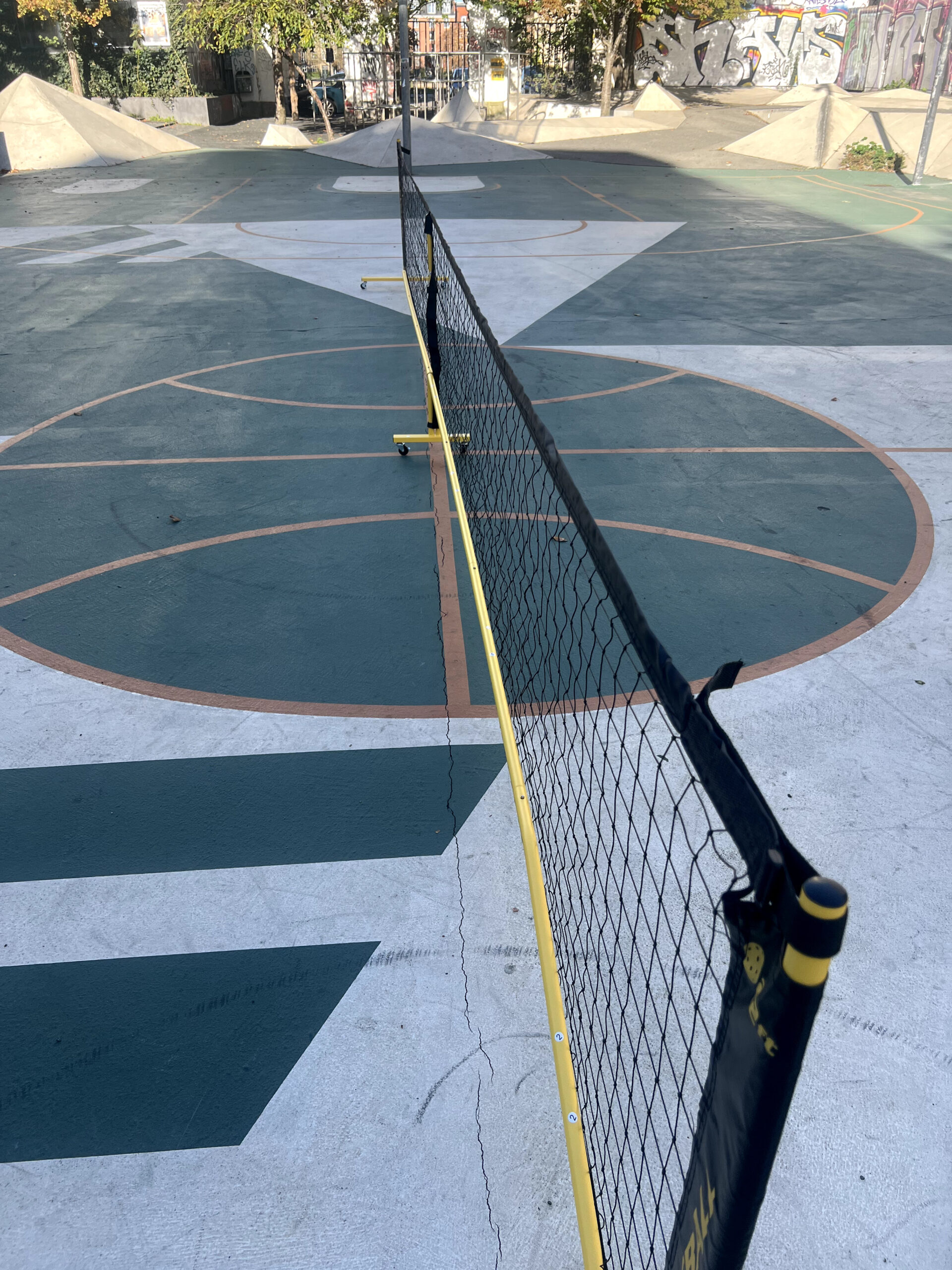
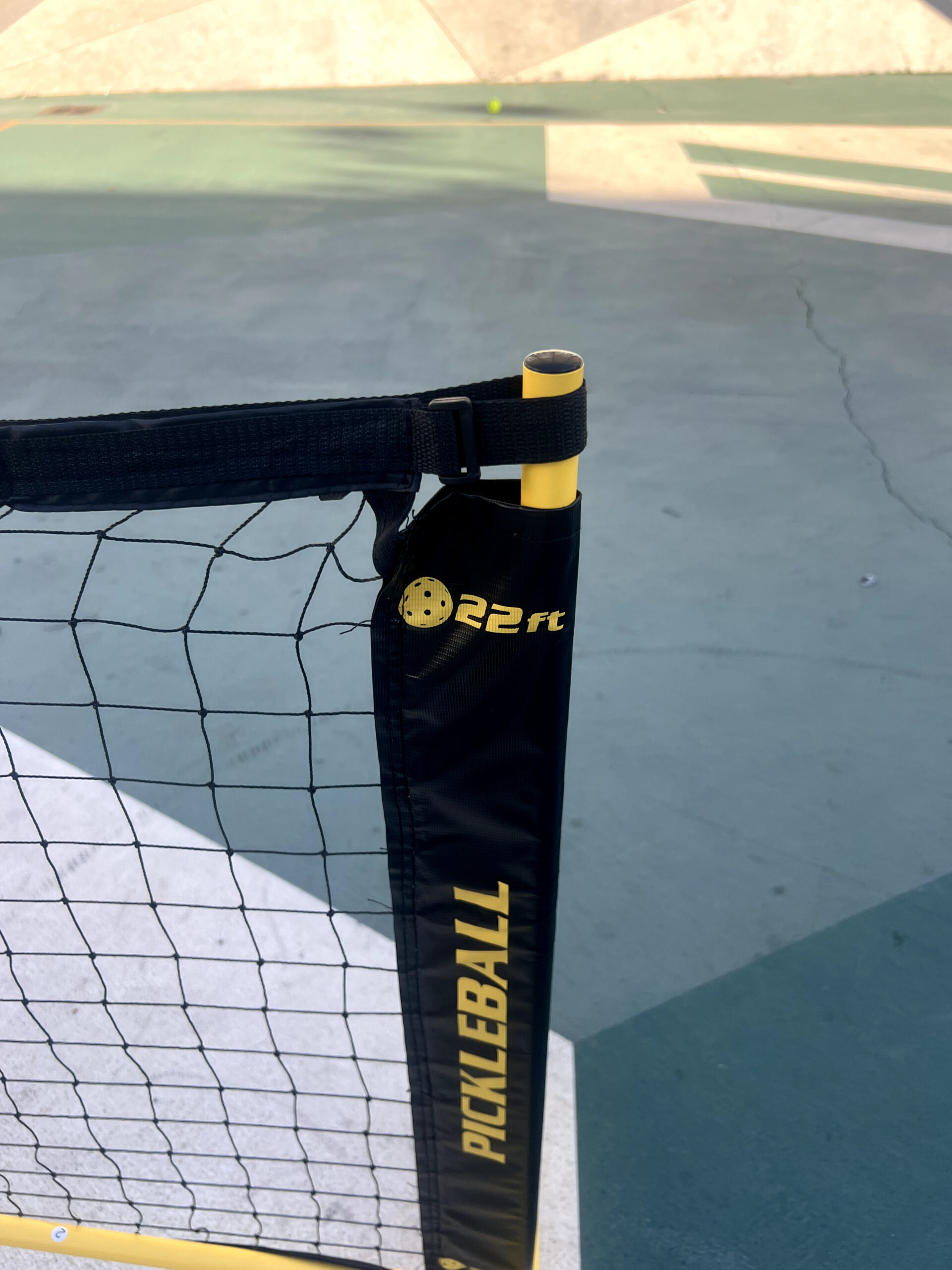
The actual ball interaction also feels normal to me. I have not noticed strange rebounds that make it feel obviously unlike a pickleball net.
One small positive surprised me: balls seem to get trapped at the bottom of this net less often than with some other portable nets I have used. That means fewer dead balls sitting under the mesh waiting to be collected.
Stability is good — until the wind gets strong
For a portable net, I think the Fostoy is reasonably stable. The frame feels solid and the wheel locks help keep it planted in ordinary outdoor conditions.
But it is still a portable system, not a heavy permanent net. In strong wind it can move, twist slightly out of alignment or tip. In my rough experience, once wind gets very strong — around the 12 m/s range or above — I may need to add extra weight using the carry bag or another heavy object near the middle or sides.
I would treat that number as my observation, not an official wind rating. Wind direction, gusts, court exposure and exactly how the net is positioned all change the result.
If wind is a regular problem where you play, see my guide to playing pickleball in wind. And if you are deciding between something you pack away each session and a heavier court installation, my portable vs permanent pickleball net guide explains the broader trade-off.
The 11 ft net is useful — but it is not why I bought it
I have only used the 11 ft configuration once, so I have much more experience with the full-size net.
I would not choose 11 ft for proper doubles matches or drills that depend on realistic crosscourt angles. The narrow width changes too much.
Where it does make sense is:
- straight-ahead drop practice;
- drive practice;
- dinking in a smaller area;
- skinny singles or constrained half-court work;
- small garages, driveways or indoor spaces;
- a six-player session where four players use the 22 ft court and two can drill on the 11 ft net instead of waiting.
So I see the 11 ft net as a useful bonus rather than the core reason to buy the system. If I were evaluating the Fostoy only as a full-size net, I would still like it.
I measured regulation net height
USA Pickleball’s current standards call for the net to be 36 inches high at the sidelines and 34 inches at the center. The official equipment standards also specify 22 ft between the inside of the posts, with a permitted tolerance. You can see the current rulebook and equipment documents on USA Pickleball’s official rules page.
I measured the Fostoy setup myself and got the expected 36 in at the side and 34 in at the center. That matters more to me than simply repeating the product listing, because incorrect center height is immediately noticeable during serious practice.
I did not independently certify every equipment-standard dimension, so I would not describe my test as a formal tournament certification. For a full explanation of the measurements, see my pickleball net height guide.
Build quality and early durability
The frame still feels solid after roughly 30 hours. I have not noticed loose joints, bent pieces, rust, torn mesh, damaged top tape or worn-out wheel mechanisms.
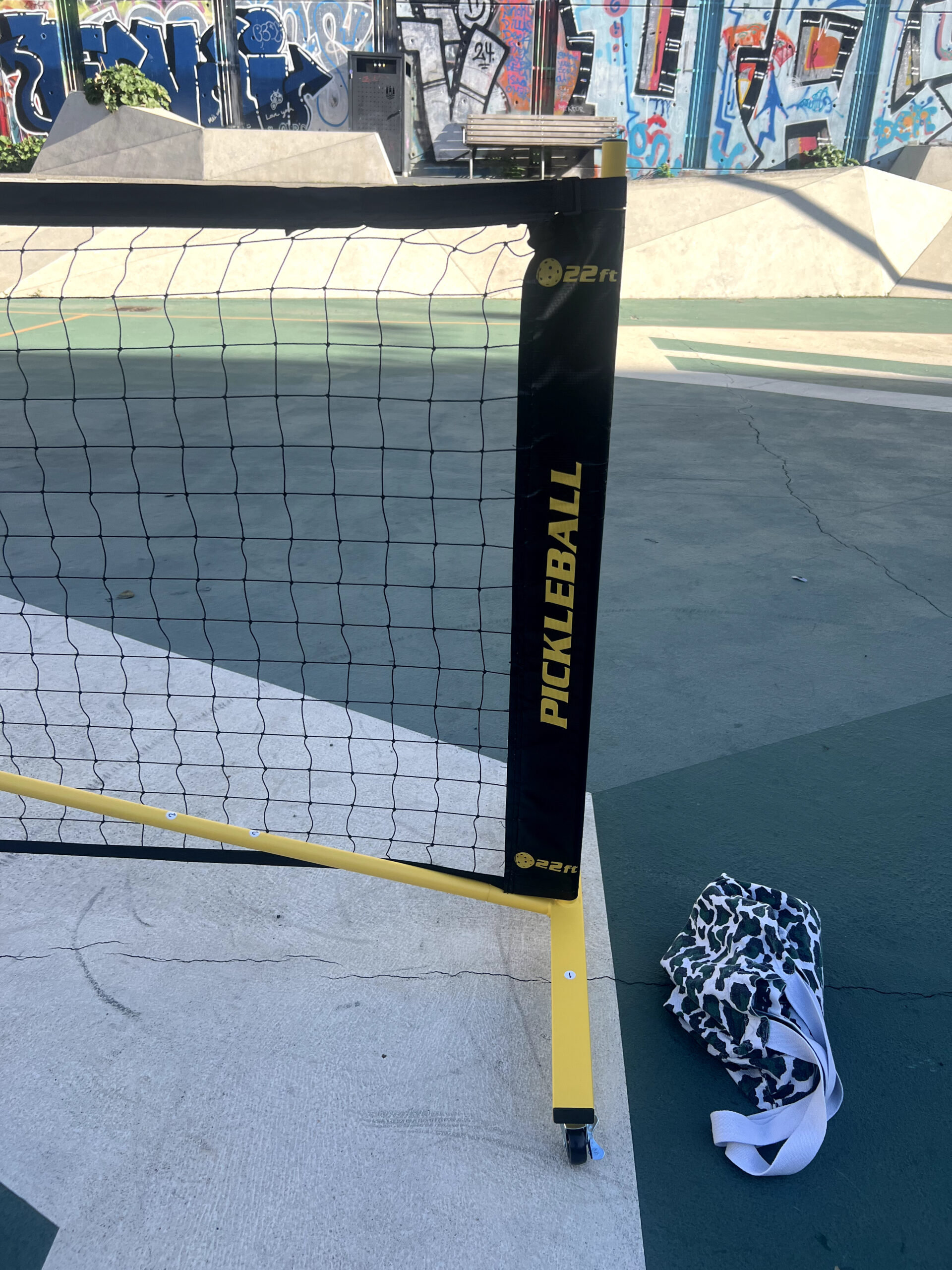
The only obvious dirt or wear I can point to is grime underneath the wheels from outdoor courts.
The Amazon listing describes this exact PB02 version as using an 18-ply PE net, a metal frame with 1 mm wall thickness at the end base, an iron center support and a 2-year manufacturer warranty. Those are manufacturer/listing specifications, not measurements I independently verified. The listing weight is 16.94 lb.
| Specification | Listing / my test |
|---|---|
| Exact model | Fostoy PB02, ASIN B0BVQYQ3F6 |
| Configurations | 22 ft full net + 11 ft half-court net |
| Listed weight | 16.94 lb |
| Listed net material | 18-ply PE |
| Listed frame | Metal, 1 mm wall thickness at end base |
| Listed center support | Iron |
| Listed warranty | 2 years |
| My height measurement | 36 in sidelines / 34 in center |
| My setup time | ~5 min solo / ~3 min with two people |
| My use so far | ~30 hours across ~10 sessions |
I am deliberately not calling it “more durable than most nets” yet. The 18-ply specification sounds promising and the system has shown no meaningful wear in my test, but long-term durability needs long-term use.
What I paid: the product was reasonable, international shipping was not
I paid for the net myself on July 8, 2026. My Amazon order broke down like this:
| Cost | My order |
|---|---|
| Item subtotal | $76.99 |
| Shipping & handling | $41.05 |
| Import charges | $3.42 |
| Estimated VAT | $30.37 |
| Total delivered to Denmark | $151.83 |
That total is obviously not representative of what a US buyer pays. For me, even at $151.83 delivered, it was still the option that looked best for my specific combination of club matches, drilling, portability and indoor/outdoor use.
I would become much less enthusiastic if the net itself cost well above roughly $150 before shipping, because at that point I would start comparing more aggressively with premium portable systems. Current retail prices change, so I would use the live price rather than a hard-coded number when deciding.
Check current price on Amazon (paid link) →
How it compares with other nets
My hands-on comparison is limited. I have used portable Forza nets, some unbranded/unknown portable systems and badminton nets adjusted to pickleball height. I have not personally tested every premium net below, so I separate my experience from published-spec comparison.
Versus the Forza portable nets I have used
The biggest Fostoy advantage for me is the wheel system. The Forza nets I have used did not give me the same quick way to roll and straighten the entire assembled net after games.
I also found the Fostoy carry bag slightly easier to repack than I expected compared with those nets, although I still would not call it oversized.
Versus a premium wheeled aluminum system
Franklin sells a much more expensive full-court aluminum wheeled net designed as a semi-portable system with a built-in cable tensioning setup and weather-resistant aluminum frame. That type of product targets a different buyer: someone who values a more court-like, semi-permanent setup and is willing to spend much more for it. Franklin’s current product information is available on its official Full Court Aluminum Net page.
The Fostoy is the better fit for my use because I actually carry it between locations and upstairs. A heavier semi-permanent net would solve the wind/stability issue better, but it would create a new transport problem.
Versus SwiftNet-style premium portability
The SwiftNet 2.1 is another premium approach: carbon-fiber/aluminum construction, approximately 17 lb including its bag and a tensioned design aimed at serious portable play. Those published specifications are listed by Right to Recreation. It sits in a much higher price tier than the Fostoy. I have not tested it myself, so I would not claim the Fostoy performs better. The comparison is mainly about value: Fostoy gives me the features I care about — full width, regulation height, quick setup, wheels and a carry bag — without paying premium-net money.
If you are choosing for frequent club or tournament deployment rather than personal transport, I would compare both categories rather than assuming the cheapest portable steel net is automatically the right choice.
Who should buy the Fostoy?
I think it is a particularly good fit for:
- serious recreational players who need their own mobile 22 ft net;
- clubs or groups using courts without permanent nets;
- players who switch between indoor halls and outdoor park courts;
- coaches and drill groups that frequently reposition the net;
- families who can also use the included 11 ft configuration;
- players who want a net they can carry rather than a semi-permanent wheeled frame.
I would look elsewhere if:
- you are setting up a permanent or near-permanent high-level court;
- maximum wind stability matters more than easy transport;
- you do not want to carry a long ~17 lb bag;
- you expect a heavy professional net that feels essentially like an in-ground system.
Why I rate the Fostoy Portable Pickleball Net 4.5/5
My overall rating is 4.5/5. The wheels, setup, net performance and versatility are all strong in my use. Wind stability and the still-limited durability window are the main reasons it does not score closer to five.
This score follows The Pickleball Wise’s published rating method: category-relevant criteria total 100%, each criterion is scored from 1.0 to 5.0 from the documented first-hand evidence, and the weighted result is rounded to one decimal place.
| Criterion | Weight | Score | Evidence from my use |
|---|---|---|---|
| Setup & mobility | 25% | 4.8/5 | About five minutes alone once familiar, with locking wheels that make repositioning the assembled net genuinely easy. |
| Net performance & tension | 25% | 4.7/5 | Good tension, no meaningful sagging and the measured height matched the regulation target in my setup. |
| Wind stability | 15% | 3.8/5 | Fine in ordinary conditions, but strong wind can shift or tip the portable frame and I sometimes add ballast. |
| Portability & storage | 15% | 4.5/5 | The bag is better than expected and I can carry it myself, though the long roughly 17 lb package will be awkward for some players. |
| Early durability | 10% | 4.4/5 | No rust, sagging, loose joints or meaningful wear after roughly 30 hours, but this is not yet a long-term durability test. |
| Versatility | 10% | 4.4/5 | Useful for full doubles, drills, indoor/outdoor sessions and an optional 11 ft half-court setup. |
| Weighted rating | 4.5/5 | 4.500 before rounding. | |
My final verdict after about 30 hours
Verdict: Recommended.
I bought the Fostoy because I needed one net that could handle full doubles, drills, outdoor courts, indoor halls and regular transport. So far it has done that job very well.
The wheels are the feature I value most. Setup is easy, the net tension has stayed good, the measured height is right, the bag is more practical than I expected and I have not seen meaningful wear after roughly 30 hours.
The main limitation is exactly what I would expect from a portable net: it is not immune to wind and it can shift slightly through a long session. If I were installing a permanent court for advanced competitive use, I would choose something heavier and more rigid. But for a net I actually need to carry, store and use in multiple places, I would buy this one again.
My only major unanswered question is long-term durability. I will update this review if the wheels, joints, bag, top tape or netting develop meaningful wear after substantially more use.
Frequently Asked Questions
How long does the Fostoy pickleball net take to set up?
In my use, the 22 ft version takes about five minutes alone or around three minutes with two people once you know the parts. The 11 ft setup takes roughly half as long.
Is the Fostoy net regulation height?
I measured my setup at 36 inches at the sidelines and 34 inches in the center, which matches the current USA Pickleball net-height requirement. I did not independently certify every tournament-equipment dimension.
Does the Fostoy net work in wind?
It has been fine for me in ordinary outdoor conditions, especially with the wheels locked. Strong wind can still move or tip it. In very windy conditions I sometimes add the carry bag or another heavy object as ballast.
Is the 11 ft net actually useful?
Yes, but mainly for small-space practice, straight-ahead drops and drives, dinking, skinny singles or keeping two extra players drilling while four play on a full court. I would not use it as a substitute for a full net in normal doubles or crosscourt drills.
Can one person carry and set it up?
Yes. I regularly carry it myself, including up and down three flights of stairs, and I can assemble the 22 ft version alone in about five minutes. The long bag and roughly 17 lb listed weight may still be awkward for some players.
Review methodology and sources
This review combines my own purchase and approximately 30 hours of first-hand use with current published specifications for the exact Fostoy PB02 / Amazon ASIN B0BVQYQ3F6. Product specifications such as listed weight, materials and warranty come from the current Amazon product listing. Regulation-height context comes from USA Pickleball. Alternative-product context is based on current manufacturer/retailer information and is clearly separated from products I have personally used.

Jonathan Grøn is a pickleball player and racket-sports enthusiast who focuses on practical doubles strategy, rules, skills, and training. He combines regular on-court experience with research from official rules, coaching resources, and other authoritative sources to create clear, useful pickleball guides.