Solo Pickleball Drills: Practice Without a Partner
Use solo pickleball drills for serves, wall work, self-feeds and footwork, with a practical system for choosing drills and tracking reps that transfer.

Use solo pickleball drills for serves, wall work, self-feeds and footwork, with a practical system for choosing drills and tracking reps that transfer.
Learn how to play pickleball with a beginner-friendly guide to serving, scoring, the two-bounce rule, the kitchen, faults, and doubles positioning.
Learn how pickleball tournament warm-ups work, why USA Pickleball recommends limiting match-court warm-up to about 2–3 minutes, and how to use that time effectively.
Learn how official pickleball ball specifications cover size, weight, bounce, holes, material and approval—and why two legal balls can still play differently.
Learn why pickleball tournaments combine age and skill brackets, when Tournament Directors can merge divisions, how playing up or down works, and what it means for medals and qualification.
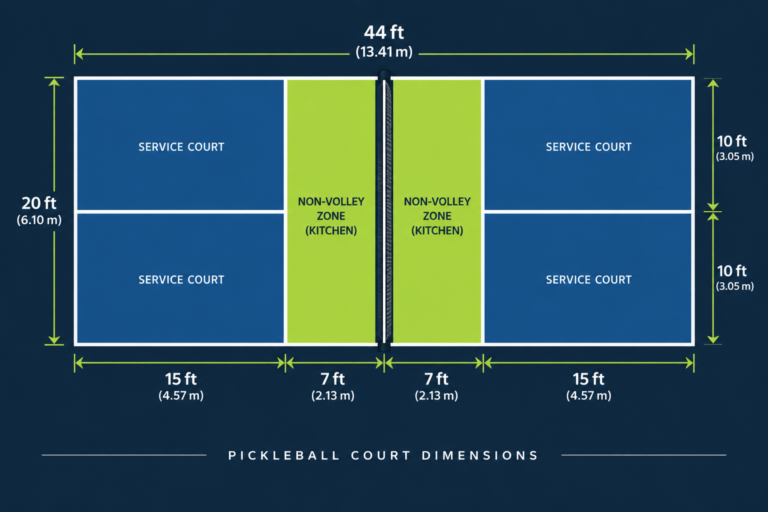
Learn official pickleball court dimensions, including court size, Kitchen depth, service boxes, net height, line width, and recommended playing space.
Use this 4-week intermediate pickleball practice plan to improve depth, dink control, third-shot choices, resets, doubles movement and game transfer without chasing random drills.
Learn the USA Pickleball two-match minimum, the single-elimination exception, and how round robin, pool play and double elimination affect how many matches you actually get.
Learn how pickleball tournament seeding works, why seeds differ from DUPR and rankings, how pools and byes affect draws, and what players should check when brackets are posted.
Choose pickleball drills by skill level and by the problem you actually need to solve, with progressions for beginners, intermediate players and advanced-intermediate play.